
ORIGINAL ARTICLE
ARTIFICIAL INTELLIGENCE-POWERED DECISION SUPPORT SYSTEM IN PRIMARY HEALTH CARE: NURSES' PERCEPTIONS
Anna Paula Mendes Marques de Lima Franco1, Francini Castilha do Nascimento2, Yasmim Ribeiro Fracaroli3, Luiz Eduardo da Silva4, Fábio de Souza Terra5, Isabelle Cristinne Pinto Sampaio Costa6
1 Universidade Federal de Alfenas. Alfenas, MG, Brasil. ORCID: 0009-0009-8847-7914. E-mail: anna.franco@sou.unifal-mg.edu.br
2 Universidade Federal de Alfenas. Alfenas, MG, Brasil. ORCID: 0000-0001-7860-0493. E-mail: francini.nascimento@sou.unifal-mg.edu.br
3 Universidade Federal de Alfenas. Alfenas, MG, Brasil. ORCID: 0009-0004-2400-2323. E-mail: yasmim.fracaroli@sou.unifal-mg.edu.br
4 Universidade Federal de Alfenas. Alfenas, MG, Brasil. ORCID: 0000-0002-8387-6766. E-mail: luiz.silva@unifal-mg.edu.br
5 Universidade Federal de Alfenas. Alfenas, MG, Brasil. ORCID: 0000-0001-8322-3039. E-mail: fabio.terra@unifal-mg.edu.br
6 Universidade Federal de Alfenas. Alfenas, MG, Brasil. ORCID: 0000-0002-2611-8643. E-mail: isabelle.costa@unifal-mg.edu.br
ABSTRACT
Objective: To analyze Primary Health Care nurses' perceptions regarding an artificial intelligence-based clinical decision support system, identifying implementation challenges and barriers. Method: A qualitative study conducted through face-to-face semi-structured interviews in the workplace with 20 nurses. The interview recordings were transcribed and subjected to thematic content analysis, as proposed by Bardin. Results: Three categories were identified: Perception of the system and its impact on clinical practice, highlighting the tool's potential to support clinical reasoning, qualify the Nursing Process, and standardize documentation; Barriers and challenges in the implementation and use of the system, highlighting difficulties related to the lack of interoperability, technological infrastructure limitations, and increased workload; and Suggestions for improvement and future recommendations, pointing to the need for system integration, usability enhancements, and strategies that favor its incorporation into Primary Health Care workflows. Conclusion: Artificial intelligence-based systems show potential to support clinical practice in Primary Health Care; however, their effective incorporation depends on system integration, investments in digital infrastructure, and implementation strategies aligned with the organizational context.
Descriptors: Primary Health Care; Nursing Process; Nursing Records; Artificial Intelligence; Clinical Decision Support Systems; Qualitative Research.
|
How to cite: Franco APMML, Nascimento FC, Fracaroli YR, Silva LE, Terra FS, Costa ICPS. Artificial intelligence-powered decision support system in primary health care: nurses' perceptions. Online Braz J Nurs. 2026;25(Suppl1):e20267036. http://doi.org/10.17665/1676-4285.20267036 |
What is already known:
Artificial intelligence-based clinical decision support systems show potential to support clinical reasoning in Primary Health Care.
Barriers related to technological infrastructure, interoperability, and workflow integration hinder the incorporation of these technologies.
Evidence regarding Primary Health Care nurses' perceptions of the use of artificial intelligence-based systems remains limited.
What this article adds:
Nurses recognize that artificial intelligence-based systems can strengthen clinical reasoning, support the Nursing Process, and standardize care documentation.
The lack of interoperability between systems and the increased workload were identified as relevant barriers to the implementation of the technology in Primary Health Care.
The incorporation of artificial intelligence-based systems depends on usability improvements, platform integration, and strategies aligned with the organizational context of health services.
INTRODUCTION
Primary Health Care (PHC) serves as the main gateway to the health system and plays a central role in care coordination, health promotion, and the longitudinal monitoring of users. Within this level of care, nurses perform strategic functions in organizing care, conducting nursing consultations, and implementing the Nursing Process (NP), an instrument that guides clinical reasoning, decision-making, and care systematization. The proper use of the NP can significantly contribute to qualifying care, as well as favoring care continuity and strengthening evidence-based practice(1-2).
The NP comprises interrelated stages that allow care to be organized systematically; however, recent evidence indicates that its execution in PHC still occurs partially or incompletely. This scenario is influenced by factors such as high care demand, work overload, time constraints, and difficulties related to the structured recording of clinical information, which compromises care documentation and the quality of clinical decision-making(3-4).
Another challenge refers to the integration of standardized nursing languages—such as NANDA International (NANDA-I), Nursing Interventions Classification (NIC), Nursing Outcomes Classification (NOC), and the International Classification for Nursing Practice (ICNP)—into the health information systems used in services. In many PHC contexts, electronic health records do not adequately accommodate the stages of the NP, requiring manual records or workarounds that increase the time dedicated to clinical documentation and hinder the use of these tools as support for clinical reasoning. The absence of structured systems to support the recording and organization of this information limits the clinical potential of the NP(5-6).
In this scenario, Artificial Intelligence (AI)-based Clinical Decision Support Systems (CDSS) have been pointed out as strategies to support health professionals in analyzing clinical information and making decisions, contributing to the identification of nursing diagnoses (ND), the recommendation of interventions, and the organization of clinical records. Studies indicate that the incorporation of these tools can strengthen professional clinical reasoning and support care practices in complex environments, such as PHC(7-9).
In view of this, SisAPEC (Nursing Process Application System in Care [Sistema de Aplicação do Processo de Enfermagem no Cuidado]) was developed as a digital tool designed to support the structured recording of NP stages in PHC. The system was conceived to organize clinical information, integrate standardized nursing languages, and support nurses' clinical reasoning during consultations, enabling the construction of a structured clinical database that can subsidize the development of AI-supported CDSS, with the potential to favor decision-making in clinical practice.
Furthermore, this system was made available to nurses working in PHC services, linked to Family Health Strategy (FHS) teams, for use in their professional practice. In this context, the research focused on analyzing these professionals' perceptions regarding the use of SisAPEC in daily care routines.
Despite the growing development of digital technologies aimed at supporting clinical practice, evidence regarding how nurses perceive the use of AI-based CDSS in the PHC context remains scarce. Understanding these perceptions is essential to identify challenges, barriers, and potentials related to the implementation of these technologies in health services, thereby contributing to the improvement of care provided to the population. Thus, this study aimed to analyze PHC nurses' perceptions regarding an AI-based CDSS, identifying implementation challenges and barriers.
METHOD
Study design
A qualitative study with an interpretive approach, grounded in the constructivist paradigm, which recognizes reality as socially constructed through individuals' interactions and experiences. The research followed the recommendations of the Consolidated Criteria for Reporting Qualitative Research (COREQ)(10). This design was chosen because it allows for an in-depth understanding of nurses' perceptions and experiences regarding the use of AI-based CDSS in PHC.
Participant selection
Participants were selected among nurses working in PHC in a municipality in southern Minas Gerais, Brazil, who were linked to the Family Health Strategy (FHS). Non-probabilistic convenience sampling was used, considering the eligibility and availability of professionals during data collection. Participants were approached in person by the lead researcher at the FHS units where they worked in the aforementioned municipality. On that occasion, they received detailed information about the objectives, procedures, and ethical aspects of the research and, after due clarification, were invited to participate in the study, at which point their acceptance was verified.
Inclusion criteria were: nurses involved in care activities in FHS units during the research period, regardless of their employment type (tenured, or contracted for a fixed or indefinite period), provided they maintained an active contractual link with the municipality until the conclusion of data collection.
Nurses who temporarily worked as substitutes for other professionals due to leaves of absence, vacations, or other absences, those who performed exclusively managerial functions, and professionals presenting health conditions that precluded their continued participation were excluded.
In total, the municipality has 20 nurses linked to FHS teams. Due to this population size, all professionals were approached and invited to participate in the study. Following the application of eligibility criteria, it was verified that all professionals met the established requirements. Thus, all accepted the invitation, with no refusals, exclusions, or withdrawals during the data collection process.
Study setting
The study was conducted in a municipality in southern Minas Gerais with full FHS coverage, where teams are responsible for monitoring the population assigned to their territories. The FHS units are distributed to serve different geographic areas, ensuring access to basic health services, promotion, prevention, and continuous care actions. In total, the municipality has 20 FHS teams, in which nurses perform care, managerial, and educational functions within the scope of PHC.
The SisAPEC system
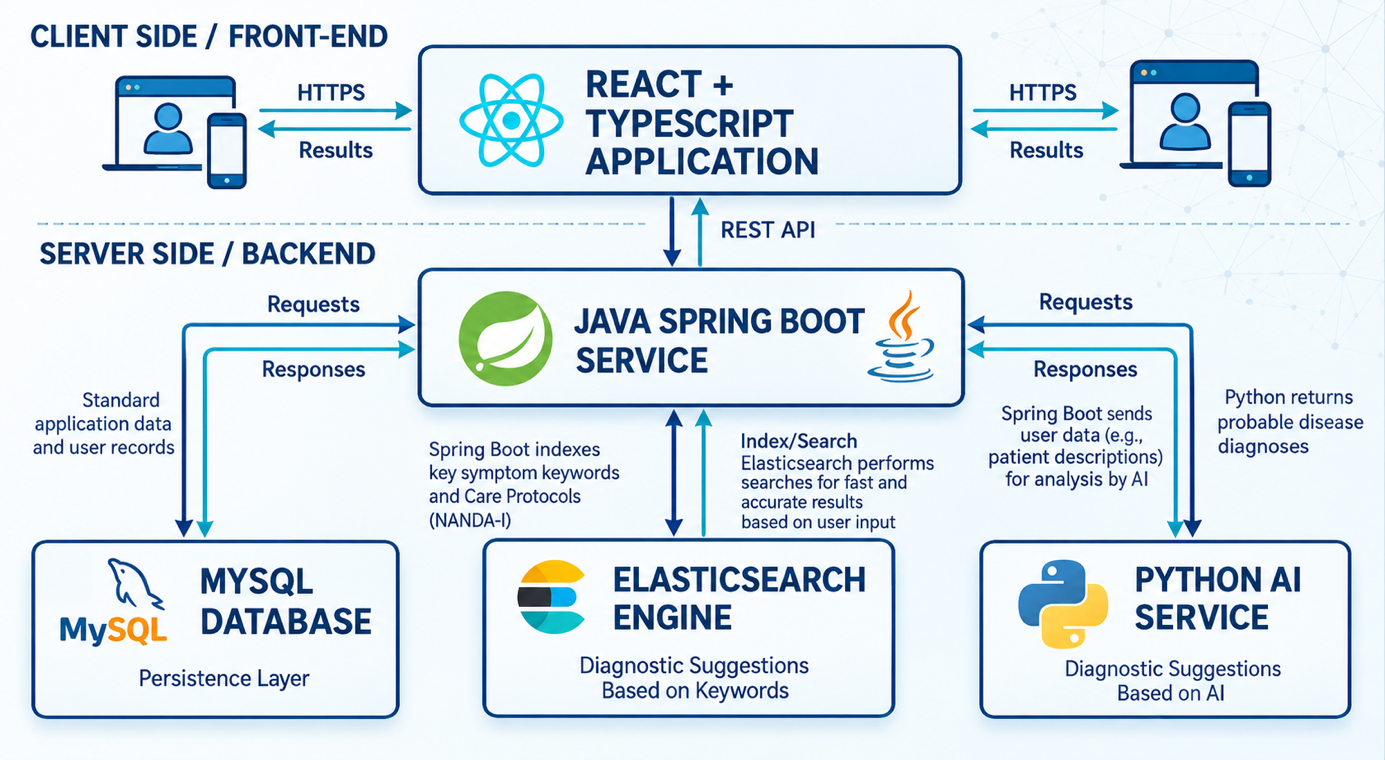
SisAPEC is a digital system developed and maintained by the research team itself, consisting of a web interface (React/TypeScript), a dedicated backend (Java Spring Boot), and a structured database (MySQL), integrating the standardized languages NANDA-I, NIC, and NOC. The system stores the history of all anamneses recorded per patient, enabling the consultation of previous visits and supporting the longitudinal monitoring of care over time. As a web application, the system currently operates in online mode, relying on an internet connection for real-time data recording and processing; there is currently no offline version available.
The diagnostic suggestion engine evolved from an initial text search mechanism (Elasticsearch) to a supervised machine learning model (SisAPEC ML), whose development, architecture, and validation are the subject of a specific methodological study currently in preparation and are not the focus of this qualitative article. Its architecture was designed for future interoperability via the Health Level Seven (HL7) standard, aiming at integration with the e-SUS Citizen Electronic Health Record (PEC), and the system follows the guidelines of the Federal Council of Nursing (COFEN Resolution No. 736/2024). Figure 1 illustrates the general architecture of the system.
Figure 1 – Architecture of the SisAPEC system. Alfenas, MG, Brazil, 2026
Source: elaborated by the authors, 2026.
Data collection
Interviews were conducted individually by a single researcher—a nurse, PhD, with experience in qualitative research and expertise in digital health—with no direct hierarchical relationship with the participants. Data collection took place in December 2025, in reserved rooms within the health units themselves, which ensured privacy and appropriate conditions; only the researcher and the nurse were present.
Data were collected through semi-structured interviews conducted using a previously prepared script containing open-ended questions designed to explore nurses' perceptions regarding an AI-based CDSS in PHC.
The interview guide (Table 1) was previously validated for content by researchers with experience in the topic. Subsequently, it underwent a pilot test with two PHC nurses not linked to the FHS units of the municipality under study, aiming to evaluate the clarity, relevance, and organization of the questions. No changes were required in the content of the final version, with only adjustments made to the wording and sequence of the questions. During data analysis, internal validation strategies were adopted, including discussions among the researchers, in order to minimize potential biases. It is noteworthy that the nurses who participated in the pilot test were excluded from the final sample. It should be clarified that, as they were not linked to the municipality's FHS teams—the population to which access to SisAPEC was restricted during the study period—these professionals had had no prior contact with the system, which ensured the suitability of the pilot test for the validation objectives of the instrument used in data collection.
Table 1 – Final version of the script for conducting semi-structured interviews. Alfenas, MG, Brazil (n=20)
|
|
|
|
|
|
|
|
|
|
|
|
|
|
|
|
|
|
Source: elaborated by the authors, 2026.
Interviews were audio-recorded in MP3 format with the participants' authorization, ensuring fidelity in recording the information, and were subsequently transcribed in full by two researchers. There was no need for additional interviews, as the information obtained in each encounter and with each nurse was considered sufficient for the research objectives. The average duration of the interviews was approximately 30 minutes. Furthermore, data collection included all 20 eligible nurses, so the definition of the number of participants was determined by the total inclusion of the study population.
It should be noted that, because it corresponds to all nurses linked to the municipality's FHS teams (n=20), the sample was characterized by census inclusion rather than a sampling process conducted until theoretical and data saturation. Information sufficiency was evaluated by the repetition and convergence of contents obtained among the accounts presented during the interviews, a criterion consistent with designs that encompass the total population of the studied context.
Data analysis
Recordings were submitted to Gemini AI(11) support for the initial audio transcription; a tool used exclusively for operational support and were subsequently reviewed manually by the researchers to check for fidelity to the original content and to perform spelling corrections of the statements without altering their meaning. Prior to submitting the audios to the tool, any elements that could identify participants were removed, in compliance with the principles of confidentiality and data protection. The analysis was conducted by two researchers who performed independent and repeated readings of the empirical material, followed by periodic meetings to discuss interpretations, refine analytical categories, and build consensus as a strategy to strengthen methodological rigor.
Content Analysis proposed by Bardin(12) was adopted, developed through the stages of pre-analysis, material exploration, and treatment of results with inference and interpretation. In the pre-analysis phase, floating reading of the transcripts was performed to familiarize with the corpus and define the units of analysis. In the material exploration stage, units of record and units of context were identified, from which thematic coding of the data was carried out.
Initial codes were grouped by similarity, originating categories and subcategories that structured the cores of meaning. Themes emerged inductively and were refined through constant comparison and discussion among the researchers, ensuring consistency and traceability. The analysis was conducted manually, with validation of the transcripts by the participants. Following this step, the categories and subcategories were systematized to subsidize the interpretive synthesis of the results, whose thematic organization is presented in Table 2.
Table 2 – Definitive categories and subcategories for the analysis of the interviews. Alfenas, MG, Brazil (n=20)
|
Category |
Subcategories |
|
Category 1: Perception of the system and its impact on clinical practice |
1.1 Qualification of the Nursing Process and documentation 1.2 Tool supporting clinical reasoning and decision-making 1.3 Satisfaction and expectations with the tool |
|
Category 2: Barriers and challenges in the implementation and use of the System for the Application of the Nursing Process in Care (SisAPEC) |
2.1 Structural and infrastructural barriers 2.2 Organizational and workflow barriers 2.3 Individual and usability barriers |
|
Category 3: Suggestions for improvement and future recommendations |
3.1 Interoperability as a top priority 3.2 Enhancement of technology and features 3.3 Strengthening of organizational support and digital culture |
Source: elaborated by the authors, 2026.
Interview excerpts presenting similar content were grouped into common categories whenever convergence of meaning was identified among the testimonies. Subsequently, the former categories, accompanied by the respective interview excerpts, were organized and systematized in Microsoft Word®, a stage in which the description of the findings was performed. The results were interpreted in light of the sociotechnical perspective, considering the interaction between professionals, technologies, and the organizational context.
The characterization of the participants was performed based on the tabulation of sociodemographic and professional variables, being analyzed descriptively and presented in a table.
Ethical aspects
The research was approved by the Research Ethics Committee of the Federal University of Alfenas (UNIFAL-MG), under opinion no. 7,713,416 and CAAE: 88887025.2.0000.5142. All participants signed the Informed Consent Form, and the participating units authorized the study by signing the Institutional Agreement Term. Furthermore, study participants were identified by alphanumeric codes (E01, E02, E03, and so on) to preserve anonymity and ensure the confidentiality of the information.
RESULTS
The study included 20 nurses linked to the FHS units of the municipality, comprising 19 females (95.0%) and one male (5.0%). Participants' ages ranged from 28 to 64 years, and their length of experience in PHC ranged from three months to 25 years. Regarding academic background, one participant held only an undergraduate degree (5.0%), 14 had lato sensu postgraduate specializations (70.0%), and five held stricto sensu postgraduate degrees (25.0%), including four master's degrees and one doctorate. Regarding familiarity with digital systems, two participants reported an advanced level (10.0%), seven intermediate (35.0%), seven basic (35.0%), and four declared no familiarity (20.0%).
Content analysis revealed a complex scenario structured into three thematic categories. The categories and their respective subcategories, detailed below, highlight the duality of professionals' experiences with the implemented CDSS.
Category 1: Perception of the system and its impact on clinical practice
This category groups perceptions regarding the quality, usefulness, and impact of SisAPEC on professional daily routines. The overall evaluation is markedly positive, with the tool predominantly viewed as a powerful resource for qualifying care and improving nurses' workflow.
Subcategory: Qualification of the Nursing Process and documentation
Participants were unanimous in stating that SisAPEC elevated the quality of documentation. The tool was described as promoting "more complete”, "centralized”, "detailed”, and "comprehensive" documentation compared to previous methods. The system was perceived as an inducer of the rigorous application of the NP, encouraging a more systematic and standardized assessment, which could optimize completion time and reduce documentary overload.
...nothing is missing. The questions are much more in-depth. Our manual report falls short of information. (E3)
Um... so that the information is centralized, right? We can, um... quickly view what was done... (E18)
...it is more complete, it gives you more visibility with the patient. (E7)
Subcategory: Tool supporting clinical reasoning and decision-making
SisAPEC was consistently identified as a facilitator of clinical reasoning. Its structure, which guides nurses through the stages of the NP, contributed to organizing thought and grounding decisions. The diagnostic suggestion feature was particularly valued, being described as a resource that "makes it easier by suggesting terms" (E11) and supports the agile identification of problems.
...describes what is happening and generates a diagnosis. It helps us think. (E2)
Because it came to, um... standardize documentation, right? We follow the diagnosis and intervention there. This helps our clinical practice in an organized way. (E18)
...for example, based on your anamnesis it suggests diagnoses, suggests diagnoses... It became much easier... (E7)
...before everything was on paper, sometimes the handwriting didn't help. Now it's there, standardized. (E20)
Subcategory: Satisfaction and expectations with the tool
Overall satisfaction with the system—including the training and technical support received—was exceptionally high. Nurses expressed that SisAPEC met and, in some cases, exceeded expectations, with evaluations such as "excellent" and "fast”. Future expectations are optimistic regarding the consolidation of the system as a standard tool, integrated with other platforms and used by the entire health team. Thus, it is estimated that the technology will promote better utilization of working time, contributing to well-being in the work environment. It should be clarified that, for the purposes of this subcategory, satisfaction with technical support was considered a constituent part of the user experience, as it is provided by the team responsible for the system itself.
From zero to 10, I give it a 10. It met expectations very well. (E9)
Technical support, from zero to 10, is a 10. Because whenever I had doubts, my doubts were resolved. Sometimes it was a matter of my own understanding, but I always had good support and they always attended to me when I needed it. (E14)
It met expectations yes, because it is something we already need to do. It helps visualize the nursing process and document better. (E16)
Very good, because every question we had, you answered. (E1)
Category 2: Barriers and challenges in the implementation and use of SisAPEC
This category gathers the obstacles faced by professionals. The barriers identified are mostly structural and organizational in nature, transcending the intrinsic quality of SisAPEC, and may impact occupational stress and quality of life at work.
Subcategory: Structural and infrastructural barriers
The lack of adequate infrastructure emerged as a recurring challenge. Problems such as "unstable internet”, a shortage of computers, and the absence of suitable rooms for consultations were pointed out as factors limiting the effective use of the system and professional performance. In the accounts, the difficulty concentrates on connection availability—complete absence in certain units or frequent interruptions—with no mention of speed as a limiting factor.
In the rural unit, the biggest difficulty is the internet. We don't have internet there. So, I have to do the entire nursing consultation, take notes on paper, and then migrate to SisAPEC and Viver. (E8)
...there is no internet in the room. (E11)
...because here, in my unit, we are left without internet very often. (E5)
Our actual barrier problem is the internet issue, right? Sometimes we are making an entry and the internet drops... (E17)
Subcategory: Organizational and workflow barriers
This subcategory represents the critical core of organizational challenges. The main barrier is the lack of interoperability between SisAPEC and legacy systems, such as the e-SUS Citizen Electronic Health Record (PEC). This gap generates the most vehement complaint: duplication of work, which forces professionals to record the same information in multiple systems. This factor, added to the chronic shortage of time in the PHC routine and the low engagement of the multiprofessional team, aggravates the nurse's work overload.
...we have two systems. This already overloads us. (E3)
I think our lack of time. I think it's a lot of lack of time really. (E19)
...time management, because everything revolves around us. (E2)
The main difficulty was the issue of time... (E12)
Subcategory: Individual and usability barriers
Despite general good usability, initial adaptation difficulties associated with the learning curve were reported. Low computer literacy was cited as a personal obstacle by some professionals. Punctual technical instabilities, although understood as part of a pilot phase, generated frustration and potential reduction in motivation. There is coherence between these barriers and the digital familiarity profile of the sample, in which four participants (20.0%) declared having no prior familiarity with digital systems.
...difficulty is knowing how to handle it really, use the computer. (E10)
...it takes me a while to learn when it's computer-related you know?! (E13)
So, I am a bit slow with computers, but little by little I'm learning. (E7)
...generally speaking, the technological part itself, knowing how to use the computer. (E4)
Category 3: Suggestions for improvement and future recommendations
This category consolidates nurses' proposals to improve SisAPEC, reflecting the desire to see the tool evolve from a pilot project into a consolidated institutional policy capable of reducing work overload and qualifying care. It is emphasized that the reduction of overload constitutes an expectation to be achieved after overcoming data duplication, rather than a consolidated reality in this initial phase.
Subcategory: Interoperability as a top priority
The most emphatic and unanimous suggestion was the need for full integration of SisAPEC with e-SUS and other systems, aiming at a unified workflow that eliminates rework and documentary overload.
...the dream is for one to link to the other. (E1)
...another thing would be to link the systems to do just one job, for the two to talk to each other. (E16)
...integrate more with other systems, right? With the state system or with private laboratories, right? So, we don't have to keep typing test results that are already ready somewhere else. (E18)
Subcategory: Enhancement of technology and features
Technological suggestions focus on optimizing system use, including the enhancement of AI to suggest not only nursing diagnoses, but also interventions and expected outcomes. There is strong demand for mobility, with versions for tablets or mobile phones, offline operation, and voice commands, aiming at greater agility and productivity in the NP.
...use during home visits. Use on mobile phone. Recording/voice option. It would be faster. (E7)
...proceed with the development of automatic association between diagnosis, NIC, and NOC. In the future, integration with AI to automatically suggest these elements. (E11)
...it needs to improve this on the voice command issue. (E15)
...the NIC, NOC part. I think that makes it difficult, we have to keep searching. (E6)
Subcategory: Strengthening of organizational support and digital culture
Finally, professionals recommend greater involvement of management in improving infrastructure and expanding the use of the system to the entire health team. The transition of SisAPEC from an isolated initiative to an institutional policy is pointed out as fundamental for long-term sustainability and the promotion of occupational well-being.
...implementation must come from the top. Just like E-SUS PEC, institutional order facilitates adoption... I think management support... not just the demand for nurses to be entering data, but them showing commitment as well. (E2)
...if we had a tablet. If the city hall gave us a tablet, because then we wouldn't need to sit at the computer and fight over it, the single computer is mine and the two nursing technicians. (E9)
I think investment in infrastructure, right? Quality internet and new computers. (E18)
DISCUSSION
The central paradox lies in the fact that a tool created to optimize work ended up increasing nurses' workload. This result must be analyzed considering the recent start of SisAPEC's implementation (three months), a period marked by professional adaptation and operational adjustments. Literature demonstrates that the introduction of digital health systems often generates initial overload before producing sustainable gains(13-14).
The duplication of records between SisAPEC and the Citizen Electronic Health Record (PEC) was pointed out as a relevant barrier by nurses, contradicting the expectation that artificial intelligence-based systems reduce administrative burden(15-16). This finding indicates that SisAPEC has not yet reached technological maturity regarding interoperability.
The system was conceived with an interoperable architecture, grounded in standards such as Health Level Seven (HL7), for secure data integration(17-19). However, this integration still depends on the tool's stabilization, and the observed overload reflects a transitory effect of the initial phase, which tends to recede with professional familiarization(20-21).
Connectivity dependency, already clarified in the methodology section, helps explain why the barrier reported by participants concentrates on internet availability—rather than speed—reinforcing the relevance of investments in digital infrastructure in FHS units, especially in rural areas and hard-to-reach locations. The demand for an offline version, evidenced in Category 3, represents a user proposal to circumvent this limitation, rather than an attribute currently available in the system.
Despite the higher perceived burden, nurses reported high satisfaction with SisAPEC's usability, indicating that the overload stems from the temporary lack of integration with other systems, characterizing "poor systemic usability"(22-23). Record duplication thus constitutes a transitory implementation challenge. With interoperability based on the HL7 standard, it is expected to eliminate this hurdle, reduce administrative burden, qualify the NP, and expand the time dedicated to care in PHC.
In this sense, interoperability enabled by HL7 tends to expand, above all, access to the clinical history already recorded in PEC, avoiding the re-typing of information and supporting care continuity, respecting the limits imposed by the General Personal Data Protection Law(24) regarding access to and use of sensitive health data. This integration finds support in the Minimum Data Set provided by the Ministry of Health, which establishes parameters for the standardized sharing of clinical information between systems(25).
Furthermore, the system demonstrates a positive impact on clinical practice by structuring data and supporting diagnostic reasoning, favoring the application of the NP and improving documentation quality, in line with previous evidence on CDSS(26). The nursing diagnosis (ND) suggestion feature, based on recorded anamnesis and physical examination data, stood out as one of the main elements supporting clinical reasoning.
It is important to mention that this support occurs through the analysis of information entered by the nurse, correlating it with NANDA-I taxonomy NDs and suggesting those compatible with the identified findings. In addition, for the suggested diagnoses, the system presents nursing interventions grounded in NIC and expected outcomes according to NOC. Thus, artificial intelligence acts as support for clinical decision-making, organizing and relating information to subsidize professional judgment without replacing it. The predictive model underlying this feature is detailed in a specific methodological study.
Participants reported that the system contributes to the organization of clinical information, assists in problem identification, and confers greater agility to decision-making by suggesting terms and guiding the construction of NDs.
Support for clinical reasoning represents an advance in consolidating the NP in PHC, historically marked by under documentation and the absence of formal diagnoses(27-28). Such findings converge with international evidence that structured digital tools strengthen clinical thinking and mitigate intuitive or fragmented practices(29-30), indicating that SisAPEC, even generating transitory overload, promotes gains in the rigor and completeness of the NP.
The analytical corpus did not evidence the perception of algorithmic bias by nurses, which indicates that current challenges are of a more basic nature. Even so, the absence of perception does not eliminate the risk, since algorithms can generate or amplify inequalities when based on non-representative data(31-33). The World Health Organization (WHO) recommends continuous audits and bias monitoring throughout the entire lifecycle of artificial intelligence in health(34).
The absence of this topic in the accounts points to two warnings: the need to train professionals to recognize algorithmic biases and to perform proactive audits, although SisAPEC was conceived with ethical concerns and strategies aimed at expanding data representativeness. To mitigate this risk, the diagnostic suggestion engine (SisAPEC ML) incorporates a reweighting balancing strategy, which assigns weights inversely proportional to sex frequency and the frequency of each diagnosis during training, reducing the favoring of majority groups and more frequent diagnoses without relevant cost to global predictive performance(35).
Complementarily, the tool incorporates an explainability component based on the SHAP (SHapley Additive exPlanations) method, which highlights, for each diagnostic suggestion, the contribution of anamnesis responses, favoring transparency and clinical validation by the nurse. These technical solutions, detailed in the specific methodological study on SisAPEC's artificial intelligence engine, reinforce the tool's commitment to algorithmic equity, even in the face of the absence of spontaneous mention in participants' statements(36-37).
Although nurses do not report concern regarding algorithmic biases, SisAPEC already contemplates mechanisms to mitigate them since its conception. This integration between ethical development, technical audit, and professional training aligns with the guidelines of responsible governance of artificial intelligence in health(38-39). Thus, it can be inferred that these issues dialogue with broad concerns about technological governance, including the preservation of professional autonomy—which should not be replaced, but supported by technology—and the protection of clinical data privacy, central aspects for the ethical and secure implementation of CDSS in PHC.
Regarding nurses' involvement in the design and integration of artificial intelligence, findings reveal that, although they continuously participate in SisAPEC's construction during the implementation phase, they still do not perceive themselves as co-authors of the technology. In different accounts, the understanding emerges that the system "was developed just for the nurse" and remains "nurse-centered”, both in operation and responsibility.
Paradoxically, this feeling coexists with testimonies evidencing active and responsive participation in the development process. One nurse synthesizes this dynamic by stating that the system "is helping a lot”, "is getting better and better”, and "listening to nurses”, highlighting that "what we think is relevant is being included and also excluded”, being seen as essential for properly completing the medical record.
This panorama demonstrates that user contributions already shape the tool in real time, although they are not interpreted as formal participation in design. This dissociation between real and perceived participation is described in the literature(40) and can reduce the sense of belonging, compromising the sustainable adoption of the system.
It is recognized that the identified perception does not stem from the absence of participation, but from a deliberate implementation strategy. SisAPEC was initially validated to support the NP in PHC, focusing on nurses in the first three months, in compliance with the guidelines of the Federal Council of Nursing (COFEN)(41).
Even so, professionals experience implementation as top-down, which generates a feeling of isolation and reinforces the idea that the system is "just another task" rather than a collective instrument, with coparticipation being essential for engagement(42). As an interdisciplinary technology in an initial phase, the inclusion of other professionals tends to broaden a sense of belonging, distribute responsibilities, and mitigate overload. In addition, by standardizing the NP, SisAPEC can promote greater equity and care quality.
However, structural barriers, such as deficient infrastructure, can compromise equity by hindering access to the system. Literature highlights that infrastructure constitutes the essential foundation for digitization in PHC, and its scarcity makes sustainable adoption unfeasible. In middle-income countries like Brazil, these limitations generate digital inequalities between services, affecting care equity(43-44).
The promotion of equity by SisAPEC depends on overcoming these structural barriers and guaranteeing algorithmic justice, since artificial intelligence systems can reproduce biases when developed or validated with data that lack representativeness of population diversity(32). In such cases, recommendations for diagnoses, interventions, and outcomes may present lower accuracy for certain groups, influencing support for clinical reasoning. Thus, the continuous validation of SisAPEC across different contexts and population profiles is imperative to ensure its recommendations are safe, equitable, and applicable to practice.
Demands for advanced features—such as automatic suggestions based on NIC and NOC, mobile device use (mobile), offline operation, and voice commands—reflect professionals' adherence and their expectation of technological evolution. Evidence points out that more predictive CDSS adapted to mobile care reduce cognitive effort(45-46).
Such suggestions align with the trend of digital nursing focused on clinical decision support, with potential to reduce care variability and strengthen adherence to the NP(47). The SisAPEC ML roadmap is tuned to this guideline and, by incorporating such resources, tends to mitigate the identified time barrier.
The demand for voice commands and greater mobility also responds to the problem of excessive time dedicated to health documentation(48-50). Evidence indicates that professionals spend an average of 1.84 hours daily on electronic health records, often outside working hours, in the so-called "pajama time"(51).
Excessive administrative work compromises the workload and the quality of interaction with patients, generating dissatisfaction and hindering the therapeutic bond(52). In this scenario, Ambient Digital Scribing (ADS) technologies, which employ artificial intelligence, Natural Language Processing (NLP), and language models, emerge as promising alternatives by automating documentation in real time, reducing the use of medical records outside working hours, and increasing professional satisfaction(50,53).
Evidence with DAX Co-pilot points to a reduction in documentation time and the incidence of burnout, with 78% of clinicians reporting greater efficiency, which reinforces the potential of these innovations to qualify records in PHC(50). In response to this demand, SisAPEC is in the final testing phase for the incorporation of voice commands and automatic transcription. Furthermore, the demand for mobile and offline versions underscores the need for solutions that ensure equity and documentation continuity in contexts of low connectivity(44).
In view of the above, the results allow for advances in knowledge in the field by pointing out strategic implications for managers and professionals, highlighting interoperability as an essential requirement for the effectiveness of digital innovations. The lack of integration increases workload, hinders technological incorporation, and may compromise care and organizational benefits. Thus, the urgency of national interoperability guidelines, investments in infrastructure, continuous training, and policies for the safe development of artificial intelligence—guided by bias auditing and algorithmic transparency—is reinforced.
The study presents limitations by involving nurses from a specific context, which restricts generalization to other PHC realities. In addition, it analyzes the initial implementation phase, and longitudinal studies are necessary to monitor transformations, especially after the realization of interoperability and the overcoming of record duplication. Finally, by focusing exclusively on nurses, the study does not contemplate the perspective of other professionals on the team, pointing to the need for broader future research.
Another limitation refers to the absence of methodological triangulation—such as the incorporation of direct observation or documentary analysis—a resource that would enhance the interpretive robustness of the findings. Thus, future investigations may combine triangulation strategies and other theoretical-methodological frameworks to strengthen the validity of the results.
CONCLUSION
The implementation of the SisAPEC system, an artificial intelligence-based clinical decision support system in PHC, simultaneously highlighted potentials and challenges in nurses' perceptions. These professionals recognized the tool as a relevant resource for qualifying the NP, supporting clinical reasoning, standardizing records, and contributing to the organization of the work process.
However, its incorporation into a fragmented digital ecosystem, marked by the lack of interoperability between systems and infrastructure limitations, reveals major barriers to its integration into daily practice. Under these conditions, technology can generate duplication of records, increased workload, and professional frustration, compromising the sustainability of the innovation.
The results of this study indicate that the success of digital transformation in health depends less on technological sophistication and more on the effective integration of digital solutions into workflows and the organizational context of services. As a contribution, this study shows that the adoption of artificial intelligence-based decision support systems in PHC depends as much on technology as on structural and organizational conditions that favor its incorporation into professional practice, subsidizing the development of these professionals' activities.
Once structural barriers are overcome and a digitally integrated culture of care is promoted, SisAPEC presents strong potential to strengthen nursing practice and contribute to the qualification of PHC in Brazil. In this sense, it is recommended that managers and policy makers prioritize investments in connectivity, interoperability with existing systems in the PHC network, and the digital training of professionals. Future studies should evaluate the impacts of SisAPEC on care outcomes and its implementation in different contexts, primarily using other methodological designs.
ACKNOWLEDGMENTS
To the nurses of the Primary Health Care Network who participated in this study and contributed valuable information, enabling the collection of data relevant to the development of this research.
CONFLICT OF INTEREST
The authors declare no conflict of interest.
FUNDING
This study was financed in part by the Coordenação de Aperfeiçoamento de Pessoal de Nível Superior – Brazil (CAPES) – Finance Code 001; the Conselho Nacional de Desenvolvimento Científico e Tecnológico (CNPq), grant no. 444704/2024-8; and the Fundação de Amparo à Pesquisa do Estado de Minas Gerais (FAPEMIG), grant no. APQ-04855-23.
USE OF ARTIFICIAL INTELLIGENCE
During the development of this study, generative artificial intelligence tools were used as auxiliary support in specific stages of the work. ChatGPT (OpenAI) was employed as support in the review and spelling correction of the manuscript, without interfering in the interpretation of the results or the formulation of the conclusions. The Claude tool (Anthropic) was used as support in the data categorization process, under the rigorous supervision and validation of the researchers. Full responsibility for the analyses, interpretations, and final content of the manuscript rests exclusively with the authors.
REFERENCES
1. Silva JF, Costa AC. Processo de enfermagem: caracterização da aplicação na atenção primária à saúde. Enferm Foco. 2024;15:e2024111:1-7. https://doi.org/10.21675/2357-707X.2024.v15.e-2024111
2. Kumar M, Saini A, Jeet K. Sustaining mental health amidst high-pressure job scenarios: a narrative review. Int J Community Med Public Health. 2024;11(8):3319-25. https://doi.org/10.18203/2394-6040.ijcmph20242197
3. Laukvik LB, et al. Utilizing nursing standards in electronic health records: a descriptive qualitative study. Int J Med Inform. 2024;184:105350. https://doi.org/10.1016/j.ijmedinf.2024.105350. PMID: 38306850.
4. Oliveira JAN, et al. Impacto da satisfação e motivação no estresse ocupacional da enfermagem do bloco operatório: estudo piloto. Rev Bras Enferm. 2025;78(1):1-6. https://doi.org/10.1590/0034-7167-2023-0415pt
5. Russell CK, McNeill M. Implementing a care plan system in a community hospital electronic health record. Comput Inform Nurs. 2023;41(2):102-9. https://doi.org/10.1097/CIN.0000000000000904. PMID: 35551143.
6. Tengeh LN, Bimerew M. Primary healthcare nurses’ perceptions about their ability to utilise electronic health records. Obzornik Zdrav Nege. 2022;56(3):176-83. https://doi.org/10.14528/snr.2022.56.3.3123
7. Golden G, et al. Applying artificial intelligence to clinical decision support in mental health: what have we learned? Health Policy Technol. 2024;13(2):100844. https://doi.org/10.1016/j.hlpt.2024.100844
8. Ouanes K, Farhah N. Effectiveness of artificial intelligence (AI) in clinical decision support systems and care delivery. J Med Syst. 2024;48(1):74. https://doi.org/10.1007/s10916-024-02098-4. PMID: 39133332.
9. Hassan M, Kushniruk A, Borycki E. Barriers to and facilitators of artificial intelligence adoption in health care: scoping review. JMIR Hum Factors. 2024;11:e48633. https://doi.org/10.2196/48633. PMID: 39207831.
10. Tong A, Sainsbury P, Craig J. Consolidated criteria for reporting qualitative research (COREQ): a 32-item checklist for interviews and focus groups. Int J Qual Health Care. 2007;19(6):349-57. https://doi.org/10.1093/intqhc/mzm042. PMID: 17872937.
11. Google. Gemini [software]. Mountain View (CA): Google; 2025 [cited 2025 Mar 15]. Available from: https://gemini.google.com/
12. Bardin L. Análise de conteúdo. São Paulo: Edições 70; 2016.
13. Borghouts J, Eikey E, Mark G, et al. Barriers to and facilitators of user engagement with digital mental health interventions: systematic review. J Med Internet Res. 2021;23(3):e24387. https://doi.org/10.2196/24387. PMID: 33759801.
14. Schlieter H, Marsch L, Whitehouse D, et al. Scale-up of digital innovations in health care: expert commentary on enablers and barriers. J Med Internet Res. 2022;24(3):e24582. https://doi.org/10.2196/24582. PMID: 35275065.
15. Hassanein S, El Arab RA, Abdrbo A, et al. Artificial intelligence in nursing: an integrative review of clinical and operational impacts. Front Digit Health. 2025;7:1552372. https://doi.org/10.3389/fdgth.2025.1552372. PMID: 40124108.
16. Wei Q, Pan S, Liu X, et al. The integration of AI in nursing: addressing current applications, challenges, and future directions. Front Med (Lausanne). 2025;12:1545420. https://doi.org/10.3389/fmed.2025.1545420. PMID: 40007584.
17. HL7 International. HL7 standards overview [Internet]. 2024 [cited 2026 Mar 30]. Available from: https://www.hl7.org/about/standardsoverview.cfm
18. Mandel JC, Kreda DA, Mandl KD, Kohane IS, Ramoni RB. SMART on FHIR: a standards-based interoperable apps platform for electronic health records. J Am Med Inform Assoc. 2016;23(5):899-908. https://doi.org/10.1093/jamia/ocv189. PMID: 26911829.
19. Torab-Miandoab A, Samad-Soltani T, Jodati A, Rezaei-Hachesu P. Interoperability of heterogeneous health information systems: a systematic literature review. BMC Med Inform Decis Mak. 2023;23(1):18. https://doi.org/10.1186/s12911-023-02115-5. PMID: 36694161.
20. Alotaibi N, Wilson CB, Traynor M. Enhancing digital readiness and capability in healthcare: a systematic review of interventions, barriers, and facilitators. BMC Health Serv Res. 2025;25(1):500. https://doi.org/10.1186/s12913-025-12663-3. PMID: 40186200.
21. Borges do Nascimento IJ, Abdulazeem H, Vasanthan LT, et al. Barriers and facilitators to utilizing digital health technologies by healthcare professionals. NPJ Digit Med. 2023;6:161. https://doi.org/10.1038/s41746-023-00899-4. PMID: 37723240.
22. Alobayli F, O’Connor S, Holloway A, Cresswell K. Electronic health record stress and burnout among clinicians in hospital settings: a systematic review. Digit Health. 2023;9:20552076231220241. https://doi.org/10.1177/20552076231220241. PMID: 38130797.
23. Gesner E, Dykes PC, Zhang L, Gazarian P. Documentation burden in nursing and its role in clinician burnout syndrome. Appl Clin Inform. 2022;13(5):983-90. https://doi.org/10.1055/s-0042-1757157. PMID: 36261113.
24. Brasil. Lei nº 13.709, de 14 de agosto de 2018: Lei Geral de Proteção de Dados Pessoais. Brasília (DF); 2018.
25. Brasil. Ministério da Saúde. Comissão Intergestores Tripartite. Resolução nº 6, de 25 de agosto de 2016: institui o Conjunto Mínimo de Dados da Atenção à Saúde. Brasília (DF); 2016.
26. Elhaddad M, Hamam S. AI-driven clinical decision support systems: an ongoing pursuit of potential. Cureus. 2024;16(4):e57728. https://doi.org/10.7759/cureus.57728. PMID: 38711724.
27. Spazapan MP, Marques D, Almeida-Hamasaki BP, Carmona EV. Nursing process in primary care: perception of nurses. Rev Bras Enferm. 2022;75(6):e20201109. https://doi.org/10.1590/0034-7167-2020-1109. PMID: 35766750.
28. Freitas da Silva G, Carvalho Barbosa de Sousa N, Ketlen de Melo Oliveira T, et al. Fatores que interferem no gerenciamento do cuidado realizado pelo enfermeiro na atenção primária. Saude Pesqui. 2024;17(3):e12513. https://doi.org/10.17765/2176-9206.2024v17n3.e12513
29. Ammenwerth E, Zwan L. Integration of digital tools into clinical reasoning education: a rapid review. Stud Health Technol Inform. 2025;324:49-50. https://doi.org/10.3233/SHTI250159. PMID: 40270383.
30. Hants L, Bail K, Paterson C. Clinical decision-making and the nursing process in digital health systems: an integrated systematic review. J Clin Nurs. 2023;32(19-20):7010-35. https://doi.org/10.1111/jocn.16823. PMID: 37485751.
31. Agarwal R, Bjarnadottir M, Rhue L, Dugas M, Crowley K, Clark J, et al. Addressing algorithmic bias and the perpetuation of health inequities: an AI bias aware framework. Health Policy Technol. 2023;12(1):100702. https://doi.org/10.1016/j.hlpt.2022.100702
32. Chen F, Wang L, Hong J, Jiang J, Zhou L. Unmasking bias in artificial intelligence: a systematic review of bias detection and mitigation strategies in electronic health record-based models. J Am Med Inform Assoc. 2024;31(5):1172-83. https://doi.org/10.1093/jamia/ocae060. PMID: 38520723.
33. Celi LA, Cellini J, Charpignon ML, et al. Sources of bias in artificial intelligence that perpetuate healthcare disparities—a global review. PLOS Digit Health. 2022;1(3):e0000022. https://doi.org/10.1371/journal.pdig.0000022. PMID: 36812532.
34. World Health Organization. Ethics and governance of artificial intelligence for health [Internet]. Geneva: WHO; 2021 [cited 2026 Apr 01]. Available from: https://iris.who.int/server/api/core/bitstreams/f780d926-4ae3-42ce-a6d6-e898a5562621/content
35. Kang H, Batbaatar E, Choi D, et al. Synthetic tabular data based on generative adversarial networks in health care: generation and validation using the divide-and-conquer strategy. JMIR Med Inform. 2023;11:e47859. https://doi.org/10.2196/47859. PMID: 37999942.
36. Guillaudeux M, Rousseau O, Petot J, et al. Patient-centric synthetic data generation, no reason to risk re-identification in biomedical data analysis. NPJ Digit Med. 2023;6(1):37. https://doi.org/10.1038/s41746-023-00771-5. PMID: 36899082.
37. Wei J, Wang X, Schuurmans D, et al. Chain-of-thought prompting elicits reasoning in large language models. Adv Neural Inf Process Syst. 2022. https://doi.org/10.48550/arXiv.2201.11903
38. Tang L, Li J, Fantus S. Medical artificial intelligence ethics: a systematic review of empirical studies. Digit Health. 2023;9:20552076231186064. https://doi.org/10.1177/20552076231186064. PMID: 37434728.
39. Abujaber AA, Nashwan AJ. Ethical framework for artificial intelligence in healthcare research: a path to integrity. World J Methodol. 2024;14(3):94071. https://doi.org/10.5662/wjm.v14.i3.94071. PMID: 39310239.
40. Voorheis P, Petch J, Pham Q, Kuluski K. Maximizing the value of patient and public involvement in the digital health co-design process: a qualitative descriptive study with design leaders and patient-public partners. PLOS Digit Health. 2023;2(10):e0000213. https://doi.org/10.1371/journal.pdig.0000213. PMID: 37878566.
41. Conselho Federal de Enfermagem (BR). Resolução COFEN nº 736/2024 [Internet]. Brasília: COFEN; 2024 [cited 2026 Apr 01]. Available from: https://www.cofen.gov.br/resolucao-cofen-no-736-de-17-de-janeiro-de-2024/
42. Kilfoy A, Hsu TC, Stockton-Powdrell C, et al. An umbrella review on how digital health intervention co-design is conducted and described. NPJ Digit Med. 2024;7:374. https://doi.org/10.1038/s41746-024-01385-1. PMID: 39715947.
43. Brasil. Ministério da Saúde. Estratégia de saúde digital para o Brasil 2020-2028 [Internet]. Brasília: MS; 2020 [cited 2026 Apr 01]. Available from: https://bvsms.saude.gov.br/bvs/publicacoes/estrategia_saude_digital_Brasil.pdf
44. World Health Organization. Global strategy on digital health 2020–2025 [Internet]. Geneva: WHO; 2021 [cited 2026 Apr 01]. Available from: https://iris.who.int/server/api/core/bitstreams/1f4d4a08-b20d-4c36-9148-a59429ac3477/content
45. Agarwal S, Glenton C, Tamrat T, et al. Decision-support tools via mobile devices to improve quality of care in primary healthcare settings. Cochrane Database Syst Rev. 2021;(7):CD012944. https://doi.org/10.1002/14651858.CD012944.pub2. PMID: 34314020.
46. Gomez-Cabello CA, Borna S, Pressman S, et al. Artificial-intelligence-based clinical decision support systems in primary care: a scoping review of current clinical implementations. Eur J Investig Health Psychol Educ. 2024;14(3):685-98. https://doi.org/10.3390/ejihpe14030045. PMID: 38534906.
47. Türk G, Taşkıran N, Er O, et al. Developing an artificial intelligence-based clinical decision support system for nursing diagnoses. Nurs Outlook. 2025;73(6):102585. https://doi.org/10.1016/j.outlook.2025.102585. PMID: 41202464.
48. Dinari F, Bahaadinbeigy K, Bassiri S, et al. Benefits, barriers, and facilitators of using speech recognition technology in nursing documentation and reporting: a cross-sectional study. Health Sci Rep. 2023;6(6):e1330. https://doi.org/10.1002/hsr2.1330. PMID: 37313530.
49. Ehrler F, Wu DTY, Ducloux P, Blondon K. A mobile application to support bedside nurse documentation and care: a time and motion study. JAMIA Open. 2021;4(3):ooab046. https://doi.org/10.1093/jamiaopen/ooab046. PMID: 34345804.
50. Shah SJ, Devon-Sand A, Ma SP, et al. Ambient artificial intelligence scribes: physician burnout and perspectives on usability and documentation burden. J Am Med Inform Assoc. 2025;32(2):375-80. https://doi.org/10.1093/jamia/ocae295. PMID: 39657021.
51. Rotenstein LS, Holmgren AJ, Horn DM, et al. System-level factors and time spent on electronic health records by primary care physicians. JAMA Netw Open. 2023;6(11):e2344713. https://doi.org/10.1001/jamanetworkopen.2023.44713. PMID: 37991757.
52. Gaffney A, Woolhandler S, Cai C, et al. Medical documentation burden among US office-based physicians in 2019: a national study. JAMA Intern Med. 2022;182(5):564-6. https://doi.org/10.1001/jamainternmed.2022.0372. PMID: 35344006.
53. Liu TL, Hetherington TC, Stephens C, et al. AI-powered clinical documentation and clinicians’ electronic health record experience: a nonrandomized clinical trial. JAMA Netw Open. 2024;7(9):e2432460. https://doi.org/10.1001/jamanetworkopen.2024.32460. PMID: 39240568.
Submission: 27-May-2026
Approved: 18-Aug-2026
Editors:
Rosimere Ferreira Santana (ORCID: 0000-0002-4593-3715)
Geilsa Soraia Cavalcanti Valente (ORCID: 0000-0003-4488-4912)
Manoel Vieira de Miranda Neto (ORCID: 0000-0002-3224-2165)
Corresponding author: Anna Paula Mendes Marques de Lima Franco (anna.franco@sou.unifal-mg.edu.br)
Publisher:
Escola de Enfermagem Aurora de Afonso Costa – UFF
Rua Dr. Celestino, 74 – Centro, CEP: 24020-091 – Niterói, RJ, Brazil
Journal email: objn.cme@id.uff.br
|
AUTHORSHIP CONTRIBUTIONS |
|
Study design: Franco APMML, Terra FS, Costa ICPS. Data collection: Franco APMML, Terra FS, Costa ICPS. Data analysis: Franco APMML, Nascimento FC, Fracaroli YR, Silva LE, Terra FS, Costa ICPS. Data interpretation: Franco APMML, Nascimento FC, Fracaroli YR, Silva LE, Terra FS, Costa ICPS. All authors are responsible for the textual writing and critical review of the intellectual content, the final version published, and all ethical, legal, and scientific aspects related to the accuracy and integrity of the study. |
 © 2026 Authors. The authors retain copyright and grant the Online Brazilian Journal of Nursing the right of first publication. This article is licensed under the Creative Commons Attribution 4.0 International License (CC BY 4.0).