
ORIGINAL ARTICLE
MODEL FOR SYSTEMIC ANALYSIS OF SEVERE FALL EVENTS, ACTIONS, AND ORGANIZATIONAL LEARNING: A CROSS-SECTIONAL STUDY
Deise Vacario de Quadros1, Isis Marques Severo2, Thiana Sebben Pasa3, Juliana da Silva Lima4, Gabriela Berlanda5, Ana Maria Müller de Magalhães6
1 Hospital de Clínicas de Porto Alegre. Porto Alegre, RS, Brazil. ORCID: 0000-0001-6442-2649. E-mail: deisevquadros@gmail.com.
2 Hospital de Clínicas de Porto Alegre. Porto Alegre, RS, Brazil. ORCID: 0000-0002-9288-0708. E-mail: isismsevero@gmail.com.
3 Hospital de Clínicas de Porto Alegre. Porto Alegre, RS, Brazil. ORCID: 0000-0003-3931-4149. E-mail: thianasp@gmail.com.
4 Hospital de Clínicas de Porto Alegre. Porto Alegre, RS, Brazil. ORCID: 0000-0001-5361-8814. E-mail: juliana.slima@hotmail.com.
5 Hospital de Clínicas de Porto Alegre. Porto Alegre, RS, Brazil. ORCID: 0000-0003-0188-8198. E-mail: gberlanda@hcpa.edu.br.
6 Universidade Federal do Rio Grande do Sul, Escola de Enfermagem e de Saúde Coletiva. Porto Alegre, RS, Brazil. ORCID: 0000-0003-0691-7306. E-mail: amagalhaes@hcpa.edu.br.
ABSTRACT
Objective: To describe the analysis of severe adverse events related to inpatient falls and the planned actions in light of the London Protocol. Method: An observational, cross-sectional, descriptive study conducted with a non-probability sample of hospitalized patients who suffered severe falls between January 2020 and December 2024. Data collection was performed using fall notifications, electronic health records, and event analysis reports. Results: A total of 14 severe falls were identified during the period. Of these, nine occurred during the night shift (64.3%), nine involved male patients (64.3%), nine were in the 60 to 74 age group (64.3%), seven occurred among patients with incomplete primary education (50.0%), and eight took place in clinical specialty units (57.1%). Regarding the resulting harm, eight cases led to fractures (57.1%), five to traumatic brain injury (35.7%), and one to a laceration injury (7.1%). Of the 14 patients who suffered severe falls, six (42.9%) died as a result of the event. Conclusion: Based on the analysis of fall events, structural, educational, and managerial systemic actions were proposed to foster organizational learning.
Descriptors: Accidental Falls; Patient Harm; Root Cause Analysis; Patient Safety.
|
How to cite: Quadros DV, Severo IM, Pasa TS, Lima JS, Berlanda G, Magalhães AMM. Model for systemic analysis of severe fall events, actions, and organizational learning: a cross-sectional study. Online Braz J Nurs. 2026;25(1):e20266989. https://doi.org/10.17665/1676-4285.20266989 |
What is already known:
In addition to financial impacts, falls expose organizational weaknesses and can evoke feelings of punishment among healthcare workers, reinforcing the need for an analysis centered on a systemic perspective.
Addressing falls in the hospital environment requires structural, managerial, and educational investments, given the variability and complexity of these events.
The London Protocol is a structured tool for investigating safety incidents, designed to identify contributing factors and underlying causes.
What this article adds:
A structured model for fall analysis prevents blaming and individualizing responsibilities, expanding the overall understanding of the process.
Given the complexity of healthcare delivery, the mere application of protocols and guidelines proves insufficient to prevent adverse outcomes, directly impacting clinical practice and collaborative work.
Adopting a systemic methodology in fall analysis fosters organizational learning and consolidates the implementation of educational, structural, and managerial actions.
INTRODUCTION
Inpatient falls remain a major challenge for healthcare managers and professionals, highlighting the need to incorporate strategies that ensure patient safety(1–3). As a preventable adverse event, falls can cause severe harm, leading to limitations, disability, and even death, making them a significant public health issue(4,5). Beyond the financial burden borne by patients, their families, and institutions, these events undermine organizational reputation by exposing weaknesses in work processes(5,6). Furthermore, they affect healthcare staff, who frequently feel judged and exposed, when fall analysis should instead be grounded in a systemic approach(7).
In the Brazilian context, falls rank fourth in total reports among safety incidents notified to the National Health Surveillance Agency in hospital settings(8). Addressing this issue is challenging due to the variability and multifactorial nature of fall events, which demand proactive investments in structural, managerial, and educational resources(5,7,9,10).
For the systemic analysis of safety incidents and adverse events, a structured methodology designed to investigate clinical occurrences in healthcare services can be employed. The London Protocol, developed by Vincent and Taylor-Adams in 1999—under the technical name "Systemic Analysis of Clinical Incidents"—is grounded in the Organizational Accident model proposed by James Reason, originally focused on organizational failures(11,12). This model provides a descriptive framework of the chain of events from which the analytical process is structured. Operational failures, understood as the final event, often originate from decisions made at executive leadership levels and replicated across operational sectors, creating conditions conducive to unsafe acts. To mitigate these risks, physical, natural, human, and administrative defenses are designed, elements that must be systematically considered during the analysis process(13).
The London Protocol is a structured tool for investigating safety incidents and adverse events aimed at identifying contributing factors, latent causes, and the root cause, with the goal of promoting organizational learning and enhancing patient safety(11,12,14). Within this framework, latent causes correspond to pre-existing systemic vulnerabilities (such as organizational or procedural flaws), whereas the root cause refers to the fundamental factor that, once addressed, prevents the recurrence of the adverse event.
Institutions that utilize structured tools to investigate the causes associated with patient harm benefit from a broader understanding of their work processes and the identification of actionable barriers, avoiding the sole individualization of responsibility among healthcare workers. Because falls are incidents with the potential to cause significant harm, they also benefit from evaluation through structured models. Such models enable the mapping of both directly involved and contributing factors, favoring the implementation of preventive measures and reducing the recurrence of new events.
Characterizing patient profiles and care settings provides evidence to direct investments and design more effective interventions. For instance, identifying falls from stretchers in emergency units as events associated with specific contributing factors allows for more assertive managerial actions. Additionally, evidence indicates that falls followed by immediate complications carry a higher probability of progressing to unfavorable outcomes, including death(15).
Regarding patient profiles, factors such as advanced age, motor instability, and associated clinical conditions, such as depression, significantly increase the risk of falls resulting in severe harm. These findings reinforce the premise that preventive strategies must account for individual singularities, combining personalized approaches with systemic actions at the organizational level(16).
In light of the above, this study is justified by addressing the issue of inpatient falls from a systemic analysis perspective. It is hypothesized that the structured analysis of severe falls promotes organizational learning. This study aims to describe the analysis of severe adverse events related to inpatient falls and the planned actions in light of the London Protocol.
METHOD
Study design
This observational, cross-sectional, and descriptive study was conducted in accordance with the Strengthening the Reporting of Observational Studies in Epidemiology (STROBE) guidelines(17). We adopted the definition of a sentinel/severe event established by the Joint Commission International (JCI), characterized as an event or condition affecting a patient that results in life-threatening physical injury (including severe pain or disfigurement), impairment or loss of functional capacity, or reduced quality of life requiring continuous physiological monitoring, surgical intervention, invasive procedure, and/or specific treatment for resolution of the clinical picture(1,18).
Setting and participants
The study was conducted at a large, general university hospital located in Southern Brazil, accredited by the JCI since 2013(18), which primarily provides care to users of the Unified Health System (SUS).
Population and sample
The non-probability sample comprised patients aged 15 years or older, admitted to clinical, surgical, or emergency units of the study hospital, who suffered severe falls or died as a result of the event, according to the evaluation conducted by the Hospital Health Risk Management Committee (CGRS). Data collection took place retrospectively in April and May 2025, covering occurrences recorded between January 1, 2020, and December 31, 2024. Outpatients, pediatric patients, patients admitted to the adult psychiatry unit, companions, family members, and institutional workers who experienced falls were excluded from the investigation.
Variables and data sources/measurement
The variables of interest included sociodemographic characteristics (sex: female or male; age group: 15 to 59 years, 60 to 74 years, and 75 years or older; educational level: primary, secondary, or higher education), as well as clinical and event-related variables (specialty: clinical, surgical, or emergency; shift of fall occurrence: morning, afternoon, or night; fall severity; treatment of harm: surgical, conservative, or no possibility of intervention; injury type: fractures of the femur, humerus, facial bones, ribs, or transtrochanteric region, traumatic brain injury/intracranial hemorrhage, and laceration injury; outcome: hospital discharge or death resulting from the fall).
Regarding the analysis guided by the London Protocol, we investigated root causes and latent causes, required resources (structural, educational, and managerial), and systemic actions proposed following the events. Concerning the classification of causes and contributing factors for severe falls, root cause was defined as the factor directly associated with the occurrence of the event whose removal would have prevented the patient's fall; contributing factors as elements that favored the event's occurrence; and latent causes as factors with the potential to contribute to future fall occurrences(14).
Additionally, the institution uses the following classification for harm severity: Grade 0 (no harm); Grade 1 (mild harm, with minimal or moderate, short-duration impact, requiring point-of-care interventions); Grade 2 (moderate harm, requiring minimal intervention, extended length of stay, or long-term functional impairment/loss); Grade 3 (severe harm, characterized by severe symptoms, need for life support or major surgery, or permanent/long-term functional loss); and Grade 4 (death)(7,19,20).
Data were retrospectively retrieved from the following sources: the electronic incident reporting system (Strategic Adviser – SA), electronic health records, root cause and contributing factor analysis reports, action plans developed in meetings grounded in the London Protocol, and institutional management reports. Based on the London Protocol, fall notifications previously classified as events resulting in severe harm or death are evaluated by the CGRS. The committee analyzes medical chart records, the chronology of events, care demands, the patient's clinical status following the event, and the impacts noted by the healthcare team and family members. Subsequently, initial family support is planned, and work process weaknesses are identified.
The team assigned to investigate the case formulates information gaps and organizes a meeting with healthcare workers directly involved in care delivery. On this occasion, a non-punitive approach is emphasized, prioritizing a systemic understanding of the event, chronological reconstruction of facts, evaluation of operational failures, and gathering of improvement proposals. Causes and contributing factors are mapped jointly by the care team and CGRS representatives. The CGRS is represented by a pair of professionals with technical expertise in care processes, meeting facilitation, and London Protocol methodology. The action plan aims to prevent the recurrence of similar events and is structured around the identified causes, with clearly defined actions, steps, and responsible parties. Meetings center on collective learning. The CGRS is responsible for consolidating information within institutional systems and reporting it to competent regulatory bodies.
Statistical methods
Data were structured in a Microsoft Office Excel® spreadsheet (2023 version). Analysis was performed using descriptive statistics, expressing results as absolute and relative frequencies for all quantitative and categorical variables. Qualitative variables regarding event causes (root and latent), required resources, and systemic actions derived from the analysis were summarized in a synoptic table developed by the authors.
Ethical considerations
This study is part of a comprehensive research project approved in November 2022 by the Institutional Review Board of the proposing institution (CAAE: 64912122.20000.5327; Opinion No. 7,307,200). Access to and use of institutional databases were authorized through a Data Use Agreement.
RESULTS
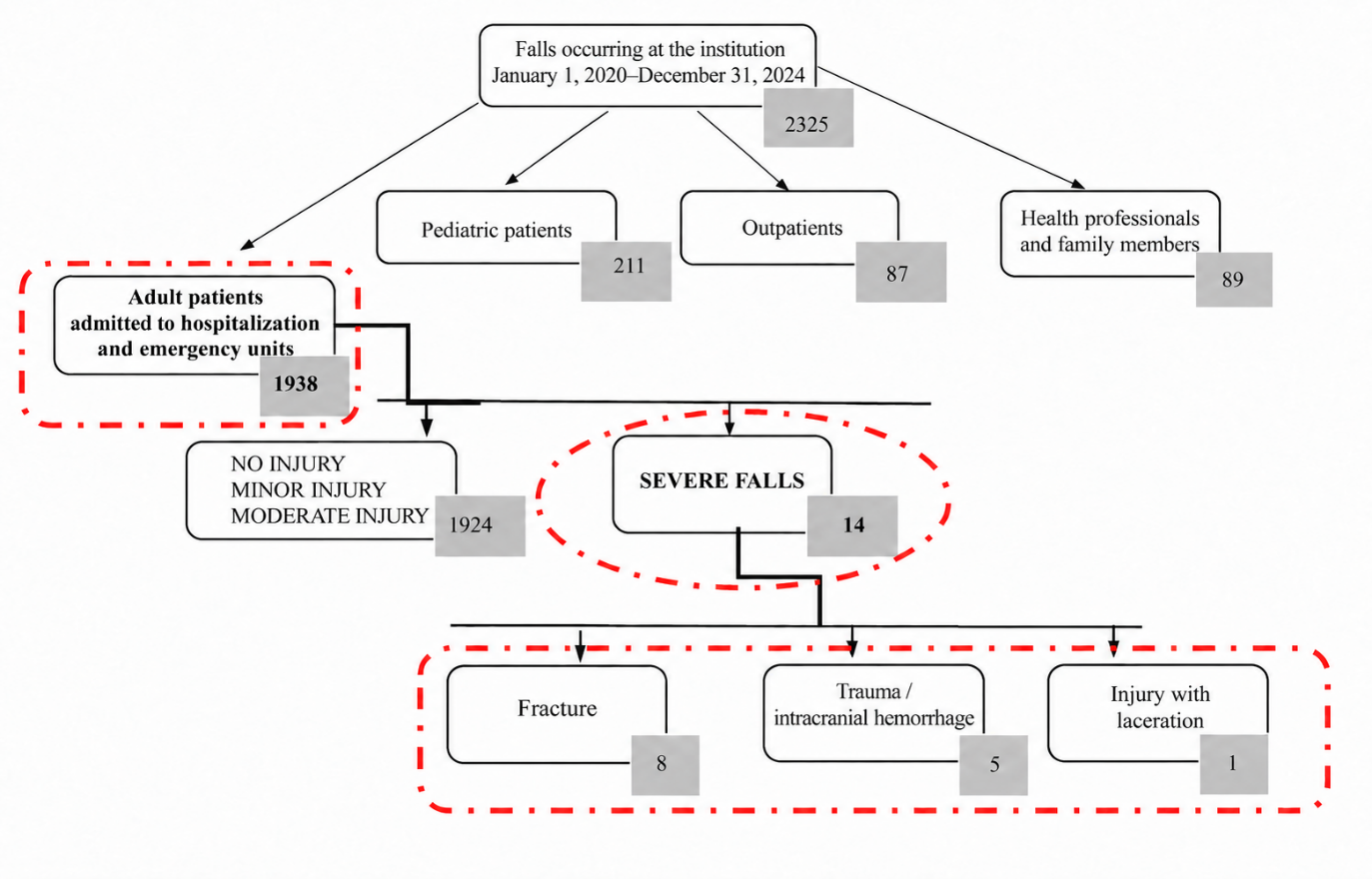
Between January 1, 2020, and December 31, 2024, a total of 2,325 falls were reported at the study hospital, 1,938 of which occurred in adult clinical, surgical, and emergency inpatient units. Among the reported falls, 14 patients who suffered severe falls were identified. Regarding the resulting physical harm, eight patients sustained fractures (57.1%), five suffered traumatic brain injury and/or intracranial hemorrhage (35.7%), and one presented with a skin laceration injury (7.1%). Regarding fractures resulting from the event, four (50.0%) occurred in the lower limbs—three femoral fractures (37.5%) and one transtrochanteric fracture (12.5%)—two involved the face (25.0%), one involved the humerus (12.5%), and one involved the ribs (12.5%). These data are summarized in Figure 1.
Figure 1 – Severe falls and their consequences (n = 14). Porto Alegre, RS, Brazil, 2020-2024
Source: prepared by the authors, 2025.
The sociodemographic and clinical characteristics of the study participants are detailed in Table 1.
Table 1 – Characterization of patients and severe falls (n = 14), Porto Alegre, RS, Brazil, 2020-2024
|
Variables |
|
n |
% |
|
Sex |
Male |
9 |
64.3 |
|
Age group |
15–59 years |
1 |
7.1 |
|
60–74 years |
9 |
64.3 |
|
|
≥ 75 years |
4 |
28.5 |
|
|
Educational level |
Incomplete primary education |
7 |
50.0 |
|
Complete primary education |
2 |
14.3 |
|
|
Secondary education |
5 |
35.7 |
|
|
Higher education |
- |
- |
|
|
Specialty |
Medical clinical |
8 |
57.1 |
|
Surgical |
5 |
35.7 |
|
|
Emergency |
1 |
7.1 |
|
|
Year of fall |
2020 |
4 |
28.6 |
|
2021 |
1 |
7.1 |
|
|
2022 |
3 |
21.4 |
|
|
2023 |
- |
- |
|
|
2024 |
6 |
42.8 |
|
|
Shift of fall occurrence |
Night |
9 |
64.3 |
|
Morning |
4 |
28.6 |
|
|
Afternoon |
1 |
7.1 |
|
|
Harm treatment |
Conservative or no possibility of intervention |
9 |
64.3 |
|
Surgical |
5 |
35.7 |
Source: prepared by the authors, 2025.
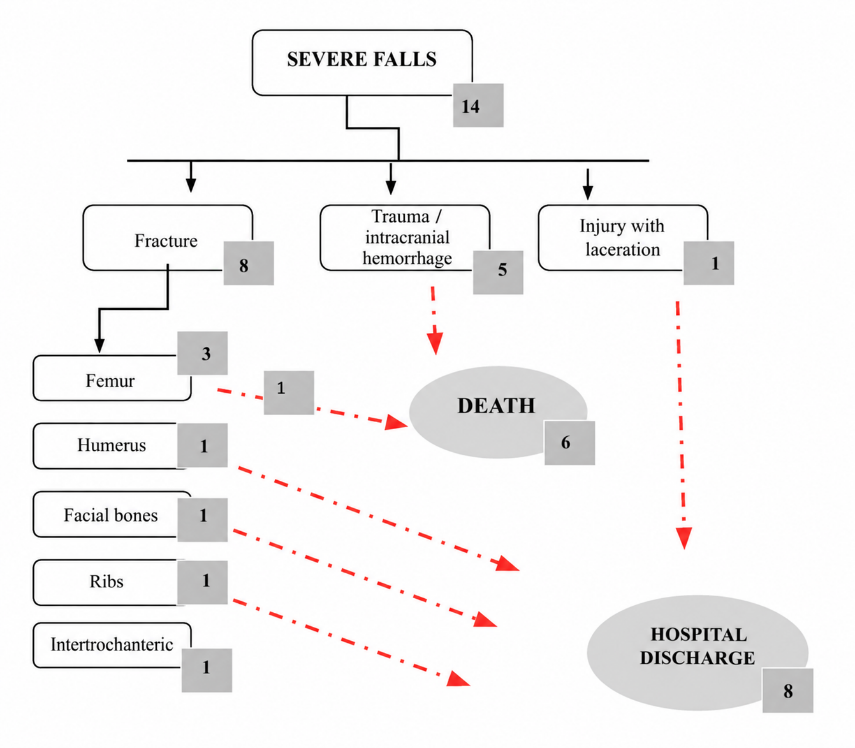
Among the 14 recorded severe falls, six (42.9%) resulted in death. Five of these fatalities stemmed from traumatic brain injury and/or intracranial hemorrhage. The remaining death occurred in a patient with a femoral fracture who, despite having a surgical indication, lacked the clinical stability required to undergo the procedure, ultimately dying due to decompensated comorbidities following the event. These findings are presented in Figure 2.
Figure 2 – Repercussions and outcomes of severe falls (n = 14). Porto Alegre, RS, Brazil, 2020-2024
Source: prepared by the authors, 2025.
In parallel with identifying victims, consequences, and outcomes, a systemic analysis of the reported incidents was conducted using the London Protocol framework, as summarized in Table 2.
Table 2 – Analysis of latent and root causes of the investigated falls (n = 14). Porto Alegre, RS, Brazil, 2020-2024
|
Latent and root causes of analyzed falls |
n |
% |
|
Latent causes: |
|
|
|
Impaired mobility |
14 |
100 |
|
Overestimation of ability |
7 |
50 |
|
Fragile support network |
6 |
42.8 |
|
Unaccompanied at the time of the fall |
6 |
42.8 |
|
Clinical condition |
5 |
35.7 |
|
Mental confusion/agitation/delirium |
4 |
28.5 |
|
Polypharmacy |
4 |
28.5 |
|
Environmental factors |
4 |
28.5 |
|
Previous fall |
2 |
14.2 |
|
Postoperative state |
2 |
14.2 |
|
Unidentified/unsignaled bleeding risk |
1 |
7.1 |
|
Root causes: |
|
|
|
Failure in risk assessment and/or fall risk signaling |
2 |
14.2 |
|
Unaccompanied at the time of the fall |
2 |
14.2 |
|
Absence of bed rails |
2 |
14.2 |
|
Environmental factors |
2 |
14.2 |
|
Mental confusion/agitation/delirium |
1 |
7.1 |
|
Postural hypotension |
1 |
7.1 |
|
Overestimation of ability |
1 |
7.1 |
|
Interprofessional communication failure regarding fall risk |
1 |
7.1 |
|
Failure in providing fall prevention guidance |
1 |
7.1 |
|
Failure to ensure ambulation assistance |
1 |
7.1 |
Source: prepared by the authors, 2025.
During the analysis, certain latent and root causes recurred across multiple adverse events. Furthermore, a single factor could act as a root cause in one occurrence and as a latent cause in another. Among the most frequent latent causes, impaired mobility, a fragile support network, the absence of a companion at the time of the event, and patient overestimation of their own physical ability were prominent. Regarding root causes, failures in fall risk assessment and/or risk signaling, episodes of mental confusion/agitation/delirium, adverse environmental factors, and support network fragility or unaccompanied status were most notable. Based on the diagnosis of severe falls, systemic institutional actions were proposed, as presented in Table 3.
Table 3 – Required resources and systemic actions proposed after the analysis of severe patient falls (n = 14), Porto Alegre, RS, Brazil, 2020-2024
|
Resources |
Systemic actions |
n |
% |
|
Structural |
|
|
|
|
|
Adjustments to building signaling/signage (floor safety lines, anti-slip friction tape, warm yellow lighting, illumination adjustments along patient travel paths) |
4 |
28.5 |
|
|
Adjustments to visual communication |
3 |
21.4 |
|
|
Bedside fall risk signaling |
2 |
14.2 |
|
Educational |
|
|
|
|
|
Alignment/enhancement of training for patients, family members, and healthcare staff |
14 |
100 |
|
|
Educational video for patients and companions |
9 |
64.2 |
|
|
Training on the use of delirium assessment scales |
1 |
7.1 |
|
|
Development of a standard operating procedure (SOP) for night rounds focused on fall prevention |
1 |
7.1 |
|
|
Revision of the institutional fall risk assessment SOP and risk prediction scale |
1 |
7.1 |
|
|
"D-Day" event: Educational reinforcement activity on fall prevention targeting patients and companions |
1 |
7.1 |
|
Managerial |
|
|
|
|
|
Monitoring of proposed actions |
14 |
100 |
|
|
Multidisciplinary rounds for clinical case discussions |
2 |
14.2 |
|
|
Nurse-to-patient staffing ratio and workload review |
2 |
14.2 |
|
|
Revision of bed transfer criteria to keep high-risk patients near the nursing station |
1 |
7.1 |
|
|
Modification of fall risk signaling systems for older adult patients |
1 |
7.1 |
|
|
Coverage of patient transportation/displacement costs |
1 |
7.1 |
|
|
Modification of unit care profiles/operational scope |
1 |
7.1 |
Source: prepared by the authors, 2025.
DISCUSSION
Of the severe fall-related events analyzed, 92.8% occurred in older adult patients. Other studies similarly point to a higher prevalence of falls in this population(20–24). Several latent causes identified in the event analyses—such as impaired mobility, agitation, delirium, previous falls, and polypharmacy—can be exacerbated by advanced age. The aging process is known to be associated with multiple comorbidities, chronic degenerative diseases, reduced functional capacity, and declining mobility(22,25), reinforcing the vulnerability of clinical and older adult patient profiles(20). Furthermore, mental confusion and delirium represent two of the most frequent postoperative complications in older adults(26,27).
Over the investigated period, the year 2024 recorded the highest frequency of severe falls (n = 6). This finding may be related to the presence of multiple comorbidities, increased clinical complexity among patients(20,21), emergency department overcrowding(21), and delayed seeking of healthcare services. It can be inferred that the historic floods experienced in the State of Rio Grande do Sul in 2024 caused delays in accessing healthcare services, worsening patients' health status upon admission.
Regarding the time of occurrence, a higher prevalence of falls was observed during the night shift. At night, reduced care interventions to preserve patient rest, lower nursing staff levels, and dimmed ambient lighting to promote sleep hygiene configure factors that can contribute to fall occurrences(7). However, managerial actions to adjust nurse staffing and team skill mix, combined with structural modifications, can mitigate these vulnerabilities, aligning with literature recommendations on patient safety and fall prevention in hospital settings(2,7). Given these factors, implementing strategies such as "night rounds"—in which the nursing team conducts hourly inspections from midnight to 5:00 AM for high-risk patients (older adults aged 75 years or older, immediate postoperative patients, those classified as high-risk on assessment scales, visually impaired patients, among others)—aims to prevent falls and mitigate potential harm.
Among the causes that directly contributed to the events or proved potentially decisive for future occurrences, patient overestimation of physical ability, failures in fall risk assessment and signaling, interprofessional communication breakdowns regarding risk, and weaknesses in patient education processes were prominent. Nursing staff view health education as a core strategy for reducing inpatient falls(7,10). To this end, educational activities targeting healthcare professionals were conducted to raise awareness about the importance of thorough fall and delirium risk assessments. Additionally, the continuous need to guide patients and companions regarding preventive measures was reinforced to heighten individual risk perception.
The low educational level identified in the sample warrants attention, requiring the use of plain, accessible language when providing guidance to patients and families, complemented by engaging educational tools such as brochures, manuals, and instructional videos. A significant association exists between age 60 years or older, low educational attainment, and a higher incidence of falls(24). Consequently, educational approaches must adapt to the vocabulary of the target audience to ensure effective learning and comprehension(7,28).
In this context, active involvement of the patient and companion in care delivery is indispensable. To achieve this, "Fall Prevention D-Day" was established as a periodic initiative where members of the Multidisciplinary Fall Prevention Committee visit clinical units to interact with high-risk patients, distribute graphic materials, and provide guidance on preventive measures. Additionally, instructional posters featuring QR codes linked to an institutional educational video were posted in care units for consultation by staff, patients, and companions, with nursing team support when needed. These initiatives reinforce the multimodal approach required in fall prevention(5,7).
Although sex is not an isolated structural risk factor for falls, the present study observed a higher frequency of severe events among men (64.3%). Literature presents variable findings regarding this variable: on one hand, osteoporosis and climacteric/menopausal changes—impacting bone mineral density and muscle mass—increase fall occurrence in women(5,20). Women also have longer life expectancy and utilize healthcare services more frequently, increasing their duration of risk exposure(5,20). On the other hand, men tend to present longer average hospital lengths of stay and higher in-hospital mortality rates(5,29). Regardless of sex, fall occurrence is strongly associated with polypharmacy and cumulative comorbidities and should not be viewed as a natural consequence of aging in either sex(30,31).
Regarding harm severity, a high incidence of fractures was observed among patients, consistent with scientific literature(20,30). Fall-induced fractures vary according to the affected bone structure and predominantly require conservative or surgical management. The high frequency of femoral fractures significantly increases mortality rates, particularly in older adults with pre-existing comorbidities, generating substantial burdens for family support networks and healthcare systems. For the patient, this outcome leads to loss of autonomy, fear of falling (ptophobia), and prolonged functional impairment(5,27).
Nevertheless, falls resulting in traumatic brain injury (TBI) and/or intracranial hemorrhage presented the highest lethality, accounting for five of the six recorded deaths. A study analyzing the profile of older trauma victims admitted to Intensive Care Units (ICUs) following falls found that 67.3% sustained TBI, 76.9% of whom developed multiple trauma-related complications, demonstrating a strong association between severe TBI, pulmonary septic shock, hemodialysis support, and mortality(32). Furthermore, due to underlying comorbidities, older patients frequently use anticoagulant and antiplatelet medications, which amplifies the risk of severe bleeding. Beyond systemic consequences, TBI in older adults can accelerate functional decline, induce cognitive deficits, and trigger mood disorders such as anxiety and depression(33).
Globally, falls among older adults represent the second leading cause of unintentional injury mortality(3). Regarding event severity among patients admitted to clinical, surgical, and emergency units, all 14 analyzed cases were classified as severe. Of these, six patients (42.9%) died as a result of the event—an indicator of potentially preventable morbidity and mortality.
The 14 severe events identified in this study are meaningful and demonstrate that investing in primary and secondary prevention creates opportunities for widespread incident reduction. This premise rests on the principle of equivalence in complex systems, which posits that both successful outcomes and adverse events emerge from the same work processes. Thus, critical reflections and improvement opportunities mapped during systemic analyses directly translate into failure mitigation and reduction of high-severity events(34).
Furthermore, learning from care teams how success in prevention is achieved during daily practice is essential, considering each patient's clinical complexity, given that the vast majority of potential events are successfully prevented in routine care. This perspective represents a paradigm shift in applying the London Protocol, aiming to foster a safety culture grounded in continuous learning. Accordingly, the protocol shifts its focus toward proactive identification of clinical risks, intervening before failures manifest. To accomplish this, Resilience Engineering and Human Factors concepts are integrated to comprehensively understand interactions within the work system, involving healthcare workers, physical infrastructure, task nature, and care environment organization(14).
Implementing actions based on identified systemic flaws enables not only the redesign of work processes but also keeps fall prevention visible on the institutional agenda. Planned actions must be articulated with structural modifications, encompassing environmental signage and visual communication, physical environment adjustments, and preventive and corrective building maintenance. Educational approaches represent a powerful strategy to give meaning and relevance to delivered instructions, especially when grounded in active methodologies that foster engagement among staff, patients, and companions, thereby supporting adherence to preventive behaviors(1,9,10).
At the managerial level, proposed actions facilitate continuous monitoring and sustainability of implemented measures, alongside staff engagement through a just culture that responds to worker concerns(5,9,10,35). This approach demonstrates institutional commitment to healthcare quality and patient safety. Learning generated from investigating causes and contributing factors enables continuous improvements across all hospital activities(14).
Additionally, adopting a structured analysis model avoids blaming and individualizing responsibility for adverse outcomes while providing a broader understanding of a process that is frequently evaluated in a fragmented manner. For this reason, action plans should originate directly from the units involved. Frontline workers are recognized as vital to ensuring care quality and safety. Therefore, fostering engagement, empowerment, and enhanced interpersonal relationships in the workplace is essential for consolidating a healthy organizational climate, positively strengthening safety culture and advancing patient-centered care(36–38).
Studies(7,34) evaluating the impact of moderate-to-severe harm falls on healthcare workers and analyzing prevention through the lens of work-as-imagined versus work-as-done—using the Functional Resonance Analysis Method (FRAM), a tool derived from Resilience Engineering—sought to extract learning opportunities from severe events with those involved. This approach rests on the premise that variability and residual uncertainty arise from multiple dynamic interactions across different professionals and hospital departments(39,40). Such dynamics increase work complexity, rendering institutional protocols and guidelines insufficient, on their own, to prevent adverse outcomes, directly affecting clinical practice and collaborative work.
Investing in continuing education for care teams and valuing practical expertise drive the dissemination of safety culture, while motivating staff and aligning them with institutional goals(38,41). Thus, encouraging transparent reporting when processes do not occur as expected is essential, transforming failures into opportunities for collective reflection. Notably, the action triggering a failure is typically executed with the intent to succeed; therefore, it should not evoke shame, judgment, or punishment, but rather serve as a catalyst for teams to review work processes and drive organizational learning(42). In this regard, the updated version of the London Protocol encourages a paradigm shift in its application: rather than focusing exclusively on what went wrong, priority is given to learning from what routinely works well(14).
Study limitations include the potential for underreporting, as incident reporting relies on human factors. Furthermore, incomplete notification forms may introduce inconsistencies or omit relevant data required for in-depth event analysis. Another limitation involves the lack of post-discharge longitudinal follow-up, as patients experiencing falls initially classified as non-severe may be readmitted due to delayed complications without establishing a causal link to the index adverse event.
CONCLUSION
During the study period, 14 severe fall events were identified, predominantly occurring among male patients, in the 60 to 74 age group, during the night shift, and among patients admitted to clinical specialty units. Observed physical injuries included fractures, traumatic brain injury, and laceration injuries. Of the affected patients, six died as a result of the event, and eight were discharged from the hospital.
Identified root causes included: failures in risk assessment, risk signaling, patient and companion education, and interprofessional communication regarding fall risk; support network fragility or absence of a companion; patient overestimation of physical ability; clinical factors (such as mental confusion, agitation, and delirium); and environmental factors or lack of assistance during ambulation and transport. Among latent causes and contributing factors, impaired mobility, history of previous falls, unidentified/unsignaled bleeding risk, postoperative status, polypharmacy, and physical environment inadequacies were prominent.
Implementing a structured methodology with a systemic approach for fall analysis enables organizational learning and fosters the expansion of integrated actions. These actions underscore the need for continuous investment in educational, structural, and managerial resources to address the complexity and multimodal nature of inpatient falls.
Although falls carry a heavy human cost for those involved, measuring their financial impact represents a promising avenue for future research that could support strategic resource allocation for preventive measures. Conducted at a large university hospital catering primarily to Unified Health System (SUS) users, this study provides a replicable model for other healthcare institutions to adopt structured adverse event analysis as a tool to direct interventions, enhance care quality, and improve the patient experience.
CONFLICT OF INTERESTS
The authors declare no conflicts of interest.
FUNDING
This study was conducted with the support of the National Council for Scientific and Technological Development (CNPq) – MCTIC/CNPq 10/2023, Grant No. 404041/2023-0; and the Coordination for the Improvement of Higher Education Personnel – Brazil (CAPES), Funding Code 001.
USE OF ARTIFICIAL INTELLIGENCE
During the preparation of this work, the authors used the Gemini® artificial intelligence tool exclusively to improve the grammatical aspects, fluency, and clarity of the text. It is noteworthy that the use of this technology did not interfere with the development of the arguments, interpretation of the results, or conclusions presented. The final version was carefully reviewed and validated by the authors, who assume full responsibility for the integrity of the content, the accuracy of the data, the analyses performed, and strict compliance with the ethical and scientific principles of academic research.
REFERENCES
1. Heng H, Kiegaldie D, Shaw L, Jazayeri D, Hill AM, Morris ME. Implementing patient falls education in hospitals: a mixed-methods trial. Healthcare (Basel). 2022;10(7):1298. https://doi.org/10.3390/healthcare10071298. PMID: 35885823.
2. Morris ME, Webster K, Jones C, Hill AM, Haines T, McPhail S, et al. Interventions to reduce falls in hospitals: a systematic review and meta-analysis. Age Ageing. 2022;51(5):1-12. https://doi.org/10.1093/ageing/afac077. PMID: 35524748.
3. Liang XZ, Chai JL, Li GZ, Li W, Zhang BC, Zhou ZQ, et al. A fall risk prediction model based on the CHARLS database for older individuals in China. BMC Geriatr. 2025 Mar 13;25(1):170. https://doi.org/10.1186/s12877-025-05814-y. PMID: 40082807.
4. World Health Organization. Step Safety: strategies for preventing and managing falls across the life-course [Internet]. Geneva: WHO; 2021 [cited 2025 May 28]. Available from: https://iris.who.int/bitstream/handle/10665/340962/9789240021914-eng.pdf?sequence=1
5. Lima J da S, Quadros DV, Silva SLC da, Tavares JP, Dal Pai D. Custos das autorizações de internação hospitalar por quedas de idosos no Sistema Único de Saúde, Brasil, 2000-2020: um estudo descritivo. Epidemiol Serv Saúde. 2022;31(1):1-12. https://doi.org/10.1590/S1679-49742022000100012. PMID: 35588512.
6. Dykes PC, Curtin-Bowen M, Lipsitz S, Franz C, Adelman J, Adkison L, et al. Cost of inpatient falls and cost-benefit analysis of implementation of an evidence-based fall prevention program. JAMA Health Forum. 2023;4(1):e225125 https://doi.org/10.1001/jamahealthforum.2022.5125. PMID: 36662505.
7. Quadros DV, Magalhães AMM, Wachs P, Severo IM, Tavares JP, Dal Pai D. Modeling of adult patient falls and the repercussions to Nursing as a second victim. Rev Lat Am Enfermagem. 2022;30:e3617. https://doi.org/10.1590/1518-8345.5830.3617. PMID: 35920541.
8. Agência Nacional de Vigilância Sanitária (BR). Relatório de incidentes e eventos adversos não infecciosos relacionados à assistência à saúde: Brasil, 2014–2021 [Internet]. Brasília: ANVISA; 2022 [cited 2025 May 15]. Available from: https://www.gov.br/anvisa/pt-br/assuntos/servicosdesaude/notificacoes/notificacao-de-incidentes-eventos-adversos-nao-infecciosos-relacionados-a-assistencia-a-saude/relatorios-de-incidentes-eventos-adversos-relacionados-a-assistencia-a-saude/BR_2014__2021_1.pdf
9. Ximenes MAM, Brandão MGSA, Macêdo TS, Costa MMF, Galindo NM, Caetano JÁ, et al. Efetividade de tecnologia educacional para prevenção de quedas em ambiente hospitalar. Acta Paul Enferm. 2022;35:eAPE003765. https://doi.org/10.37689/acta-ape/2022AO01372
10. Quadros DV, Magalhães AMM, Lopes EFS, Lima JS, Boufleuer E, Dal Pai D. Prevenção de quedas na hospitalização: oportunidades educativas na perspectiva dos trabalhadores de enfermagem. Rev Enferm UFSM. 2024;14:e3. https://doi.org/10.5902/2179769284145
11. Vincent C, Taylor-Adams S, Chapman EJ, Hewett D, Prior S, Strange P, et al. How to investigate and analyse clinical incidents: clinical risk unit and association of litigation and risk management protocol. BMJ. 2000;320(7237):777-81. https://doi.org/10.1136/bmj.320.7237.777. PMID: 10720366.
12. Taylor-Adams S, Vincent C. Systems analysis of clinical incidents: the London protocol. Clin Risk. 2004;10(6):211-20. https://doi.org/10.1258/1356262042368255
13. Reason J. Human error. Cambridge: Cambridge University Press; 1990.
14. Vincent C, Adams S, Bellandi T, Michel P, Staines A. Systems analysis of clinical incidents: The London Protocol. [place unknown: publisher unknown]; 2024 [cited 2025 May 28]. 48 p. Available from: https://fhv.ch/wp-content/uploads/2024/09/the-london-protocol_september-2024.pdf
15. Giaquinto BCD, Oliveira CMC, Costa CCA, Barros KGD, Manzo BF, Corrêa AR. Accidents from falls among hospitalized patients in Emergency Units: a multicenter study. Rev Bras Enferm. 2026;79:e20240320. https://doi.org/10.1590/0034-7167-2024-0320. PMID: 41919812.
16. Ghosh M, O’Connell B, Afrifa-Yamoah E, Kitchen S, Coventry L. A retrospective cohort study of factors associated with severity of falls in hospital patients. Sci Rep. 2022;12:12266. https://doi.org/10.1038/s41598-022-16403-z. PMID: 35851400.
17. Von Elm E, Altman DG, Egger M, Pocock SJ, Gøtzsche PC, Vandenbroucke JP. The strengthening the reporting of observational studies in epidemiology (STROBE) statement: guidelines for reporting observational studies. J Clin Epidemiol. 2008 Apr;61(4):344-9. https://doi.org/10.1136/bmj.39335.541782.AD. PMID: 17947786.
18. Joint Commission International [Internet]. Oakbrook Terrace (IL): Joint Commission International; c2025 [cited 2025 May 15]. Available from: https://www.jointcommissioninternational.org/resources/news/2024/07/jci-publishes-8th-edition-of-international-accreditation-standards/
19. Runciman W, Hibbert P, Thomson R, Van Der Schaaf T, Sherman H, Lewalle P. Towards an international classification for patient safety: key concepts and terms. Int J Qual Health Care. 2009;21(1):18-26. https://doi.org/10.1093/intqhc/mzn057. PMID: 19147597.
20. García-Hedrera FJ, Noguera-Quijada C, Sanz-Márquez s, Pérez-Fernández E, Acevedo-García M, Dominguéz-Rincón R, et al. Incidence and characteristics of falls in hospitalized patients: a cohort study. Enferm Clín (Engl Ed). 2021;31(6):381–9. https://doi.org/10.1016/j.enfcle.2021.04.003. PMID: 34674988.
21. Hamilton MP, Bellolio F, Jeffery MM, Bower SM, Palmer AK, Tung EE, et al. Risk of falls is associated with 30-day mortality among older adults in the emergency department. Am J Emerg Med. 2024;79:122-6. https://doi:10.1016/j.ajem.2024.02.020. PMID: 38422753.
22. Silvestre FMM, Entradas CACN. Fatores relacionados com a incidência de quedas em contexto hospitalar: uma revisão de literatura. REASE. 2025;11(2):1-9. https://doi.org/10.51891/rease.v11i2.18112
23. Dornelles C, Aguiar JRV, Bonati MM, Prado ARA. Caídas en el entorno hospitalario entre 2009 y 2019: una revisión integradora. Rev Urug Enferm. 2022;17(1):e2022v17n1a11. https://doi.org/10.33517/rue2022v17n1a11
24. Maruszewska A, Ambroży T, Rydzik Ł. Risk factors and socioeconomic determinants of falls among older adults. Front Public Health. 2025;13:1571312. https://doi.org/10.3389/fpubh.2025.1571312. PMID: 40182529.
25. Lin XZ, Meng RL, Peng DD, Li C, Zheng X Y, Xu HF, et al. Cross-sectional study on prevalence and risk factors for falls among the elderly in communities of Guangdong province, China. BMJ Open. 2022;12(11):e062257. https://doi.org/10.1136/bmjopen-2022-062257. PMID: 36375979.
26. Jin Z, Hu J, Ma D. Postoperative delirium: perioperative assessment, risk reduction, and management. Br J Anaesth. 2020;125(4):492–504. https://doi.org/10.1016/j.bja.2020.06.063. PMID: 32798069.
27. Toneto MAS, Mendes PC, Araújo SA. Characterization of the occurrence of fractures in the elderly: an epidemiological study in a public hospital. Cogit Enferm. 2024;29:e94209. https://doi.org/10.1590/ce.v29i0.94209
28. Locklear T, Kontos J, Brock CA, Holland AB, Hemsath R, Deal A, et al. Inpatient falls: epidemiology, risk assessment, and prevention measures. A narrative review. HCA Healthc J Med. 2024;5(5):517-25. https://doi.org/10.36518/2689-0216.1982. PMID: 39524960.
29. Abreu DROM, Novaes ES, Oliveira RR, Mathias TAF, Marcon SS. Internação e mortalidade por quedas em idosos no Brasil: análise de tendência. Cien Saude Colet. 2018;23(4):1131–41. https://doi.org/10.1590/1413-81232018234.09962016. PMID: 29694573.
30. Montero-Odasso M, Van Der Velde N, Martin FC, Petrovic M, Tan MP, Ryg J, et al. World guidelines for falls prevention and management for older adults: a global initiative. Age Ageing. 2022;51(9):afac205. https://doi.org/10.1093/ageing/afac205. PMID: 36178003.
31. André CU, Carvalho MV, organizadores. Cartilha de segurança da pessoa idosa [Internet]. Brasília: CONASS; 2025 [cited 2025 May 18]. 31p. Available from: https://www.conass.org.br/biblioteca/seguranca-da-pessoa-idosa/
32. Nunes RDQ, Siqueira NR, França SC, Rocha MF, Prado RL, Bessa PRF, et al. Cirurgia de emergência para traumatismo cranioencefálico em pacientes geriátricos. Rev CPAQV. 2024;16(1):1-10. https://doi.org/10.36692/V16N1-61
33. Gerber K, Iriarte E, Sierra CJ. Multidimensional frailty and traumatic brain injury among older adults: a literature review. Invest Educ Enferm. 2023;41(2):e02. https://doi.org/10.17533/udea.iee.v41n2e02. PMID: 38589320.
34. Quadros DV, Wachs P, Magalhães AMM, Severo IM, Tavares JP, Dal Pai D. Daily work variability in falls prevention of hospitalized patients: nursing team’s perception. BMC Health Serv Res. 2023;23(1):931. https://doi.org/10.1186/s12913-023-09956-w. PMID: 37653512.
35. Vanderloo MJ, Evans E, Smith A, Call M, Locke A, Wright H, et al. Exploration of nurses’ experiences related to moral injury: a reflexive thematic analysis of nurse interviews. J Adv Nurs. 2025;81(10):6843-54. https://doi.org/10.1111/jan.16856. PMID: 40008669.
36. Wei H, Sewell KA, Woody G, Rose MA. The state of the science of nurse work environments in the United States: a systematic review. Int J Nurs Sci. 2018;5(3):287–300. https://doi.org/10.1016/j.ijnss.2018.04.010. PMID: 31406839.
37. Peduzzi M, Agreli HLF, Silva JAM, Koyama MAH, Fracolli LA, Xyrichis A. Team climate and patients’ perception of primary healthcare attributes in Brazil: a cross-sectional study. J Interprof Care. 2024 Jul-Aug;38(4):705–12. https://doi.org/10.1080/13561820.2024.2351006. PMID: 38755950.
38. Istrate MI, Forray AI, Ungureanu MI, Mira JJ, Constantinescu SA, Cherecheș RM. Assessing safety culture and second victim experience following adverse events among Romanian nurses: a cross-sectional study. BMC Nurs. 2025 Jan 28;24(1):102. https://doi.org/10.1186/s12912-025-02745-2. PMID: 39875993.
39. Nason R. Challenges of implementing complexity in healthcare. Healthc Manage Forum. 2023 Nov;36(6):368-72. https://doi.org/10.1177/08404704231191956. PMID: 37544743.
40. Wright M. A need for systems thinking and the application of (complexity) science in healthcare. Future Healthc J. 2024;11(4):100185. https://doi.org/10.1016/j.fhj.2024.100185. PMID: 39346936.
41. Tate K, Penconek T, Dias BM, Cummings GG, Bernardes A. Authentic leadership, organizational culture and the effects of hospital quality management practices on quality of care and patient satisfaction. J Adv Nurs. 2023;79(8):3102–14. https://doi.org/10.1111/jan.15663. PMID: 37002558.
42. Wu AW, Kachalia AB. Creating a “just culture”: More work to be done. J Patient Saf Risk Manag. 2023;28(2):56–8. https://doi.org/10.1177/25160435231168152
Submission: 26-Mar-2026
Approved: 15-Jul-2026
Editors:
Rosimere Ferreira Santana (ORCID: 0000-0002-4593-3715)
Geilsa Soraia Cavalcanti Valente (ORCID: 0000-0003-4488-4912)
Katerine Moraes dos Santos (ORCID: 0000-0002-2064-5207)
Corresponding author: Deise Vacario de Quadros (deisevquadros@gmail.com)
Publisher:
Escola de Enfermagem Aurora de Afonso Costa – UFF
Rua Dr. Celestino, 74 – Centro, CEP: 24020-091 – Niterói, RJ, Brazil
Journal email: objn.cme@id.uff.br
|
AUTHOR CONTRIBUTIONS |
|
Study conception: Quadros DV and Magalhães AMM. Data acquisition: Quadros DV. Data analysis: Quadros DV and Magalhães AMM. Data interpretation: Quadros DV, Severo IM, Pasa TS, Lima JS, Berlanda G and Magalhães AMM. All authors are responsible for the writing and critical review of the intellectual content, the final published version, and all ethical, legal, and scientific aspects related to the accuracy and integrity of the study. |
