
ORIGINAL ARTICLE
PREVENTION AND MANAGEMENT OF POSTPARTUM HEMORRHAGE: PRACTICES OF NURSES IN OBSTETRIC CARE
Igor Matheus Nascimento Barbosa1, Ana Leticia Soares Valdivino2, Izabel Lorrane Alves da Silva3, Luciana da Rocha Cabral4, Ana Márcia Nóbrega Dantas5
1 UniFacisa – University Center. Campina Grande, PB, Brazil. ORCID: 0000-0002-1799-3585. E-mail: igormatheusenfermeiro@gmail.com.
2 UniFacisa - University Center. Campina Grande, PB, Brazil. ORCID: 0000-0003-1824-1024. E-mail: enf.leticia.valdivino@gmail.com.
3 University of Pernambuco. Ouricuri, PE, Brazil. ORCID: 0009-0001-0415-6809. E-mail: izabel.lasilva@upe.br.
4 University of Pernambuco. Ouricuri, PE, Brazil. ORCID: 0000-0002-6396-3897. E-mail: luciana.rcabral@upe.br.
5 University of Pernambuco. Associated Graduate Program in Nursing UPE/UEPB. Ouricuri, PE, Brazil. ORCID: 0000-0001-5729-8512. E-mail: anamarcia.dantas@upe.br
ABSTRACT
Objective: To describe the practices of nurses working in obstetric care related to the prevention and management of postpartum hemorrhage (PPH) in a public maternity hospital. Method: A descriptive field study with a qualitative approach conducted with 12 nurses working in different care sectors of a public maternity hospital. Results: Three thematic categories were identified: i) nurses’ knowledge regarding the identification of PPH; ii) strategies for the prevention, intervention, and monitoring of PPH; and iii) challenges faced by professionals when managing this postpartum emergency. Conclusion: The findings demonstrate that some nurses possess knowledge and practices consistent with care protocols. However, weaknesses were observed regarding the monitoring of blood loss and the performance of uterine massage.
Descriptors: Postpartum Hemorrhage; Obstetric Nursing; Women’s Health; Nursing Care; Obstetrics.
|
How to cite: Barbosa IMN, Valdivino ALS, Silva ILA, Cabral LR, Dantas AMN. Prevention and management of postpartum hemorrhage: practices of nurses in obstetric care. Online Braz J Nurs. 2026;25(1):e20266940. http://doi.org/10.17665/1676-4285.20266940 |
What is already known:
Postpartum hemorrhage is the leading cause of maternal mortality worldwide and can be prevented through early identification and timely management.
Nurses play a key role in monitoring bleeding, managing the third stage of labor, and implementing clinical care protocols.
Gaps remain in blood loss monitoring and adherence to essential interventions, such as uterine massage.
What this article adds:
It highlights weaknesses related to blood loss assessment and the performance of uterine massage in the management of postpartum hemorrhage.
It reveals differences in professional confidence among nurses with varying levels of experience and involvement in childbirth care.
It underscores the need for ongoing training to improve the management of postpartum emergencies.
INTRODUCTION
Postpartum hemorrhage (PPH), defined as blood loss of 500 mL or more following vaginal delivery, 1,000 mL or more following cesarean delivery, or any blood loss capable of causing hemodynamic instability during the postpartum period, remains the leading cause of maternal death worldwide(1). Despite advances in prevention and management strategies, this condition continues to be responsible for the deaths of thousands of women every year. It is a preventable, potentially treatable condition when identified early and managed appropriately(1).
Maternal mortality is defined as the death of a woman during pregnancy or within 42 days after the end of pregnancy, regardless of the duration or site of the pregnancy(2). In addition to PPH, conditions such as hypertension and puerperal infections contribute substantially to maternal morbidity and mortality, particularly in low-income countries where access to obstetric care remains limited(3).
The World Health Organization estimates that approximately 92% of maternal deaths occur in low- and lower-middle-income countries(4). In Brazil, data from the Ministry of Health’s Maternal Mortality Monitoring Dashboard showed that PPH was the direct obstetric cause of death in 149 postpartum women in 2024(5).
Reducing maternal mortality requires ongoing efforts aimed at improving the quality of obstetric care. These include strengthening health care infrastructure, increasing investments in the health sector, and training health professionals in the prevention, early diagnosis, and appropriate management of obstetric emergencies(6-7).
The severity of PPH is related to its rapid clinical progression, making early recognition essential for reducing severe maternal outcomes(8). In this context, the concept of the golden hour in PPH management is particularly important. Clinical protocols recommend that identification of the cause of bleeding, based on the 4Ts mnemonic, and hemodynamic stabilization should occur simultaneously within the first 60 minutes after diagnosis(8-9). Therefore, nurses must be proficient in institutional protocols and confident in delivering appropriate care(9-10).
During labor, childbirth, and the postpartum period, nurses must be able to recognize clinical changes associated with blood loss, including signs of hemodynamic instability and impaired gas exchange(11). Understanding the care practices adopted by these professionals in the management of PPH may contribute to the planning of continuing education initiatives and the improvement of obstetric care. Furthermore, it may support the achievement of Sustainable Development Goal 3.1, which aims to reduce the global maternal mortality ratio to fewer than 70 deaths per 100,000 live births by 2030(3,12).
It is important to understand the practices adopted by nurses in the prevention and management of PPH, ranging from preventive measures to interventions performed during obstetric emergencies. Accordingly, the following guiding question was formulated: What are the practices of nurses working in obstetric care regarding the prevention and management of PPH?
Therefore, the aim of this study was to describe the practices of nurses working in obstetric care related to the prevention and management of PPH in a public maternity hospital.
METHOD
This was a descriptive study with a qualitative approach, conducted in accordance with the COnsolidated criteria for REporting Qualitative research(13).
The study was carried out in a public maternity hospital located in the state of Paraíba, Brazil. The institution comprises a normal birth center, triage unit, delivery room, neonatal intensive care unit (ICU), high-risk ward, maternal ICU, rooming-in unit, and obstetric unit.
A total of 12 nurses working in six sectors of the maternity hospital participated in the study. Data collection was concluded upon reaching data saturation, which was identified when participants’ statements began to show repetition of information without the addition of new elements relevant to the phenomenon under investigation.
Eligible participants were nurses who had worked at the institution for at least 1 year and held a specialization in obstetric nursing, women’s health, a residency in the field, or a lato sensu postgraduate degree in Nursing. Professionals who discontinued their participation during the interview or were on vacation during the data collection period were excluded.
The study was conducted by an undergraduate nursing student under the supervision of a PhD professor. Before data collection, the researcher received training in interviewing techniques and qualitative research methods to ensure methodological rigor. There was no prior relationship between the researcher and the participants. Contact occurred exclusively during the invitation to participate in the study and the interview process.
Participants were selected through convenience sampling. Initially, the researcher obtained access to the nurses’ work schedules. Individual approaches were then conducted during work shifts to explain the study objectives, methodological procedures, and ethical considerations.
Before the interviews, participants received information about the study objectives and the need to conduct the interview in a private setting to ensure confidentiality and privacy. Only the researcher and the participant remained in the room. Permission was also requested to record the interviews using an electronic audio device. After obtaining consent, participants received a copy of the Informed Consent Form (ICF), while the signed copy was retained by the principal researcher.
Data collection took place in September 2023 at the participants’ workplace during their work shifts. A semi-structured interview guide was used, including questions related to participants’ professional characteristics, such as years since graduation, sex, age, and specialization, as well as questions addressing the study topic. A pilot test was conducted beforehand to assess the adequacy of the questions and identify any necessary adjustments to the interview guide.
The interview guide included the following guiding questions: How do you identify a postpartum woman with PPH? What is the best strategy for monitoring postpartum blood loss? What strategies do you use to prevent or reduce PPH? How do you identify uterine atony? What should be included in a hospital kit for PPH management? What strategies do you use in the treatment of PPH? Do you encounter difficulties when managing postpartum emergencies? If so, what are they? Do you use any protocol for PPH prophylaxis? If so, which ones?
The interviews lasted between 6 and 13 minutes. Data collection ended after reaching data saturation, characterized by the recurrence of information and the absence of new elements relevant to the phenomenon under investigation(11). No repeat interviews were conducted. To preserve anonymity, participants were identified by a numerical code represented by the abbreviation “Nurse” followed by the corresponding interview number.
Interviews were transcribed verbatim to create the textual corpus. The IRaMuTeQ® software was used for data organization and initial processing through lexical analysis of textual forms. At this stage, a word cloud was generated to graphically identify the most frequently occurring terms in participants’ statements.
Subsequently, data were subjected to Bardin’s thematic content analysis, following the stages of pre-analysis, material exploration, and treatment of results, culminating in the definition of the final thematic categories(14-15).
The study complied with the ethical and legal principles established by Resolution No. 466/12. Data collection was conducted after approval by the Human Research Ethics Committee of the Centro de Ensino Superior e Desenvolvimento under CAAE No. 69297623.0.0000.5175. All participants signed the ICF before the interviews were conducted.
RESULTADOS
A total of 12 nurses working in a public maternity hospital participated in this study. The investigation focused on practices related to the prevention and management of PPH.
Data were organized according to participants’ demographic and professional characteristics, including identification code, age, sex, years since graduation, specialization, and work sector (Table 1).
Table 1 – Characteristics of the nurses who participated in the study at a public maternity hospital (n = 12). Campina Grande, PB, Brazil, 2023
|
ID |
Age |
Sex |
Time since graduation |
Work sector |
Specialization |
|
Nurse_1 |
32 years |
Female |
10 years |
NBC |
Obstetric Nursing |
|
Nurse_2 |
24 years |
Male |
2 years |
NBC |
Obstetric Nursing Resident |
|
Nurse_3 |
31 years |
Female |
9 years |
NBC |
Obstetric Nursing |
|
Nurse_4 |
35 years |
Female |
4 years |
Triage |
Emergency and Critical Care Nursing |
|
Nurse_5 |
30 years |
Female |
5 years |
Neonatal ICU |
Aesthetic and Dermatologic Nursing |
|
Nurse_6 |
41 years |
Female |
12 years |
High-risk unit |
Obstetric and Neonatal Nursing |
|
Nurse_7 |
26 years |
Female |
4 years |
High-risk unit |
Emergency and Critical Care Nursing |
|
Nurse_8 |
61 years |
Female |
37 years |
High-risk unit |
Obstetric Nursing |
|
Nurse_9 |
39 years |
Female |
3 years |
Delivery room |
Emergency and Critical Care Nursing |
|
Nurse_10 |
48 years |
Female |
8 years |
Delivery room |
Women’s Health |
|
Nurse_11 |
31 years |
Female |
6 years |
Delivery room |
Public Health |
|
Nurse_12 |
32 years |
Female |
2 years |
Maternal ICU |
Obstetric Nursing |
ICU: intensive care unit; NBC: normal birth center.
Source: prepared by the authors, 2023.
For this study, three thematic categories were developed: (i) nurses’ knowledge regarding the identification of PPH; (ii) strategies for the prevention, intervention, and monitoring of PPH; and (iii) difficulties faced by nurses when managing postpartum emergencies.
Nurses’ knowledge regarding the identification of postpartum hemorrhage
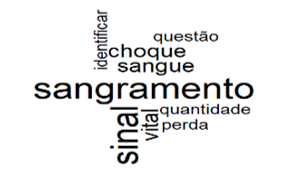
Regarding the identification of PPH, most participants (n = 7) reported relying primarily on the observation of visible bleeding. In contrast, some nurses (n = 5) described a more comprehensive assessment, including hemodynamic parameters and calculation of the shock index, as illustrated in the following statements:
Through the bleeding. (Nurse_7)
I only check for the presence of vaginal bleeding. (Nurse_9)
Source: prepared by the authors.
Figure 1 – Word cloud representing the methods used by nurses participating in the study to identify postpartum hemorrhage at Maternidade Elpídio de Almeida (n = 12). Campina Grande, PB, Brazil, 2023
Analysis of Figure 1 shows the predominance of the term “bleeding” in participants’ statements, reinforcing its central role in the identification of PPH.
The remaining nurses reported combining clinical assessment with hemodynamic monitoring for the early identification of PPH:
Here, we assess the vital signs. As soon as the woman gives birth, we begin calculating the shock index, which involves four measurements of blood pressure divided by heart rate and respiratory rate, followed by the complete shock calculation. So that is our first sign. Then we assess uterine tone to determine whether the uterus is contracted and also evaluate blood loss. (Nurse_1)
First, we assess her vital signs. We calculate the shock index using systolic blood pressure and heart rate. I pay attention to clinical signs, such as pallor, episodes of fainting, and also the amount of blood and volume of fluid lost. All of these factors must be evaluated. (Nurse_3)
Main strategies for the prevention, intervention, and monitoring of postpartum hemorrhage
Regarding prevention strategies, some participants reported using institutional protocols and Ministry of Health recommendations as the basis for care:
The Ministry of Health, in partnership with the Pan American Health Organization, launched the Zero Maternal Deaths from Hemorrhage strategy. It recommends active management of the third stage of labor, including early skin-to-skin contact, encouragement of breastfeeding, controlled cord traction, and prophylactic administration of oxytocin immediately after birth. Therefore, in clinical practice, we always seek to implement active management. (Nurse_2)
With regard to blood loss monitoring, clinical assessment and visual estimation predominated. Some nurses reported abandoning objective measurement methods in favor of practical experience:
The best strategies for monitoring blood loss are the woman’s vital signs and clinical signs because sometimes a woman can deteriorate even with what appears to be a small volume of blood loss. However, if her clinical signs and vital signs become unstable, we initiate a protocol. We do not assess towels or pads; we rely on visual estimation. (Nurse_3)
When I first graduated, I used the diaper-weighing method frequently, but over time I started relying only on visual assessment because it is faster and also effective. (Nurse_8)
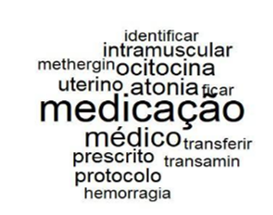
Regarding interventions, participants reported using clinical protocols, investigating the cause of PPH, particularly uterine atony, and implementing pharmacological management with oxytocin, tranexamic acid, and methylergometrine.
Source: prepared by the authors, 2023.
Figure 2 – Word cloud representing the main interventions performed by nurses participating in the study at Maternidade Elpídio de Almeida (n = 12). Campina Grande, PB, Brazil, 2023
Analysis of Figure 2 reinforces these findings, with particular emphasis on the term “medication.” This result highlights the central role of pharmacological management in participants’ statements, especially through the use of oxytocin and other uterotonic agents.
Difficulties faced by nurses in managing postpartum emergencies
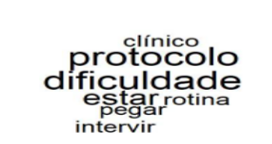
Regarding difficulties in managing PPH, the reports suggested an association between professional confidence, years of experience, and area of practice. Nurses without previous experience in obstetric emergencies or without specialized training in the field reported limitations related to clinical reasoning, decision-making, and the practical application of institutional protocols, as illustrated in the following statements:
During my first experience, I had difficulties. However, the experience gained through residency training gave me greater confidence in management. I think the main challenge is clinical reasoning, diagnosis, and intervention. We know that the Brazilian health care system faces difficulties in providing materials and medications. One thing I noticed was the difficulty some professionals on my team have in identifying flowcharts and applying them in practice. Some do what they think is best, while others follow the protocol. As a result, nursing practice becomes confusing because it is unclear whether the protocol or the specialist’s judgment would be better for the patient. However, it is known that the protocol is safer and more appropriate. (Nurse_2)
Since I have never witnessed a case, I would say yes, mainly because I am not an obstetric nurse. I do not know how to intervene in the same way that a specialist in the field would. I believe I need to study the topic further. (Nurse_9)
Yes, I do – every aspect of it! I need to study the subject more. (Nurse_5)
Source: prepared by the authors, 2023.
Figure 3 – Word cloud representing the main difficulties faced by nurses participating in the study at Maternidade Elpídio de Almeida (n = 12). Campina Grande, PB, Brazil, 2023
Analysis of Figure 3 reinforces these findings, particularly through the prominence of the terms “protocol,” “difficulty,” and “intervene.” The term “routine” also appeared frequently in participants’ statements.
In contrast, nurses routinely involved in childbirth care reported greater confidence in clinical management and greater familiarity with institutional protocols:
I do not have difficulties because it is part of my routine, and experience comes with practice. (Nurse_10)
No. Since it is part of our routine, the institution’s protocol is always followed, and training on the topic helps us gain practical experience in management. (Nurse_11)
DISCUSSION
The findings of this study demonstrate that nurses’ knowledge and confidence in the management of PPH are associated with professional training and clinical experience. The identification of PPH was found to remain strongly based on visual estimation of bleeding, a practice that may compromise the early recognition of postpartum clinical instability.
Nursing plays a fundamental role in caring for women throughout the pregnancy-postpartum cycle. In this context, nurses must be able to differentiate physiological blood loss from hemorrhagic conditions associated with maternal risk as well as recognize risk factors, prevent complications, and appropriately manage PPH(16).
Regarding prevention and intervention strategies, the prominence of the term “medication” in participants’ statements highlights the central role of pharmacological management, particularly through the use of oxytocin, tranexamic acid, and methylergometrine.
However, participants’ reports revealed a predominance of visual estimation as the method for assessing blood loss. This finding deserves attention, as the literature discourages the isolated use of this method because of the potential for underestimating blood loss volume(9). Nurse_8, despite having 37 years of professional experience and working in a high-risk care unit, reported relying exclusively on visual assessment (Table 1). This result demonstrates that practical experience is not necessarily associated with the use of objective monitoring methods.
Studies indicate that underestimation of blood loss may delay the recognition of PPH and the initiation of therapeutic interventions(9). Therefore, systematic collection of clinical data and physical examination are essential for the early identification of PPH and the determination of appropriate management. Furthermore, risk factors for PPH should be identified beginning in the prenatal period(17-18).
The prevention of PPH should begin during pregnancy through the identification of risk factors, treatment of gestational anemia, and review of medications associated with blood dyscrasias(17).
The difficulties reported by participants, represented by the terms “protocol,” “difficulty,” and “intervene,” demonstrate limitations related to the practical application of clinical protocols. Data presented in Table 1 show that professionals without specialization in obstetrics, such as Nurse_5 and Nurse_9, reported insecurity when faced with postpartum emergencies. In contrast, nurses routinely involved in childbirth care reported greater mastery of institutional protocols and greater confidence in clinical management.
This disparity suggests not only an individual knowledge gap but also an institutional weakness, indicating that the service may lack formal onboarding training programs or mandatory continuing education updates.
These findings highlight the need to strengthen institutional strategies for professional training. The literature emphasizes that simulation-based training contributes to the development of clinical reasoning, decision-making, and the execution of active management of the third stage of labor(19-20).
From this perspective, the Pan American Health Organization guidelines recommend active management of the third stage of labor, including delayed umbilical cord clamping between 3 and 5 minutes after birth, skin-to-skin contact, universal PPH prophylaxis with a uterotonic agent (preferably oxytocin), controlled cord traction, and periodic assessment of uterine tone during the first 2 hours after delivery(9).
To investigate the causes of PPH, the “4Ts Rule” is commonly used: tone, trauma, tissue, and thrombin. This tool enables a systematic assessment of PPH, with uterine atony being the most common cause, followed by trauma, retained tissue, and coagulopathies(10). In such cases, early recognition of altered uterine tone should immediately trigger interventions such as uterine massage and administration of uterotonic agents, particularly during the “golden hour”(10).
In this context, nurses must correlate vital signs, shock index, and pulse rate while also rapidly recognizing signs suggestive of uterine atony, the leading cause of PPH. Control of the hemorrhagic source should ideally occur within the first hour after PPH is identified(9).
According to clinical protocols, uterine massage is one of the main interventions in the initial management of uterine atony and may be performed by health professionals, including nurses(9). However, the results of this study revealed limited emphasis on this intervention in participants’ statements. Similar findings were reported in an integrative literature review, which described nurses’ difficulties in performing this procedure and highlighted the need to strengthen continuing education initiatives as well as to reinforce the importance of basic postpartum care, such as monitoring vital signs and assessing uterine involution(21).
In addition to evaluating uterine tone, it is also necessary to investigate potential traumatic causes of PPH, including lacerations, hematomas, uterine rupture, and uterine inversion(9). In this context, Resolution No. 672/2021 of the Brazilian Federal Nursing Council grants obstetric nurses autonomy to perform the repair of birth-related tissue injuries(22).
Obstetric nurses have autonomy to manage obstetric emergencies. A national study demonstrated that the care provided by these professionals is evidence-based and supported by public policies aimed at promoting humanized care during childbirth and the postpartum period(23).
Nevertheless, nurses with limited experience in obstetric emergencies reported insufficient knowledge of clinical protocols for PPH management. These findings underscore the need to strengthen professional training strategies focused on the prevention, assessment, and treatment of PPH(24-26).
The results also demonstrated that confidence in PPH management was more common among professionals with greater direct experience in childbirth care. This scenario reinforces the importance of investing in obstetric nursing residency programs and practical training initiatives aimed at newly graduated professionals or those recently assigned to obstetric units.
The management of obstetric emergencies requires competencies that extend beyond theoretical knowledge. In this regard, strategies such as simulation-based training and qualified preceptorship may contribute to the development of clinical reasoning, decision-making, and the practical skills required for PPH management(19-20).
As a limitation, this study was conducted in a single health care institution, which restricts the generalizability of the findings to other care settings, considering differences in work organization across institutions.
CONCLUSION
The findings demonstrate that some nurses possess knowledge and practices consistent with clinical protocols for PPH management. However, weaknesses remain regarding the monitoring of blood loss and the performance of uterine massage.
Nurses with greater professional experience or direct involvement in childbirth care reported greater confidence in managing postpartum emergencies. In contrast, professionals without routine involvement in obstetric care reported greater difficulties related to clinical reasoning, diagnosis, and intervention.
These results reinforce the need to strengthen continuing education within health care services through periodic training, simulation-based learning, and ongoing updates of institutional protocols to improve the quality of obstetric care.
ACKNOWLEDGMENTS
We thank the entire hospital staff for their accessibility and contribution to this research.
CONFLICT OF INTEREST
The authors declare no conflict of interest.
REFERENCES
1. World Health Organization. A roadmap to combat postpartum haemorrhage between 2023 and 2030 [Internet]. Geneva: WHO; 2023 [cited 2025 out 20]. Available from: https://iris.who.int/server/api/core/bitstreams/3e7b13d4-ef5b-404e-aedd-55dc713c4ff5/content
2. World Health Organization. Trends in maternal mortality 2000 to 2020: estimates by WHO, UNICEF, UNFPA, World Bank Group and UNDESA/Population Division [Internet]. Geneva: WHO; 2023 [cited 2025 out 20]. Available from: https://www.who.int/publications/i/item/978924008759
3. René S, Santos AS dos, Duarte CS, Yarid SD, Santos CS, Anjos Neta MMS dos. Desafios do objetivo de desenvolvimento sustentável 3. Rev Bioét. 2025;33:e3832. https://doi.org/10.1590/1983-803420253832PT
4. World Health Organization. Maternal mortality [Internet]. Geneva: WHO; 2025 [cited 2025 out 25]. Available from: https://www.who.int/news-room/fact-sheets/detail/maternal-mortality
5. Ministério da Saúde. Plataforma integrada de vigilância em saúde. Painel de monitoramento da mortalidade materna [Internet]. Brasília: Ministério da Saúde; 2024 [cited 2025 out 27]. Available from: http://plataforma.saude.gov.br/mortalidade/materna/
6. United Nations. The sustainable development goals report 2023: special edition [Internet]. New York: United Nations; 2023 [cited 2025 out 20]. Available from: https://tinyurl.com/4kn7krty
7. Coelho T da S, Fonseca LMM, Cardoso MVLML, Aquino PS, Costa CC da, Maciel NS, et al. Clinical simulation for nurses’ knowledge on postpartum hemorrhage: a randomized clinical trial. Rev Bras Enferm. 2025;78(suppl 1):e20240214. https://doi.org/10.1590/0034-7167-2024-0214. PMID: 40105609.
8. Alves ÁLL, Francisco AA, Osanan GC, Vieira LB. Postpartum hemorrhage: prevention, diagnosis and non-surgical management. Rev Bras Ginecol Obstet. 2020;42(11):776-784. https://doi.org/10.1055/s-0040-1721882. PMID: 33254276.
9. Organização Pan-Americana da Saúde. Manual de orientação para o curso de prevenção de manejo obstétrico da hemorragia: Zero Morte Materna por Hemorragia [Internet]. Brasília: OPAS; 2018 [cited 2025 out 27]. Available from: https://iris.paho.org/server/api/core/bitstreams/983cddcf-9325-4538-90bd-33623a555eb3/content
10. Teixeira LNA, Silveira AEL, Portela LP, Negreiros F da S, Júnior VA da C, Santos GGO dos, et al. Prevenção e manejo da hemorragia pós-parto: uma revisão de literatura. Braz J Hea Rev. 2021;4(3):10420–31. https://doi.org/10.34119/bjhrv4n3-066
11. Castiblanco Montañez RA, Coronado Veloza CM, Morales Ballesteros LV, Polo González TV, Saavedra Leyva AJ. Hemorragia pós-parto: intervenções e tratamento do profissional de enfermagem para prevenir choque hipovolêmico. Rev Cuidarte (Bucaramanga). 2022;13(1):e2075. https://doi.org/10.15649/cuidarte.2075. PMID: 40114789.
12. Kalu FA, Chukwurah JN. Midwives' experiences of reducing maternal morbidity and mortality from postpartum haemorrhage (PPH) in Eastern Nigeria. BMC Pregnancy Childbirth. 2022;22(1):474. https://doi.org/10.1186/s12884-022-04804-x. PMID: 35676645.
13. Tong A, Sainsbury P, Craig J. Consolidated criteria for reporting qualitative research (COREQ): a 32-item checklist for interviews and focus groups. International Journal for Quality in Health Care. 2007;19(6):349-357. https://doi.org/10.1093/intqhc/mzm042. PMID: 17872937.
14. Bardin L. Análise de conteúdo. 4. ed. Lisboa: Edições 70; 2016.
15. Camargo BV, Justo AM. IRAMUTEQ: um software gratuito para análise de dados textuais. Temas Psicol. 2013;21(2):513-8. https://doi.org/10.9788/TP2013.2-16
16. Almutairi WM, Almutaraiy SM, Al-Zahrani A, Alsharif F, Faheem WA, Abunar A, et al. Transforming Postpartum Care: The Efficacy of Simulation Training in Hemorrhage Management Among Nurses. Healthcare (Basel). 2025;13(5):549. https://doi.org/10.3390/healthcare13050549. PMID: 40077113.
17. Moraes AM de, Vasconcelos DV, Imbiriba TCO. The challenges of anamnesis and physicalexamination in the systematization of nursing care -sae: an integrative literature. Rev Ibero-Am Humanid Ciênc Educ. 2021;7(10):3261-81. https://doi.org/10.51891/rease.v7i10.3036
18. World Health Organization. Consolidated guidelines for the prevention, diagnosis and treatment of postpartum haemorrhage [Internet]. Geneva: WHO; 2025 [cited 2025 out 27]. Available from: https://iris.who.int/server/api/core/bitstreams/88bf11a5-93b6-4d6b-bdaa-856b46c8ed3c/content
19. Lu Z, Wang W, Florez-Arango JF, Seo JH, Hamilton DK, Wells-Beede E. A Framework to Develop an Immersive Virtual Reality Simulation Tool for Postpartum Hemorrhage Management Nurse Training. Nurs Educ Perspect. 2024;45(3):189-191. https://doi.org/10.1097/01.NEP.0000000000001112. PMID: 36881514.
20. Sumner E, Craig C, Coleman J, Kumi H, Scott H. Low-fidelity simulation for management of postpartum haemorrhage in a Ghanaian teaching hospital. Afr J Reprod Health. 2022;26(4):57-64. https://doi.org/10.29063/ajrh2022/v26i4.6
21. Branga L, Wilhelm LA, Arboit J, Pilger CH, Sehnem GD, Martins EL. Nursing care against puerperal hemorrhages: integrative review. Rev Enferm UFSM. 2022;12(e45):1-22. https://doi.org/10.5902/2179769270177
22. Conselho Federal de Enfermagem. Resolução Cofen nº 672/2021, 19 de julho de 2021. Altera a Resolução Cofen nº 516, de 23 de junho de 2016, que normatiza a atuação e a responsabilidade do Enfermeiro, Enfermeiro Obstetra e Obstetriz na assistência às gestantes, parturientes, puérperas e recém-nascidos [...] [Internet]. Brasília: Cofen; 2021 [cited 2025 out 27]. Available from: https://www.cofen.gov.br/resolucao-cofen-no-672-2021/
23. Jacob T de NO, Rodrigues DP, Alves VH, Reis LC dos, Ferreira E da S, Carneiro MS, et al. A autonomia da enfermagem obstétrica na assistência no Centro de Parto Normal. Av Enferm. 2022;40(3):444-56. https://doi.org/10.15446/av.enferm.v40n3.93559
24. Silva ACD da, Paula E de, Ribeiro WA, Santos LCA dos, Amaral FS do, Lima DS, et al. Cotidiano do enfermeiro nas emergências obstétricas no atendimento pré-hospitalar móvel. E-Acadêmica. 2022;3(2):e2332174. https://doi.org/10.52076/eacad-v3i2.174
25. Higashijima MNS, Slomp Junior H, Ferla AA, Feuerwerker LCM, Merhy EE, Ceccim RB, et al. Princípios e características da Educação Permanente em Saúde: resgate e resistência em favor de um SUS potente e em defesa da vida. Ciênc Saúde Coletiva. 2025;30(suppl 1):e05902023. https://doi.org/10.1590/1413-812320242911.05902023
26. Henry J, Clarke-Deelder E, Han D, Miller N, Opondo K, Oguttu M, et al. Health care providers' knowledge of clinical protocols for postpartum hemorrhage care in Kenya: a cross-sectional study. BMC Pregnancy Childbirth. 2022;10;22(1):828. https://doi.org/10.1186/s12884-022-05128-6. PMID: 36357842.
Submission: 19-Dec-2025
Approved: 13-Apr-2026
Editors:
Rosimere Ferreira Santana (ORCID: 0000-0002-4593-3715)
Geilsa Soraia Cavalcanti Valente (ORCID: 0000-0003-4488-4912)
Corresponding author: Ana Márcia Nóbrega Dantas (anamarcia.dantas@upe.br)
Publisher:
Escola de Enfermagem Aurora de Afonso Costa – UFF
Rua Dr. Celestino, 74 – Centro, CEP: 24020-091 – Niterói, RJ, Brazil
Journal email: objn.cme@id.uff.br
|
AUTHORSHIP CONTRIBUTIONS |
|
Study design: Barbosa IMN, Dantas AMN. Data collection: Barbosa IMN, Dantas AMN. Data analysis: Barbosa IMN, Valdivino ALS, Silva ILA, Cabral LR. Data interpretation: Barbosa IMN, Valdivino ALS, Silva ILA, Cabral LR. All authors are responsible for the textual writing and critical review of the intellectual content, the final version published, and all ethical, legal, and scientific aspects related to the accuracy and integrity of the study. |
