
ORIGINAL ARTICLE
STRESSORS EXPERIENCED BY HOSPITALIZED OLDER ADULTS UNDER THE NEUMAN SYSTEMS MODEL: A QUALITATIVE STUDY*
Eliane Raquel Rieth Benetti1, Margrid Beuter2, Marinês Tambara Leite3, Larissa Venturini4, Sandra da Silva Kinalski5, Leticia de Moura6
1Federal University of Santa Maria, Palmeira das Missões Campus. Palmeira das Missões, RS, Brazil. ORCID: 0000-0003-1626-5698. E- mail: elianeraquelr@yahoo.com.br
2Federal University of Santa Maria. Santa Maria, RS, Brazil. ORCID: 0000-0002-3179-9842. E-mail: margridbeuter@gmail.com
3Federal University of Santa Maria, Palmeira das Missões Campus. Palmeira das Missões, RS, Brazil. ORCID: 0000-0003-3280-337X. E-mail: tambaraleite@yahoo.com.br
4Federal University of Santa Maria. Santa Maria, RS, Brazil. ORCID: 0000-0002-5401-3849. E-mail: larissa.venturini@ebserh.gov.br
5Regional University of Northwestern State of Rio Grande do Sul. Ijuí, RS, Brazil. ORCID: 0000-0002-4841-2288. E-mail: sandrakinalski@yahoo.com.br
6Federal University of Santa Maria, Palmeira das Missões Campus. Palmeira das Missões, RS, Brazil. ORCID: 0000-0002-6461-893X. E-mail: leticiamoura2444@gmail.com
ABSTRACT
Objective: To describe the stressors experienced by older adults during hospitalization. Method: A qualitative study conducted in a large university hospital involving 30 hospitalized older adults admitted to medical and surgical units. Data were collected through interview-conversations and participant observation, conducted individually at the bedside, based on a script grounded in the Neuman Systems Model. Data were analyzed according to the methodological framework proposed by Trentini, Paim, and Silva. Results: Among participants, there was a predominance of males, individuals aged 60 to 69 years, and the presence of previous comorbidities. Intrapersonal stressors included limited knowledge regarding the health-disease process and organic changes, such as functional decline and the presence of signs and symptoms. Interpersonal stressors arose from relationships established with family members, healthcare professionals, and other patients. Extrapersonal stressors were related to infrastructure and institutional rules and routines. Conclusion: Hospitalization exposes older adults to various stressors that may compromise the care provided and their well-being. In the presence of these stressors, nurses should act to strengthen lines of defense and develop coping strategies in order to promote the maintenance of well-being and minimize the negative impacts resulting from hospitalization.
Descriptors: Aged; Hospitalization; Geriatric Nursing; Nursing Theory; Stress, Psychological.
|
How to cite: Benetti ERR, Beuter M, Leite MT, Venturini L, Kinalski SS, Moura L. Stressors experienced by hospitalized older adults under the Neuman Systems Model: a qualitative study. Online Braz J Nurs. 2026;25(1):e20266938. http://doi.org/10.17665/1676-4285.20266938 |
What is already known:
Nursing care for hospitalized older adults should consider the singularities arising from senescence and senility.
Hospitalization is permeated by several stressors capable of compromising the well-being of older adults.
In old age, the impact of stressful events tends to intensify.
What this article adds:
The identification of stressors experienced by older adults during hospitalization may support the planning and guidance of nursing care.
Hospitalization constitutes a systemic and dynamic phenomenon in which environment, interpersonal relationships, and individual characteristics continuously interact.
The Neuman Systems Model constitutes an important theoretical-practical tool to support nurses in the care of hospitalized older adults.
INTRODUCTION
The gradual and proportional increase in the older population has generated a significant impact on demographic and epidemiological profiles, implying changes in healthcare directed toward this age group(1). In this context, longevity may lead to vulnerabilities inherent to the aging process, encompassing physical, cognitive, social, financial, environmental, and spiritual components, thereby increasing the need for comprehensive and individualized care aimed at preventing iatrogenic events(2,3).
Hospitalization constitutes a challenging event for older adults, as it is associated with a greater risk of functional decline, frailty, and vulnerability to exposure to internal and external stressors(4,5). In this regard, the impact of stressful events intensifies in old age, since the possibilities of experiencing adverse situations increase as a result of changes inherent to the aging process(6).
When addressing this concept, Betty Neuman(7) defines stressors as forces or stimuli present in the intrinsic or extrinsic environment that are capable of producing tension and potentially causing system instability. The author proposed the Neuman Systems Model (NSM), a theoretical framework composed of interrelated definitions and concepts that provides support for understanding stressors and guiding nurses’ actions in response to these phenomena(7).
In the NSM, the individual is conceived as an open and dynamic system, consisting of continuous cycles of input, processing, and output. At the center of this system lies the core, surrounded by concentric circles representing variables common to all human beings: physiological, developmental, psychological, sociocultural, and spiritual. Furthermore, the model includes flexible lines of defense, normal lines of defense, and lines of resistance, which function as protective or buffering mechanisms against stressors, contributing to the maintenance of system-client integrity(7,8). Thus, the effective management of stressors promotes system stability and fosters more favorable adaptive responses(9).
The model is grounded in a systemic and dynamic perspective of human beings, understanding them as open systems in constant interaction with the environment. In the context of aging, this understanding becomes particularly relevant, since the senescence process may weaken lines of defense and resistance, increasing vulnerability to stressors. From this perspective, hospitalization is understood not merely as a care setting but as an environment potentially permeated by intrapersonal, interpersonal, and extrapersonal stressors.
Moreover, in the context of hospitalization, numerous factors may be perceived as stressors, among which the absence of natural light, disruption of sleep-wake patterns, deprivation or restriction of contact with family members, loss of control over one's own body, lack of privacy, and exposure to various clinical procedures stand out. Although necessary for treatment, these procedures may lead to different forms of discomfort(10). In this scenario, identifying stressors makes it possible to understand human responses to situations experienced during hospitalization(11).
By adopting the NSM as its theoretical framework, this study assumes that the experience of hospitalized older adults should be understood through the interaction among aging, illness, and the institutional context, recognizing its complexity and multidimensionality. The model guides the investigative perspective by assuming that the phenomenon of hospitalization emerges from the dynamic interaction among biological, psychological, sociocultural, developmental, and spiritual variables, requiring a contextualized and relational analysis.
The relevance of this investigation is justified because of the knowledge gap regarding the stressors permeating the hospitalization of older adults. Therefore, this study aimed to describe the stressors experienced by older adults during hospitalization.
METHOD
This is a qualitative, descriptive, exploratory study linked to a doctoral dissertation in Nursing, grounded in the methodological framework of convergent care research (CCR), titled “Stressors and well-being variances in hospitalized older adults: a middle-range nursing theory.” The present study constitutes a subset of the parent study, delineated from specific objectives and supported by its own methodological pathway. The manuscript was written in accordance with the COnsolidated criteria for REporting Qualitative research(12).
The study was conducted in a large university hospital located in the central region of Rio Grande do Sul, Brazil. Participants were older adults hospitalized in medical and surgical units who met the following inclusion criteria: hospitalization longer than 24 hours and preserved cognitive capacity. Older adults unable to participate in the investigation were excluded, including those receiving mechanical ventilation, with tracheostomies, verbal and motor impairments, respiratory distress, or hemodynamic instability.
To identify eligible participants, the principal researcher, a nurse and PhD candidate in Nursing with previous experience in qualitative research, reviewed the daily hospitalization records of the units, identifying new admissions and the clinical status of older adults. After convenience sampling, she approached the patient’s room or ward, introduced her credentials, and invited the individual to participate. Although employed as a nurse at the institution, the researcher had no direct care relationship with participants included in the study.
The invitation was extended after explaining the study objectives, emphasizing the voluntary nature of participation and the absence of any impact on care in the event of refusal. Adequate time for decision-making and the possibility of withdrawal at any time were also ensured. Upon agreement, the Mini-Mental State Examination (MMSE)(13,14) was administered.
The MMSE was used to assess cognitive capacity(13,14). Cutoff points were defined according to educational level: 18 points for illiterate individuals; 21 points for those with 1-3 years of schooling; 24 points for those with 4-7 years of education; and 26 points for individuals with more than 7 years of schooling(15). Participants who met the cutoff points were included in the study. This stage resulted in the exclusion of eight older adults.
Data were produced using a characterization form, interview-conversations, and participant observation, conducted individually at the bedside. The form included sociodemographic and clinical characteristics as well as NSM elements concerning the physiological, psychological, sociocultural, developmental, and spiritual dimensions. The interview guide was developed based on the central concepts of the model, particularly the identification of intrapersonal, interpersonal, and extrapersonal stressors. Questions explored older adults’ perceptions regarding changes resulting from hospitalization, their sources of tension, and the mechanisms mobilized for coping.
Interview-conversations and participant observation were conducted simultaneously, enabling the capture not only of verbal reports but also of interactions, behaviors, and contextual expressions within the hospital environment. Each participant was followed through three to four meetings, with a mean total duration of 140 minutes, favoring the progressive deepening of narratives and a greater understanding of the lived experience.
Data production was conducted entirely by the principal researcher, guided by the adopted theoretical framework. Considering her professional insertion in the investigated setting, a reflexive stance was adopted throughout fieldwork, with perceptions, impressions, and contextual elements relevant to understanding the dynamics among aging, illness, and the hospital environment recorded in a field diary, paying particular attention to the possible influence of the researcher’s institutional position on data production.
During the meetings, the researcher positioned herself close to the older adult in order to promote comfort and privacy. The conversation began with the guiding question: “Tell me what your daily life in the hospital has been like since admission. What situations have bothered you or continue to bother you?” Based on this question, efforts were made to identify the stressors perceived by older adults(7). Subsequent meetings were conducted through informal conversations about hospitalization and experienced stressors, following a previously established guide.
Participant observation began as soon as the researcher entered the room or ward. A guide developed based on the assumptions of the NSM was used, encompassing aspects related to the care provided by healthcare professionals, interpersonal relationships among older adults, professionals, and family members, environmental conditions, physical space, institutional rules and routines as well as nonverbal expressions, attitudes, and feelings expressed in relation to the lived experience. Observation was performed during all meetings.
Immediately after each meeting, records were systematized in a field diary, seeking to document as much information as possible. These records totaled 118 pages and were incorporated into the analytical corpus as interview notes (IN) and observation notes (ON). The criterion of theoretical saturation was used for sample delimitation, achieved through the recurrence and complementarity of information(16). The final sample consisted of 30 older adults, with no sample losses.
As this study represents a subset of a parent study grounded in CCR, data were analyzed according to the proposal of Trentini, Paim, and Silva(17), comprising the stages of apprehension, synthesis, theorization, and transfer. Apprehension began during data production and involved organizing reports and observational records. This stage enabled categorization by similarity and supported the identification of theoretical saturation.
During the synthesis stage, records were grouped according to convergence of ideas, resulting in analytical categories. Thus, three deductive categories were established according to the classification proposed by the theoretical framework: intrapersonal, interpersonal, and extrapersonal stressors. Theorization corresponded to the researchers’ reflections on the relationship between the produced data and the assumptions of the NSM, involving processes of theoretical-conceptual construction, deconstruction, and reconstruction. Transfer occurred through contextualization and dissemination of findings, highlighting possibilities for care in response to experienced stressors.
Formal validation of findings with participants was not performed due to the descriptive-interpretive nature of the study and the clinical conditions of hospitalized older adults. Analytical rigor was ensured through triangulation among interviews, participant observation, and field diary records.
Regarding ethical aspects, national guidelines for research involving human beings were respected(18). The project was approved by a human research ethics committee under opinion no. 1,771,984 and CAAE no. 60668116.2.0000.5346. All participants signed the informed consent form in duplicate.
RESULTS
The sociodemographic characterization of older adults revealed a predominance of males (53.33%), individuals aged 60-69 years (60%), married participants (56.67%), and those with 4-7 years of education (50%). Regarding the clinical profile, most participants (83.33%) presented previous comorbidities, predominantly hypertension (60%) and diabetes mellitus (26.67%). The most frequent length of hospitalization was 1 to 10 days. The main diagnoses at admission corresponded to cardiovascular diseases (33.33%), neoplasms (33.33%), and infectious diseases (23.33%).
Hospitalization may constitute a potentially disorganizing condition for the system-client, as it results from an illness process capable of weakening lines of defense. In this context, the stressors identified during hospitalization may intensify instability within the older adult’s system.
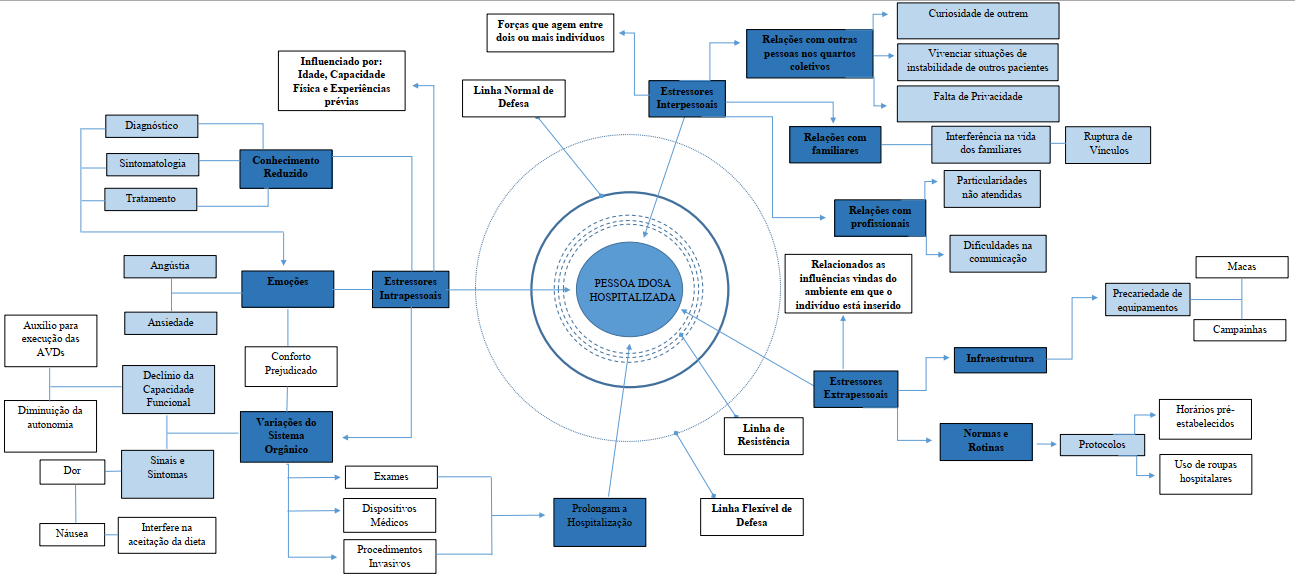
To facilitate the synthesis and visualization of the identified stressors, a conceptual map grounded in the NSM was developed (Figure 1).
Figure 1 – Conceptual map synthesizing interpersonal, intrapersonal, and extrapersonal stressors. Santa Maria, RS, Brazil, 2025.
Source: prepared by the authors, 2025.
Intrapersonal stressors
Intrapersonal stressors correspond to those acting within the individual, encompassing knowledge, emotions, and changes in the organic system(7). In this category, stressors related to illness, hemodynamic alterations, and the psychosocial repercussions resulting from hospitalization were identified.
When I came to the hospital, I never thought I would have to stay for so many days. […] After I got here, they told me that I need abdominal aortic surgery. I’m waiting […] It leaves me shaken, anxious. […] I worry about undergoing major surgery at my age (OI14, IN).
The discovery of the diagnosis was marked by the expression of feelings such as anxiety and concern, as well as uncertainties regarding the next stages of treatment or even clarification of the diagnosis itself. In this regard, limited knowledge about the clinical condition, symptomatology, and treatment was considered a stressful event.
I got quite a shock today (tears). I wasn’t expecting this; I truly believed my heart exam was normal. But no, I’m going to need surgery! I’m here, what else can I do? (OI25, IN)
The older adult expresses concern about her clinical condition and reports not knowing whether she will need a radical nephrectomy. She experiences episodes of intense bone pain, as well as sweating and pallor, which make her anxious. She is unaware of the complexity of her pathology (renal neoplasm with bone metastases), and her daughter wishes to keep it that way. (OI7, ON)
[…] but I still don’t know what caused this drooping eyelid (ptosis), this eye pain. That makes me anxious! Tomorrow, I think we’ll find out what it is […] (OI2, IN)
Organic dysfunctions resulting both from the clinical condition and from the therapeutic interventions employed manifested through signs and symptoms that interfered with older adults’ well-being during hospitalization. Among these symptoms, pain stood out as an important limiting factor for independence and functionality.
[…] as you can see, I’m confined to bed […] I can’t turn onto my side by myself because my left leg is infected (osteomyelitis); the bone is as thin as paper. I have an open fracture, so you can’t imagine the pain I feel. The pain has lessened now; there are days when Dipyrone helps, but there were days when not even Morphine worked. The saddest thing: I never imagined I would feel so much pain. (OI30, IN)
I had never been in a hospital before. […] I feel trapped here! With this hip pain, I can’t get out of bed on my own; it hurts too much. (OI9, IN)
In addition to pain, nausea and vomiting episodes were also identified as stressors, especially because of their repercussions on taste perception and food acceptance. Furthermore, the food provided in the hospital environment was frequently perceived as different from that consumed at home, contributing to reduced food intake.
Some days I feel fine; on other days, I get nausea from the medication (chemotherapy), and I can’t eat even half of my meal. It bothers me during every cycle […] When I’m like that, I can’t eat. The food arrives in the room, and I can’t even stand the smell. It really makes me nauseous. (OI4, IN)
Ever since I had the test, I smell food and feel like vomiting. It has improved a little with the medication I’m taking, but as soon as the food arrives in the room, my stomach starts turning. I even try to eat, but not everything appeals to me. It’s not the same as home-cooked food. (OI14, IN)
Interpersonal stressors
Interpersonal stressors correspond to forces acting between two or more individuals and are represented by relationships established with family members, friends, and healthcare professionals(7). In this sense, hospitalization was associated with changes in family arrangements and interpersonal relationships, affecting the daily lives and well-being of older adults.
Mechanized and automated care provided by professionals, at times disregarding the singularities of older adults, was perceived as a stressor. Exposure of intimacy and lack of privacy were also highlighted. Dependence on others for performing activities of daily living (ADLs) likewise negatively affected the hospitalization experience.
The first few baths were embarrassing. I felt like a sack of beans, being rolled from one side to the other […] But I need help, there’s nothing I can do about it […] Another day I was on a stretcher in the hallway while they cleaned the room, and I needed my diaper changed […] How were they going to clean me there, in front of everyone!?! […] Honestly, I would rather have stayed dirty […] (OI1, IN)
What bothers me most is the lack of privacy. You’re always exposed. There are no screens, no curtains. Just yesterday, a group of medical residents came to assess me. They took off my blouse and bra in front of the other patients to examine me. It makes you feel embarrassed, ashamed, stressed about it […] (OI13, IN)
In addition, reports emerged regarding the devaluation of older adults’ complaints in situations that caused them discomfort and suffering. Furthermore, the provision of conflicting, inconclusive, or insufficient information by professionals was perceived as an element generating insecurity and stress during hospitalization.
My [venous] access is still leaking. I’ve said it over and over that it isn’t working properly [...] They used this tiny vein here, but it already hurts. I asked for that other catheter, but it seems it won’t be available until Monday […] During the night, the medication leaked, and when I woke up, the bed was completely soaked. This could already have been solved, but instead I’m dealing with one or two needle sticks every day. (OI26, IN)
I’m fasting again, since midnight, for this test today. But I may not even have it today because the doctor said it still isn’t certain! Everyone says something different: one says I need to fast because I’ll have the test today, another says they’re not sure. (OI1, IN)
In interactions with other patients and family members, shared wards, loss of control over the environment, and exposure to critical situations involving other patients emerged as stressors. Such circumstances were associated with discomfort, concern, and compromised privacy.
One thing that stresses me is when the nurse comes to change my dressing and other people stop to watch out of curiosity. Or when they bathe me and this curtain isn’t properly closed. I’m an old grump; I don’t like being exposed or having others witness my pain. (OI30, IN)
That woman got sick, right from the beginning of the night. She became really ill. There was constant coming and going in this room; I don’t think any of us managed to sleep because we were worried about her […] At one point, I thought she was going to die because she looked so unwell […] (OI17, IN)
In addition, older adults reported feelings of guilt for interfering with family routines due to their need for care during hospitalization and after discharge. The hospitalization period was also associated with separation from family bonds and the home environment, triggering feelings of loneliness, longing, and concern for family members.
I can’t stay away from home for many days. I gave the housekeeper time off, my sister-in-law works all day, and my husband is home alone, but he can’t even prepare his own meals. My daughters are taking turns staying with me, so during the day he’s alone at home, and he’s elderly too. I worry about him. (OI23, IN)
When we’re in the hospital, everything is stressful. I wish I were at home. I have my dogs to take care of, and I miss my grandchildren. They live very far from here. My daughter comes to stay with me, but they stayed with their father; they’re still little (cries). (OI22, IN)
Extrapersonal stressors
Extrapersonal stressors correspond to forces and interactions that occur outside the system-client but exert influence upon it(7). In this category, stressors related to hospital infrastructure as well as institutional rules and routines, were identified.
Hospital infrastructure was perceived as insufficient to promote comfort for older adults, interfering with the maintenance of well-being and making the hospitalization experience less satisfactory. Among the aspects mentioned were inadequate beds, the unavailability or malfunction of support equipment, such as call bells used to request assistance from healthcare professionals, and waiting times for admission in places considered inappropriate. Reports also revealed concerns related to patient safety, especially regarding the risk of falls.
Down there [the emergency department], the stretcher wasn’t comfortable! It had a very thin mattress, and I started feeling the metal bars against my back. I would turn over on the stretcher, but the nurses would tell me to be careful. If I sat on the stretcher, I had to sit right in the middle so it wouldn’t tip over […] (OI12, IN)
[…] when I was receiving medication through the vein, I would fall asleep and wake up until it was finished. I kept watching so that when the medication ended I could call someone, but there was no way to call because these call bells don’t work. (OI3, IN)
In addition to these experiences, changes in daily routines, such as the need to wear hospital-provided clothing, remain away from home, adapt to institutional schedules, and adjust to changes in diet, were also perceived as potentially stressful situations.
My days here in the hospital haven’t been easy, but I think I’ll get through it. At first, it felt very strange, but now I’m getting used to this routine of tests, procedures, fasting […] We really find this routine difficult to adapt to. (OI1, IN)
Even these clothes we wear feel strange to me. I would rather wear my own pajamas — warmer and more comfortable — but the routine here is to wear these clothes. (OI29, IN)
DISCUSSION
The aging process is marked by reduced physiological reserves, a higher prevalence of chronic diseases, and functional changes that increase older adults’ vulnerability to stressors inherent to hospitalization(19). In this context, the NSM makes it possible to understand older adults’ responses to the health-disease process throughout life(20), considering that aging is a multidimensional phenomenon capable of influencing the stability of the system-client.
In the face of illness, individuals may experience feelings of helplessness, insecurity, embarrassment, and loss of autonomy associated with threats to identity and privacy(21). In this regard, participants in the present study perceived different symptoms and experiences resulting from hospitalization as intrapersonal stressors.
Hospitalization involves a succession of events culminating in multiple healthcare interventions. In this setting, older adults need to assimilate complex information regarding diagnosis and treatment, which may be insufficient, inaccurate, or subject to change throughout hospitalization(22). The limited knowledge identified in this study resembles the lack of information described among hospitalized patients in general hospitals in Yazd, Iran(23), demonstrating that even in distinct sociocultural contexts, the stressors experienced by hospitalized older adults present important convergences.
In the present study, pain was reported as an important stressor, corroborating investigations demonstrating a high prevalence of this symptom among hospitalized patients(24,25). In light of the NSM, pain may exert greater disorganizing potential during aging due to reduced adaptive capacity, placing strain on the system-client’s lines of resistance. These findings reinforce the importance of systematic pain assessment and the implementation of effective pain management measures.
The identified intrapersonal stressors are directly linked to the aging process, which is characterized by greater susceptibility to health problems and the reconfiguration of social roles. From this perspective, hospitalization does not act as an isolated event but rather as a factor that amplifies systemic vulnerability by challenging lines of defense already weakened by advancing age(7).
Interpersonal stressors were identified in interactions established with family members, healthcare professionals, and caregivers of other patients. Within this dimension, curiosity expressed through frequent questions and gazes emerged as an important stressor, causing discomfort and a perception of loss of privacy, thereby making the hospitalization experience even more burdensome.
Privacy constitutes a patient right and a dynamic concept(26), encompassing physiological, psychological, sociocultural, and spiritual dimensions. Several factors may influence it, including disease complexity, degree of dependence, gender identity, available human resources, environmental conditions, and the performance of care procedures(26). Considering these aspects is essential for preventing or minimizing stressors related to standardized and poorly individualized care.
Communication between professionals and patients was described by older adults as fragile and ineffective. Therapeutic communication is an essential component of care, as it allows patients to be recognized beyond their disease(27). In this sense, nursing professionals should identify each person’s singularities and demonstrate genuine interest in care, which presupposes respect, commitment, sensitivity, and ethics.
Reduced or absent autonomy in decision-making was also identified as a stressor, consistent with studies describing illness and hospitalization as experiences capable of restricting older adults’ autonomy(28). In this context, the expanded clinical approach developed by the healthcare team may favor the preservation of autonomy by recognizing older adults as active subjects in the health-disease process(29).
This understanding aligns with the premise that nurses’ protection and promotion of older adults’ autonomy depend on opportunities, abilities, and willingness to build relationships in which their voices and preferences are valued(30). Such strategies may contribute to strengthening the system-client’s normal lines of defense.
Older adults experience a succession of losses related to functional capacities and worsening clinical conditions. Confrontation with their current conditions intensifies feelings of loss and may weaken internal coping resources built throughout life. Furthermore, the inability to fulfill previously assumed family roles was also perceived as a stressor.
Family bonds represent an important component of older adults’ well-being. Thus, hospitalization and separation from family and home environments may trigger feelings of longing, sadness, loneliness, and isolation, which are perceived as stressors. One study(31) highlights that high levels of loneliness among hospitalized older adults may be related to separation from the family environment and social networks during the experience of a potentially stressful event. Moreover, older adults often have fewer coping strategies in the face of reduced mobility and less stable social networks(32).
Hospitalization may also result in functional losses and increased vulnerability, affecting the transition of care from the hospital setting to the home(33). This aspect converges with the findings of the present study, in which the need for care after discharge was perceived as a stressor, especially because it requires reorganization of family routines and greater availability of time to care for older adults.
From the perspective of the NSM, the relational tensions identified are not restricted to isolated conflicts but rather reflect processes of systemic reorganization of social roles in the context of aging and hospitalization. The reversal of family roles and the need for mediation by the healthcare team constitute interactions that may generate instability, particularly in the face of weakened autonomy.
Furthermore, institutional routines marked by care overload and limited time for qualified listening may intensify these stressors, demonstrating that system-client stability depends not only on individual interventions but also on the quality of relationships established within the care environment.
Regarding extrapersonal stressors, these predominantly comprised aspects related to hospital infrastructure, perceived as inadequate for promoting comfort and meeting the needs of older adults. The physical environment should adapt to the consequences of physiological aging and the limitations imposed by clinical conditions, favoring the maintenance of functional independence and autonomy among older adults(34).
Institutional rules and routines, characterized by the imposition of specific schedules for performing ADLs, were perceived as compromising autonomy and potentially generating frailty, thus constituting stressors. Participant observations revealed an environment marked by high circulation of professionals, frequent interruptions, and prioritization of technical procedures, aspects that also constituted extrapersonal stressors. In this regard, hospital routines are known to generate feelings of unfamiliarity, affective responses such as anxiety and depression, and even trigger uncooperative behaviors(35).
From the perspective of the NSM, institutional and environmental conditions within the hospital setting act as external forces capable of compromising the stability of the system-client. Elements such as noise, frequent interruptions, staff turnover, and limited time for qualified interaction constitute not merely organizational characteristics but also potential threats to lines of defense, especially given the reduced adaptive reserve inherent to aging.
The findings of this study indicate that psychological, sociocultural, developmental, and spiritual dimensions should be valued to the same extent as the physiological dimension in order to improve care, minimize or control stressors, and strengthen lines of defense and coping strategies. In this context, it is understood that the magnitude of the therapeutic response and its outcomes depend both on the intensity of the stressor and on how it is perceived by older adults.
Nursing interventions aim to promote system stabilization, restoration of balance, and maintenance of well-being, favoring the process of energy reconstitution(11). It is essential for nurses to possess clinical and relational competencies that enable early identification of threats to lines of defense and the implementation of secondary and tertiary prevention strategies. However, such practice requires favorable institutional conditions, including adequate time and resources, so that care can be effectively centered on older adults.
As a limitation of the study, its conduct in a single hospital institution is highlighted, which may restrict the transferability of findings to other care settings. Furthermore, the results may reflect specific regional characteristics and particularities of the care processes adopted by the investigated institution.
CONCLUSION
This study made it possible to describe the stressors experienced by older adults during hospitalization, demonstrating that such experiences manifest across intrapersonal, interpersonal, and extrapersonal dimensions. The findings reveal that hospitalization, in the context of aging, involves multiple factors capable of challenging the stability of the system-client, especially in light of reduced adaptive reserve and the institutional conditions of care.
In light of the NSM, hospitalization was understood as a systemic and dynamic phenomenon in which environment, relationships, and individual characteristics continuously interact. The study contributes by providing support for reflection and planning of care for hospitalized older adults, highlighting the importance of care approaches that recognize the comprehensiveness and complexity of this experience. Nursing professionals should identify and understand stressors in their multiple dimensions.
*Article extracted from the Doctoral Dissertation in Nursing titled “Stressors and well-being variances in hospitalized older adults: A Middle-Range Nursing Theory”, presented to the Graduate Program in Nursing at the Federal University of Santa Maria, Santa Maria, RS, Brazil, in 2019.
The authors declare no conflict of interest.
REFERENCES
1. Barbosa MEM, Silveira AE da, Vieira MCU, Pereira EM, Hamm JR, Andrade GF de, et al. Síndrome da fragilidade e fatores associados em idosos adscritos de uma unidade básica de saúde. Rev Eletrôn Acervo Saúde. 2025;25:e19278. https://doi.org/10.25248/reas.e19278.2025
2. Morais TSA de, Siquara GM, Magalhães SB de. Intervenções psicológicas na UTI: fluxograma de cuidado para idosos sob estressores. Rev SBPH. 2024;27:e008. https://doi.org/10.57167/Rev-SBPH.v27.590
3. Baixinho CRSL, Ferreira M de A, Huarcaya SSL. Special issue: aging, aging process and health; active citizenship and sustainable development. Esc Anna. Nery. 2025;29:e2025E002. https://doi.org/10.1590/2177-9465-EAN-2025-E002en
4. Barros RS, Teixeira GTM, Pinto JM, Sampaio RX, Mendes FAS, Garcia PA. Factors predicting hospital admission and death in older adults with cognitive impairment: a longitudinal study. Texto Contexto Enferm. 2024;3:e202301493. https://doi.org/10.1590/1980-265X-TCE-2023-0149en
5. Rodrigues JAM, Lenardt MH, Cechinel C, Cruz EDA, Tsunoda AT, Kuznier TP. Hospital admission and the occurrence of delirium in older adults with physical frailty: cross-sectional study. Rev Esc Enferm USP. 2023;57:e20230156. https://doi.org/10.1590/1980-220X-REEUSP-2023-0156en. PMID: 38100603.
6. Santos NRP, Rabelo DF. Racism and stressful events: narratives of black elders. Ciencias Psi. 2022;16(2):e-2494. https://doi.org/10.22235/cp.v16i2.2494
7. Neuman B. The Neuman systems model. In: Neuman B, Fawcett J. The Neuman systems model. Upper Saddle River (NJ): Pearson; 2011.
8. Pestana-Santos M, Santos M da SR, Cabral IE, Sousa PC, Lomba M de LLF. Neuman Systems Model in perioperative nursing care for adolescents with juvenile idiopathic scoliosis. Rev Esc Enferm USP. 2021;55:e03711. https://doi.org/10.1590/S1980-220X2020001703711. PMID: 34190880.
9. Santos J de C, Arreguy-Senna C, Pinto PF, Paiva EP de, Pereira PM dos SD, Brandão MAG. Home fall of elderly people: implications of stressors and representations in the COVID-19 context. Rev Gaúcha Enferm. 2021;42(esp):e20200221. https://doi.org/10.1590/1983-1447.2021.20200221. PMID: 34037182.
10. Brito NN de S, Soares SSS, Carvalho EC, Souza DG de, Franco AS, Almeida LF de, et al. Environmental stressors in a cardio-intensive unit and Nursing care planning: a descriptive study. Online Braz J Nurs. 2021;20:e20216539. https://doi.org/10.17665/1676-4285.20216539
11. Lemos RCPB, Arreguy-Sena C, Melo LD, Brandão MAG, Braga LM, Krempser P. Peripheral venous puncture and contrast in radiological exams: social representations anchored in Neuman’s stressors. Texto Contexto Enferm. 2022;31:e20220030. https://doi.org/10.1590/1980-265X-TCE-2022-0030en
12. Souza VR dos S, Marziale MHP, Silva GTR, Nascimento PL. Translation and validation into Brazilian Portuguese and assessment of the COREQ checklist. Acta Paul Enferm. 2021;34:eAPE02631. http://dx.doi.org/10.37689/acta-ape/2021AO02631
13. Folstein MF, Folstein SE, McHugh PR. “Mini-Exame State”. A practical method for grading the cognitive state of patients for the clinicians. J Psychiatr Res. 1975;12(3):189-198. https://doi.org/10.1016/0022-3956(75)90026-6. PMID: 1202204.
14. Bertolucci PHF, Brucki SMD, Campacci SR, Juliano Y. O mini-exame do estado mental em uma população geral. Impacto da escolaridade. Arq Neuro-Psiquiatr. 1994;52(1):1-7. https://doi.org/10.1590/S0004-282X1994000100001. PMID: 8002795.
15. Caramelli P, Nitrini R. Como avaliar de forma breve e objetiva o estado mental de um paciente? Rev Assoc Med Bras. 2000;46(4):301. https://doi.org/10.1590/S0104-42302000000400018
16. Minayo MC de S. Amostragem e saturação em pesquisa qualitativa: consensos e controvérsias. Rev Pesq Qual [Internet]. 2017 [cited 2025 Apr 01];5(7):1-12. Available from: https://editora.sepq.org.br/rpq/article/view/82
17. Trentini M, Paim L, Silva DMGV. Pesquisa Convergente Assistencial: delineamento provocador de mudanças nas práticas de saúde. 3 ed. Porto Alegre: Moriá; 2014.
18. Conselho Nacional de Saúde (BR). Resolução n. 466, de 12 de dezembro de 2012. Aprovar as seguintes diretrizes e normas regulamentadoras de pesquisas envolvendo seres humanos [Internet]. Brasília: Conselho Nacional de Saúde; 2012 [cited 2025 Apr 10]. Available from: https://www.gov.br/conselho-nacional-de-saude/pt-br/atos-normativos/resolucoes/2012/resolucao-no-466.pdf/view
19. Antequera IG, Lopes MCBT, Batista REA, Campanharo CRV, Costa PCP, Okuno MFP. Rastreamento de violência contra pessoas idosas: associação com estresse percebido e sintomas depressivos em idosos hospitalizados. Esc Anna Nery. 2021;25(2):e20200167. https://doi.org/10.1590/2177-9465-EAN-2020-0167
20. Oliveira SG de, Caldas CP, Nicoli EM, Silva FVC e, Cardoso RB, Lopes FM do VM. Applicability of the Neuman Systems Model to the Gerontology Nursing practice: a scoping review. Rev Latino-Am Enfermagem. 2024;32:e4224. https://doi.org/10.1590/1518-8345.6977.4224. PMID: 39082502.
21. Simões EPC, Michelin A de F, Bonifácio NA, Sakamoto SR, Ferreira LB, Nascimento G do. Percepção dos pacientes hospitalizados sobre privacidade, exposição e manipulação corporal. Braz J Health Rev. 2023;6(3):10030-10046. https://doi.org/10.34119/bjhrv6n3-132
22. Hussein Y, Edwards S, Patel HP. Psychological Impact of Hospital Discharge on the Older Person: A Systematic Review. Geriatrics. 2024;9(6):167. https://doi.org/10.3390/geriatrics9060167. PMID: 39727826.
23. Kalani Z. Patients’ Perception of Stressors in Medical-Surgical Units. J Client Care. 2017;2(1):6-9. https://doi.org/10.15412/J.JCC.02020102
24. Gerges S, Hallit R, Hallit S. Stressors in hospitalized patients and their associations with mental health outcomes: testing perceived social support and spiritual well-being as moderators. BMC Psychiatry. 2023;23(1):323. https://doi.org/10.1186/s12888-023-04833-6. PMID: 37161403.
25. Palmer PK, Wehrmeyer K, Florian MP, Raison C, Idler E, Mascaro JS. The prevalence, grouping, and distribution of stressors and their association with anxiety among hospitalized patients. PLoS One. 2021;16(12):e0260921. https://doi.org/10.1371/journal.pone.0260921. PMID: 34871325.
26. Tajdari S, Irajpour A, Shahriari M, Saghaei M. Identifying the dimensions of patient privacy in intensive care units: a qualitative content analysis study. J Med Ethics Hist Med. 2022;25;15:6. https://doi.org/10.18502/jmehm.v15i6.11048. PMID: 37143512.
27. Fhon JRS, Sousa EF de, Li W, Silva ARF, Silva LM. Nursing care for hospitalized elderly at the end of life: integrative review. Rev Eletr Enferm. 2022;24:1-14. https://doi.org/10.5216/ree.v24.70169
28. Pinto VAH, Paiva FS de. “Ah, com certeza iam me dá alta, né…’: autonomia no processo de cuidado em saúde de sujeitos hospitalizados. Physis. 2021;31(3):e310315. https://doi.org/10.1590/S0103-73312021310315
29. Pereira MM, Rezende KTA, Santos IF, Tonhon SF da R. O processo de hospitalização sob a ótica do paciente. Rev Bras Promoc Saúde. 2020;33:11657. https://doi.org/10.5020/18061230.2020.11657
30. Frank C, Holmberg M, Jernby EE, Hansen AS, Bremer A. Older patients’ autonomy when cared for at emergency departments. Nurs Ethics. 2022;29(5):1266-1279. https://doi.org/10.1177/09697330221105637. PMID: 35727146.
31. Just SA, Seethaler M, Sarpeah R, Waßmuth N, Bermpohl F, Brandl EJ. Loneliness in Elderly Inpatients. Psychiatr Q. 2022;93(4):1017-1030. https://doi.org/10.1007/s11126-022-10006-7. PMID: 36350482.
32. Savage RD, Wu W, Li J, Lawson A, Bronskill SE, Chamberlain SA, et al. Loneliness among older adults in the community during COVID-19: a cross-sectional survey in Canada. BMJ Open. 2021;11(4):e044517. https://doi.org/10.1136/bmjopen-2020-044517. PMID: 33811054.
33. Tomazela M, Valente SH, Lima MAD da S, Bulgarelli AF, Fabriz LA, Zacharias FCM, et al. Care transition of older adults from hospital to home. Acta Paul Enferm. 2023;36:eAPE00291. https://doi.org/10.37689/acta-ape/2023AO00291
34. Scheerman K, Klaverweide JS, Meskers CGM, Maier AB. Toward Senior-Friendly Hospitals: An Overview of Programs, Their Elements and Effectiveness in Improving Care. Gerontologia. 2025;71(1):1–12. https://doi.org/10.1159/000540655. PMID: 39317167.
35. Sá-Serafim RC da N, Silva RPR da, Bú EA do. Representações sociais da hospitalização elaboradas por pacientes crônicos e acompanhantes. Arq Bras Psicol [Internet]. 2021 [cited 2025 Nov 30];73(1):52-69. Available from: https://pepsic.bvsalud.org/scielo.php?script=sci_arttext&pid=S1809-52672021000100005
Submission: 19-Dec-2025
Approved: 13-Apr-2026
Editors:
Rosimere Ferreira Santana (ORCID: 0000-0002-4593-3715)
Geilsa Soraia Cavalcanti Valente (ORCID: 0000-0003-4488-4912)
Thiago Augusto Soares Monteiro da Silva (ORCID: 0000-0001-6870-5101)
Corresponding author: Eliane Raquel Rieth Benetti (elianeraquelr@yahoo.com.br)
Publisher:
Escola de Enfermagem Aurora de Afonso Costa – UFF
Rua Dr. Celestino, 74 – Centro, CEP: 24020-091 – Niterói, RJ, Brazil
Journal email: objn.cme@id.uff.br
|
AUTHORSHIP CONTRIBUTIONS |
|
Study design: Benetti ERR, Beuter M. Data collection: Benetti ERR, Beuter M. Data analysis: Benetti ERR, Beuter M; Leite MT, Venturini L, Kinalski SS, Moura L. Data interpretation: Benetti ERR, Beuter M; Leite MT, Venturini L, Kinalski SS, Moura L. All authors are responsible for the textual writing and critical review of the intellectual content, the final version published, and all ethical, legal, and scientific aspects related to the accuracy and integrity of the study. |
