
ORIGINAL ARTICLE
HEALTH FOR OMOLOKÔ PRACTITIONERS: REPRESENTATIONAL STRUCTURE, SPIRITUALITY, AND CARE*
Carla Cristina Gonçalves1, França Helena Elias Pereira2, Lívia Fajim de Melo3, Milena Quaresma Lopes4, Priscila Cristina da Silva Thiengo de Andrade5, Antonio Marcos Tosoli Gomes6
1 Universidade do Estado do Rio de Janeiro/ PhD Student. Graduate Program in Nursing. Rio de Janeiro, RJ, Brazil. ORCID: 0000-0002-2415-0164. E-mail: carlacrisgon@gmail.com.
2 Universidade do Estado do Rio de Janeiro/ PhD Student. Graduate Program in Nursing. Rio de Janeiro, RJ, Brazil. ORCID: 0000-0001-6899-9269. E-mail: fhelena.p@gmail.com.
3 Universidade do Estado do Rio de Janeiro/ Professor / Medical-Surgical Nursing Department. Rio de Janeiro, RJ, Brazil. ORCID: 0000-0002-5613-7976. E-mail: liviafajim@gmail.com.
4 Universidade do Estado do Rio de Janeiro/ PhD Student. Graduate Program in Nursing. Rio de Janeiro, RJ, Brazil. ORCID: 0000-0002-4814-3444. E-mail: milaenf30@gmail.com.
5 Universidade do Estado do Rio de Janeiro/ Professor / Medical-Surgical Nursing Department. Rio de Janeiro, RJ, Brazil. ORCID: 0000-0003-0840-4838. E-mail: profprithiengo@gmail.com.
6 Universidade do Estado do Rio de Janeiro/ Professor / Medical-Surgical Nursing Department. Rio de Janeiro, RJ, Brazil. ORCID: 0000-0003-4235-9647. E-mail: mtosoli@gmail.com.
ABSTRACT
Objective: To describe the structure of social representations of health for Omolokô practitioners, as constructed by its followers. Method: A descriptive study with a qualitative approach, supported by the Central Nucleus Theory (CNT) of social representations, conducted across 05 Omolokô terreiros located in the State of Rio de Janeiro, with 106 participants. Results: The results show that health, for this group, is represented by four intersecting dimensions: spiritual, attitudinal, affective, and biomedical. Conclusion: Conceptions of health among Omolokô practitioners are revealed as a synonym for well-being and quality of life, emphasizing the ability to face challenges by maintaining the balance between body, mind, and spirit. The social relevance of this study is centered on the fact that, by giving voice to these subjects, an opportunity arises to understand their desires, fears, images, difficulties, attitudes, barriers, and feelings.
Descriptors: Social representation; Religion; Nursing; Self-care; Health.
|
How to cite: Gonçalves CC, Pereira FHE, Melo LF, Lopes MQ, Andrade PCST, Gomes AMT. Health for Omolokô practitioners: representational structure, spirituality, and care. Online Braz J Nurs. 2026;25(1):e20266935. http://doi.org/10.17665/1676-4285.20266935 |
What is already known:
Spirituality and religiosity influence health perception and self-care practices; however, knowledge regarding specific African-matrix traditions remains limited.
Healthcare does not always account for the cultural singularities and symbolic representations of practitioners of terreiro religions.
What this article adds:
It reveals that the social representation of health for Omolokô practitioners is structured by the intersection of four dimensions: spiritual, attitudinal, affective, and biomedical.
It demonstrates that health in Omolokô signifies well-being and quality of life sustained by the balance between body, mind, and spirit when facing daily challenges.
It provides insights for nursing to deliver humanized, inclusive, and culturally sensitive care, respecting the knowledge and lived experiences of this population.
INTRODUCTION
Health, as a multifaceted social construction, presents varied understandings and interpretations, with an emphasis on Afro-Brazilian religions, such as Candomblé, Umbanda, and Omolokô, which do not limit it to the absence of disease. It starts from the premise that this community establishes a distinct understanding of health in relation to the biomedical paradigm, given its special interaction with the body, nature, and self-care practices(1-2), which interests the field of nursing as a form of holistic and integral human approach in the context of care.
In this scenario, health is perceived as intertwined with social factors, such as skin color and social class, highlighting the fragility of racially stigmatized groups(2-3). It is further noted that, for adherents of Afro-Brazilian practices, health is a holistic construction, where well-being is a reflection of spiritual, emotional, and social balance, and the community is essential for mutual support, strengthening communal ties among its practitioners(2).
Studies(3-4) in the field of nursing have pointed out that terreiros and, consequently, Afro-Brazilian religions are configured as health care spaces, in which physical, emotional, social, and spiritual dimensions of the health-disease process are articulated—elements often made invisible by the hegemonic biomedical model. When analyzed as care spaces, terreiros demonstrate that these communities produce therapeutic practices based on dialogue, qualified listening, welcoming, and the construction of meaning for suffering, elements that directly dialogue with the fundamentals of Nursing care(4).
In this context, the approach of the Social Representations Theory is fundamental to understanding how health needs go beyond biological demands, incorporating social and cultural aspects(5). Omolokô, originating from African communities, emerges as a religious practice that combines Afro-Brazilian knowledge and wisdom(6), pointing to the need to understand the social representations of health constructed by this social group. Thus, the present study proposes an analysis that articulates the cultural, social, and symbolic dimensions involved in the conceptions of health among practitioners of this religion, highlighting its relevance in the construction of collective identities and values.
Social Representations Theory, influenced by the psychological and social nature of groups, allows for the analysis of how Omolokô practitioners construct shared meanings about health, transforming a complex object into something familiar in daily life(7-8). Representations constitute a process that enables the consolidation of actions within a specific group, which, in this study, allows for an understanding of how this social group organizes care practices and health meanings that guide their behaviors related to therapeutic choices(7-8).
Social representation is intrinsically linked to the knowledge disseminated in society and reflects how the social environment shapes the individual(8), functioning as a theory of everyday knowledge, influencing both personal and collective identity(9). Built through social interactions, social representations organize and resignify shared ideas, guiding ways of thinking and acting regarding socially relevant objects(8).
In this study, the structural perspective, or Central Nucleus Theory, is adopted, which enables the apprehension of the social and cognitive logics that organize social representations. This approach comprises a dual structure composed of two interdependent subsystems: the central nucleus and the peripheral system(9).
The central nucleus is shaped by the essence of the represented object, by the group's relationship with that object, and by the social values and norms of the historical and ideological context(10), being responsible for assigning meaning to the social representation and presenting low sensitivity to the immediate context, which grants it stability(11). The peripheral system is organized around the central nucleus and functions to protect it from contextual interferences, being composed of the most accessible, concrete elements linked to the subjects' daily experiences(11).
Therefore, understanding the social representations of health constructed by Omolokô practitioners is relevant to nursing insofar as specific ways of thinking by social groups regarding health and its interfaces with care needs in the process of living, falling ill, and dying can be perceived. Furthermore, it is considered that this type of knowledge qualifies the nurse's performance in the Unified Health System (SUS), by explicating their non-inclusion, to date, in the health system and institutions, reinforcing institutional racism and the coloniality of knowledge, which devalue Afro-religious care practices and hinder access to integral and quality health care(12).
By recognizing these processes, Nursing can qualify care practices that are culturally sensitive, integral, and committed to health equity, contributing to the fight against religious intolerance and the fulfillment of SUS principles. To this end, the objective is: to describe the structure of social representations of health for Omolokô practitioners, as constructed by its followers.
METHOD
The investigation is based on a descriptive and exploratory study using a qualitative approach, supported by the Social Representations Theory within the scope of social psychology, specifically its structural approach.
The field research was conducted in five terreiros or Omolokô houses of worship, located in three different municipalities: Rio de Janeiro, São João de Meriti, and Duque de Caxias, facilitated by the researcher's relationship with the religious leaders of these spaces. The communities where the temples are located possess good infrastructure, such as basic sanitation and waste collection. It was observed that many of these spaces belong to the zeladores (caretakers/priests), who also reside in them. These houses of worship show similarities in the organization of spaces dedicated to spiritual practices, including the ritual hall and the community kitchen.
The individuals involved in the study were practitioners of the religion who attended the terreiros related to this study. Thus, the sample consisted of 106 participants. Inclusion criteria encompassed Omolokô practitioners who had already undergone the initiation ritual (feitura) and had more than one year of attendance at a terreiro. On the other hand, individuals with stigmatizing chronic diseases or those undergoing palliative treatment were excluded from the research, as these conditions could affect representational constructions.
Data were collected through a closed-ended questionnaire for socioeconomic information and the Free Word Association Technique, organized into two phases. First, the questionnaires were administered to the participants, followed by the free word association technique, in which individuals were asked to record three words associated with the inducing term "health”. Free word association is seen as a primary approach for gathering the components that form the content of a representation. This technique involves asking participants to express the words or phrases that spontaneously come to mind based on a keyword (usually the verbal designation of the object in question) provided by the investigator(10-11). The obtained terms were organized into a Word file, which served as the basis for the analysis corpus.
The analysis was performed using the four-cell (prototypical) configuration technique to identify the possible nucleus of social representations, supported by the Ensemble de Programmes Permettant l’Analyse des Évocations (EVOC) software, 2005 version. This software performs a statistical analysis of textual data in an associative network, allowing for the combination of the frequency of occurrence of evoked words with their relevance in terms of importance(11). The combination of these two criteria—frequency of evocation and the average order of evocation (AOE) for each term—makes it possible to identify words that, due to their representative or salient character, are likely part of the central nucleus of the representation. In this technique, the intersection between the average frequency of evocation of the total set of words and the averages of their respective orders of evocation (rang) results in the definition of four quadrants, which assign different levels of centrality to the present words(12).
The upper-left quadrant, formed by terms that are most frequently mentioned and have a lower average order, suggests a probable central nucleus. In contrast, the lower-right quadrant, which gathers less-cited terms with a higher average order, indicates the second periphery(11). The lower-left quadrant contains content that appears infrequently but has a low average order of evocation, classified as the contrast zone, where it is common to find a representational subgroup that contrasts with the nucleus. In turn, the upper-right quadrant is associated with the first periphery, gathering frequent but lately cited elements(9-11).
It is noteworthy that the values forming the table—minimum frequency, average frequency, and average rang—are established based on the report provided by the software, considering the distribution of words in the evoked set according to Zipf's Law. The cutoff point (minimum frequency) is chosen when there is stability in the word distribution, while the average is determined by dividing the number of words included from the cutoff by the number of different words. The average rang is provided by the software.
In addition to the central nucleus technique, the similarity tree technique was used in conjunction. Within the Social Representations Theory, this technique organizes these representations into a hierarchical structure, where nodes represent concepts or ideas and branches illustrate the connections and similarities between them. This graphic representation facilitates the identification of patterns, divergences, and convergences in social representations, contributing to a deeper analysis of the social and cultural dynamics that influence the formation of collective meanings(9).
The investigation was approved by the Research Ethics Committee of the State University of Rio de Janeiro, under opinion No. 5,481,787 and CAAE No. 59551222.8.0000.5282.
RESULTS
Among the 106 individuals analyzed, 40 (42.6%) are male and 66 (57.4%) are female, with a higher concentration in the age group below 42 years. Regarding previous religious practice, 41 (60.3%) identified as Candomblé practitioners, while 24 (35.3%) declared themselves Umbandists, one (1.5%) identified as Evangelical, one (1.5%) as Catholic, one (1.5%) as Kardecist Spiritist, and one (1.5%) as having no religious affiliation. The majority (45.6%) stated they are assiduously involved in religious practices within their community.
Regarding the inducing term "HEALTH”, an original corpus was formed with 106 participants, who originated 306 cognemes from the evocations. The average rang was defined by the software as 1.90, corresponding to the mean of the orders of evocation of the terms. A minimum frequency of 4 and an intermediate frequency of 8 were adopted as criteria for the organization of the structural framework (Chart 1).
Chart 1 - Four-cell block regarding the inducing term “Health”. Rio de Janeiro, RJ, Brazil, 2022
|
AOE |
<1.90 |
|
|
|
|
|
|
Avg. Freq. |
Evoked Term |
Freq. |
AOE |
Evoked Term |
Freq. |
AOE |
|
|
well-being life care |
32 27 12 |
1.469 1.852 1.833 |
joy nutrition peace |
10 10 10 |
2.000 2.000 2.000 |
|
< 8 |
medicine prevention strength health having faith cure mind medicine/remedy |
6 6 5 5 5 4 4 4 |
1.833 1.677 1.400 1.800 1.800 1.750 1.250 1.750 |
happiness orixás disposition exercises gratitude tranquility body |
7 5 4 4 4 4 4 |
2.286 2.400 2.500 2.250 2.250 2.000 2.000 |
Note: N= 106; Minimum Freq= 4; Intermediate Freq= 8; Rang (AOE)= 1.90.
Source: prepared by the authors.
In the Chart 1 above, it is noted that the upper-left quadrant contains the concepts of "well-being”, "care”, and "life”, which constitute the possible central nucleus of the representation, seen as its most stable part, providing it with meaning. In the upper-right corner, called the first periphery, are the cognemes that can be observed as interface elements with reality, guiding the subjects' actions and reactions toward the representation. These are also components that have the potential to move into the central nucleus due to their high frequency. In our research, the first periphery is symbolized by the terms "joy”, "nutrition”, and "peace”.
The contrast zone, located in the lower-left quadrant, shows traces of a representational subgroup(3). It is formed by the cognemes "cure”, "strength”, "medicine”, "prevention”, "remedy”, "health”, "mind”, and "having faith”. This area reveals a tension between the notion of integral and holistic health found in what would be the central nucleus and the medicalized perspective that prevails in this quadrant. In the configuration of the second periphery, located in the lower-right quadrant, the terms "body”, "disposition”, "exercises”, "happiness”, "gratitude”, "orixás”, and "tranquility" can be observed.
The union of the different quadrants and the resulting creation of the "four-cell block" made it possible to understand that, for Omolokô adherents, health is perceived through four distinct dimensions: attitudinal (considering care, exercise, and disposition), affective (including joy, peace, and happiness), biomedical (encompassing medicine, prevention, and medications), and spiritual (represented by the terms faith and orixás).
It is important to note that the term "life" is polysemic in nature, allowing it to operate in different dimensions and also functioning as a connection between them. Thus, this term has the potential to represent the experiences, principles, aspirations, desires, knowledge, and even the lifestyle of these people. Regarding the concepts that may play a central role, "healthy life" is deeply linked to well-being and care, where the existence of one is interconnected with the other.
The aspects of "happiness”, "nutrition”, and "tranquility”, found in the second periphery, also demonstrated significant relevance among the study participants, forming a quadrant where the emotional dimension ("happiness" and "tranquility") stands out. It is important to note the inclusion of the term "nutrition”, which possesses attributes connecting it to a possible central nucleus, associating it with specific care and, consequently, acting as a factor in promoting well-being.
In order to deepen the structural approach of social representations theory, we present in Figure 1 below the similarity tree, which is a graphic representation illustrating the relationships and connectivity between the elements of a social representation(10-11).
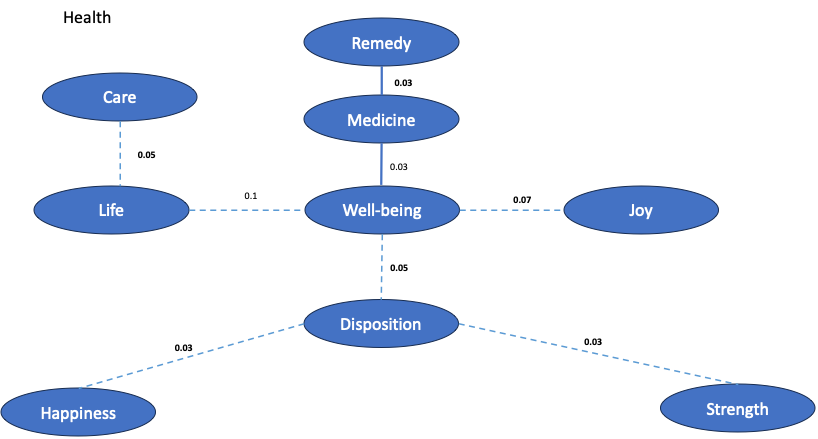
Figure 1 – Similarity Tree for the inducing term HEALTH. Rio de Janeiro, RJ, Brazil, 2022
The term that presented the highest number of connections in our network was "well-being", connecting to five other items, which already points to it as a possible central point in the four-cell block. Following this are the terms "life", "joy", and "medicine", each connecting to two other elements; these are located in the central nucleus, the first periphery, and the contrast zone, respectively. Thus, they are considered elements with the greatest potential to integrate the central nucleus, taking their connections into account (Figure 1).
At the same time, the highest recorded indices occurred between the terms "well-being" and "life”, with a score of 0.1, and between "well-being" and "joy”, which presented an index of 0.07. When examining the expression "well-being" through its connections, its dynamic characteristic stands out, evidencing the influence of religious traditions in conjunction with the traditional biomedical model. It can be concluded that, for this group, health is intrinsically conditioned by the interrelationship between body, mind, and spirit, reinforcing the concepts of life and well-being based on a harmonious integration of these elements, enabling full and integral health.
Another relationship that proved important was the one existing between the terms "well-being”, "medicine”, and "remedy”, suggesting an understanding regarding the valuation of biomedical care and its relevance. It is noteworthy that, for adherents of this Afro-Brazilian religion, health is understood in a holistic manner, meaning that physical well-being cannot be dissociated from spiritual and emotional balance. Religious practice involves rituals and offerings to the orixás and spiritual entities, considered fundamental to maintaining the harmony and health of individuals and the community. Therefore, the relationship between these cognemes shows that, although a differentiated path to health exists—possessing specific practices and rites—a biomedical reality still emerges within the contrast zone.
DISCUSSION
It is noteworthy that the indications of centrality identified in this study align with findings observed in research with Candomblé and Umbanda practitioners, for whom health is also understood as an expanded experience of living well, sustained by daily practices and community relations(13-14). At the same time, some authors(2,5,15) corroborate these results, pointing out that certain health paradigms do not merely oppose the biomedical perspective but seek to surpass the principles of individualistic ideology present in the common understanding of contemporary Western culture. This observation aligns with the reality of this religious group, in which the concept of health encompasses aspects that go beyond the limits of dominant science and the biomedical approach.
Therefore, the studied representation is not based exclusively on the biomedical model, as evidenced by the empirical data. This observation is established when, in addition to the probable central nucleus, the spiritual, attitudinal, and affective dimensions appear in the peripheral quadrants, inserting representational elements into them that indicate that spirituality and affection, for example, are present in the immediate contexts of life and are reflected in the daily routine and social practices of the analyzed group.
In light of the findings, the existence of biomedical, religious, and human dimensions allows for a new interpretation of health, making it important to recognize the connection between popular knowledge and reified/scientific knowledge. It is understood that, for the group addressed, the coexistence of these different types of knowledge is common in their daily lives and that all possess relevance.
It is crucial to relate the perspective that African-matrix communities have on health with an understanding grounded in traditions and personal conduct, which can be expressed through attitudinal aspects(16). According to these groups, especially Omolokô, health is understood as a state of well-being that encompasses various facets and meanings, being understood as integral, linked to vital force, ancestry, and belonging(17).
In recent years, several studies(1,13-14,17) have shown that terreiro communities understand health as an integral process that articulates spiritual, physical, emotional, and social dimensions. Corroborating the results found, one study(2) highlights that practices such as prayers, passes, oracular consultations, and the use of medicinal plants constitute care structured on knowledge that differs from the existing biomedical model.
Similarly, results presented in other studies(2,15,18) show that Afro-Brazilian practices, such as Candomblé and Umbanda, offer emotional, spiritual, and social support to adherents, acting as essential therapeutic spaces for the promotion of well-being and resilience. Candomblé terreiros are not only religious spaces but also unique ways of life that integrate human and non-human aspects into a non-binary dynamic, in which life is multifaceted(19).
Other authors(20-24) indicate that terreiros linked to the National Network of Afro-Brazilian Religions and Health (Renafro) understand health based on the fight against racism and the valuation of ancestry, expanding the notion of well-being beyond clinical and biomedical parameters(13).
Additionally, recent research(22-24) shows that health in terreiros is directly associated with sociocultural resistance and addressing racial inequalities, demonstrating that care practices in traditional Candomblé communities are marked by resistance to religious racism and that, therefore, health promotion also involves historical reparation, cultural protection, and identity strengthening. At the same time, community networks and ancestral knowledge gain prominence in these studies within the processes of care, prevention, and health promotion(24).
In turn, the use of rituals, herbs, baths, and infusions employed in the terreiros gains importance, expanding the therapeutic repertoire of practitioners and addressing subjective and spiritual dimensions that are most often neglected by health institutions(18).
It is fundamental that health system managers and the professionals working within it recognize the importance not only of scientific knowledge but also of the theological, ancestral, and cultural knowledge that these communities have preserved for centuries. Within the scope of health management specifically, these findings evidence the need for care, formative, and organizational processes that prepare nurses and other health professionals to deal with religious and cultural diversity, contributing to the fight against institutional racism and religious intolerance in health services.
In the sphere of management and public health policies, this study subsidizes actions aimed at promoting equity in the SUS, contributing to the fight against institutional racism and the recognition of terreiros as legitimate spaces for the production of care and health promotion(4).
The social representations of health that emerged throughout this research contribute to broadening the views on alternative forms of attention and care that can—and must—be offered to this group. For Nursing care practice, understanding these social representations allows for the recognition of care demands that go beyond the biomedical dimension, favoring more integral approaches that are sensitive to the users' beliefs, values, and cultural practices.
By considering the social representations of health among Omolokô practitioners, Nursing can qualify communication, bonding, and adherence to care practices, reducing symbolic conflicts frequently observed in the interaction between users of Afro-Brazilian religions and health services(1).
The implications for Nursing lie in identifying the urgency of a care practice that recognizes the terreiro as a space of resistance and health preservation(23). By understanding that, for Omolokô, health is synonymous with integral well-being and spiritual balance, it is up to the nurse to offer more affective, effective, and humane care, acting as an agent for strengthening these populations in society.
The results of this study contribute to Nursing practice by evidencing that the social representations of health constructed by Omolokô practitioners guide care practices based on integrality, spirituality, and community strengthening. Recognizing these representations enables the nurse to develop culturally sensitive care approaches, respecting traditional knowledge and promoting more humanized care.
Within the context of representations, the understanding of health as an interaction with the sacred, carried out through rituals and spiritual practices considered religious, stands out. Faced with the health-disease binomial and the reality of this community's thinking, it cannot be recognized as a separate phenomenon in which people, when facing illnesses, cannot be considered healthy(23).
At the same time, the process of falling ill implies the potential for being healthy, which can be expressed in the physical and biological realms, but also in psychological balance and healthy ways of coping with suffering, limitations, and death(24). In this perspective, the presence of the sacred in human life emerges as a structuring element of resilience, as spirituality contributes to emotional reorganization, the construction of meaning in the face of finitude, and the experience of a dignified death, as evidenced in studies demonstrating the role of transcendence and the spiritual dimension as fundamental supports in facing illness and dying(13,24).
Social representations theory sheds light on the processes by which the image of an object is constructed in relation to science or by borrowing elements from it, knowing that, for the public, the recognized validity of this image is based on its practical relevance and the functions it performs in the shared elaboration and use of social knowledge(15). Therefore, representations of health among Omolokô practitioners are revealed as a synonym for well-being and quality of life, emphasizing the ability to face challenges by maintaining the balance between body, mind, and spirit.
The term "well-being" emerges as the main focus, encompassing the connection between prevention and health preservation. Our findings indicate that there is a responsibility, at times considerably individualizing, regarding people's actions, manifested through self-care habits, healthy eating, and physical activity, in addition to the collective perception promoted by emotions such as joy, happiness, and gratitude.
This research identified that social representations of health are seen as dynamic, multifaceted, and related to human and transcendental aspects, revealing a continuous evolutionary process. Participants understand health as a state of well-being and a holistic experience that integrates physical, mental, and spiritual aspects, manifesting through self-care practices involving natural and biodynamic approaches, in addition to biomedical care.
The need for a paradigm shift through decolonial approaches was also evidenced, recognizing the biomedical model as one knowledge among many, without relegating it to the exclusivity of responding to health needs(24-26). This predominance of biomedical knowledge perpetuates the devaluation of distinct knowledges, especially those emerging from the terreiros. In a context where racial hierarchy continues to dictate epistemic superiority, it becomes vital to deconstruct the colonizing mentality that prevents the recognition of the richness of knowledge coming from Afro-diasporic cultures(24-26).
In the field of professional training, the findings reinforce the need to insert discussions on structural racism, the coloniality of knowledge, and religious diversity into educational processes in Nursing and Collective Health, in order to prepare professionals to act in diverse sociocultural contexts historically marked by inequalities.
Furthermore, the data indicate the need for an intersection between coloniality, power, and racism, not only to understand the identities and knowledges of the group in question but also to integrate these discussions into academic health training(25-26). The legacy of the diaspora, which resulted in the marginalization and invisibility of Afro-Brazilian knowledge, is crucial in this aspect, requiring the educational structure in the health area to be improved to include non-traditional knowledges that are part of the daily lives of Afro-diasporic communities. Spaces such as terreiros are configured as sites of resistance and preservation of knowledge, where ancestral practices and knowledges must be recognized and valued(25).
Finally, a deep and critical review of the power relations that permeate health practice, often structured in the biomedical paradigm to the detriment of other knowledges, is essential. Transforming this dynamic is not only necessary to respect the autonomy of communities but also represents an advance in the conception of health that integrates multiple views(25-26).
Thus, the health field must be understood as a process that goes beyond technology and medications, incorporating the rich Brazilian cultural tapestry that permeates the experiences of health and illness, challenging a logic that places life experience and the search for well-being in the background compared to a market-driven approach to care.
CONCLUSION
It is understood that, for the group in question, the social representation of health is structured around the triad of body, mind, and spirit, evidencing a comprehensive and holistic view of health. One cannot ignore the discussion regarding the erasure of knowledge held by this group and all practitioners of Afro-Brazilian religions concerning their care and worldview, driven by hegemonic groups and the biomedical paradigm.
In order for practitioners of Omolokô or other Afro-diasporic religions to have their health rights preserved, as well as their culture and religious expression, there is a clear need for social and public policies that prevent this erasure. Finally, the need for further studies on this subject is emphasized; such research, in addition to collaborating toward more effective health care practices, may also contribute to the strengthening of these populations within society.
*Article derived from the Master's thesis titled “Social representations of health and illness among Omolokô adherents,” presented to the Graduate Program in Nursing (PPGENF) at the Rio de Janeiro State University (UERJ), Rio de Janeiro, Brazil, in 2023.
CONFLICT OF INTEREST
The authors declare no conflicts of interest.
REFERENCES
1. Gonçalves CC. As representações sociais de saúde e doença para os adeptos do Omolokô [dissertation]. Rio de Janeiro: Universidade do Estado do Rio de Janeiro; 2023.
2. Rocha MB da, Severo AK de S, Félix-Silva AV. O Cuidado em Saúde Promovido pelas Religiões Afro-Brasileiras. Psicol cienc prof. 2023;43:e222817. https://doi.org/10.1590/1982-3703003222817
3. Brandão JL, Gomes AMT, Melo LD, Marques SC, Pereira GL, Spezani RS, et al. Social representation of spiritual surgeries in Umbanda: culture, religion and contributions of Nursing Theory. Rev Bras Enferm. 2023;76(6):e20220787. https://doi.org/10.1590/0034-7167-2022-0787. PMID: 38055482.
4. Gomes AMT. The Umbanda terreiro as a care space: some reflections. Rev. baiana enferm. 2021;35:e45202. https://doi.org/10.18471/rbe.v35.45202
5. Alves PHM, Leite-Salgueiro CDB, Alexandre ACS, Oliveira GF de. Reflections on comprehensive care in the ethnic-racial context: an integrating review. Ciênc saúde coletiva. 2020;25(6):2227-36. https://doi.org/10.1590/1413-81232020256.23842018
6. Magalhães PG. Religião, racionalidade e representatividade: uma análise do comportamento normativo perante as religiões afro-brasileiras [dissertation]. Belo Horizonte: Universidade Federal de Minas Gerais; 2021.
7. D’Omolu C. Umbanda Omolocô: liturgia, rito e convergência na visão de um adepto. São Paulo: Ícone; 2002.
8. Jodelet D. Representações sociais: um domínio em expansão. In: Jodelet D, editor. As representações sociais. Rio de Janeiro: UERJ; 2001. p. 17-44.
9. Moscovici S. Representações sociais: investigações em psicologia social. Petrópolis: Vozes; 2003.
10. Abric JC. A abordagem estrutural das representações sociais. In: Moreira ASP, Oliveira DC, organizers. Estudos interdisciplinares em representação social. Goiânia: AB; 2000. p. 27-38.
11. Sá CP. Núcleo central das representações sociais. 2. ed. Petrópolis: Vozes; 2002.
12.Anunciação D, Pereira LL, Silva HP, Nunes APN, Soares JO. Ways and detours in guarantee of health for the black population and the confrontation of racism in Brazil. Ciênc Saúde Colet. 2022;27(10):3861-70. https://doi.org/10.1590/1413-812320222710.08212022
13. Flor do Nascimento W, Silva JM da. A Saúde desde os Terreiros: desafios da política nacional de saúde integral da população negra na perspectiva das religiões de matrizes africanas. Revista Calundu. 2023;6(2):5-18. https://doi.org/10.26512/revistacalundu.v6i2.46421
14. Silva GS, Gomes AM, Brandão JL. The social representation of the disease for umbanda practitioneres in the context of covid-19 and cross-cultural care. Enferm Foco. 2024;15:e-2024121. https://doi.org/10.21675/2357-707X.2024.v15.e-2024121
15. Gomes AMT, Silva CM, Brandão JL, Couto PLS, Merces MC, Araújo MÂM, et al. Spirituality and religiosity for umbandist and candomblecist women: social representation and health implications. Ciênc Saúde Colet. 2023;28(9):2721-31. https://doi.org/10.1590/1413-81232023289.20172022
16. Santos CS, Gomes AMT, Souza FS, Pinheiro GML, Rodrigues VP, Machado JC, et al. Practical dimension of the health professinals' social representations about neglected diseases. Cogitare Enferm. 2021;26:e76116. https://doi.org/10.5380/ce.v26i0.76116
17. França MML, Waldez SB de Q, Bezerra C. Saúde dos povos de terreiro, práticas de cuidado e terapia ocupacional: um diálogo possível?. Cad. Ter. Ocup. UFSCar. 2016;24(1):105-16. https://doi.org/10.4322/0104-4931.ctoao0583
18. Evangelista LO, Siqueira CFC. Religiões afro-brasileiras: saberes, acolhimento e resistência. Fotocronografias [Internet]. 2021 [cited 2026 Feb 20];7(18):123-35. Available from: https://seer.ufrgs.br/index.php/fotocronografias/article/view/126278
19. Oliveira AMB, Regis DFB. Pandemia e saúde: a experiência do Ilê Axé T’oju Labá Lè Si Kán. revistacalundu. 2023;6(2):49-66. https://doi.org/10.26512/revistacalundu.v6i2.46433
20. Macêdo MA. Cuidados em saúde pública para povos de comunidades tradicionais de terreiro de candomblé: atravessamentos sensíveis e resistências ao racismo religioso [thesis]. Recife: Universidade Federal de Pernambuco; 2025.
21. Mota CS, Trad LAB. We live to take care of the population: health care strategies and meanings for health, disease and healing in candomblé temples. Saude soc. 2011;20(2):325-37. https://doi.org/10.1590/S0104-12902011000200006
22. Silva JM da. Religiões e saúde: a experiência da Rede Nacional de Religiões Afro-Brasileiras e Saúde. Saude soc. 2007;16(2):171-7. https://doi.org/10.1590/S0104-12902007000200017
23. Gomes MA. CRAS e intervenção psicopolítica: os terreiros como lugar de pertença, acolhimento e resistência política. Rev psicol polít [Internet]. 2020 [cited 2026 Feb 20];20(47):87-101. Available from: https://pepsic.bvsalud.org/pdf/rpp/v20n47/v20n47a08.pdf
24. Romão AF. A espiritualidade e a boa morte. RPMGF. 2024;40(6):610-4. https://doi.org/10.32385/rpmgf.v40i6.13804
25. Guimarães MB, Nunes JA, Velloso M, Bezerra A, Sousa IM de. Integrative and complementary practices in the health field: towards a decolonization of knowledge and practices. Saude soc. 2020;29(1):e190297. https://doi.org/10.1590/S0104-12902020190297
26. Souza DH de, Rocha DG, Nunes NR de A. Health of the black population in health training: perspectives towards racial equity. Ciênc saúde coletiva. 2024;29(7):e02992024. https://doi.org/10.1590/1413-81232024297.02992024EN
Submission: 19-Dez-2025
Approved: 25-Fev-2026
Editors:
Rosimere Ferreira Santana (ORCID: 0000-0002-4593-3715)
Geilsa Soraia Cavalcanti Valente (ORCID: 0000-0003-4488-4912)
Cláudia Mara de Melo Tavares (ORCID: 0000-0002-8416-6272)
Corresponding author: Carla Cristina Gonçalves (carlacrisgon@gmail.com)
Publisher:
Escola de Enfermagem Aurora de Afonso Costa – UFF
Rua Dr. Celestino, 74 – Centro, CEP: 24020-091 – Niterói, RJ, Brazil
Journal email: objn.cme@id.uff.br
|
AUTHORSHIP CONTRIBUTIONS |
|
Study design: Gonçalves CC, Gomes AMT. Data collection: Gonçalves CC. Data analysis: Gonçalves CC, Pereira FHE, Melo LF, Lopes MQ, Thiengo PCS, Gomes AMT. Data interpretation: Gonçalves CC, Pereira FHE, Melo LF, Lopes MQ, Thiengo PCS, Gomes AMT. All authors are responsible for the textual writing and critical review of the intellectual content, the final version published, and all ethical, legal, and scientific aspects related to the accuracy and integrity of the study. |
