
ORIGINAL ARTICLE
ASSESSMENT OF IRAQI NURSES' KNOWLEDGE, ATTITUDES, AND PRACTICES CONCERNING EVIDENCE-BASED PRACTICE: A CROSS-SECTIONAL STUDY
Ied Al-Sadoon1, Qasim Ali Khasal2
1 Department of Adult Nursing, College of Nursing, University of Thi-Qar, Thi-Qar, 64001, Iraq. ORCID: 0000-0003-4602-6663. E-mail: Ied_Al_Sadoon@utq.edu.iq
2 Department of Adult Nursing, College of Nursing, University of Thi-Qar, Thi-Qar, 64001, Iraq. ORCID: 0009-0002-2176-0191. E-mail: k.a.k@utq.edu.iq
ABSTRACT
Objective: To assess the knowledge, attitudes, and practices related to evidence-based practice (EBP) among nurses working in multiple central hospitals. Method: This descriptive, cross-sectional study included 284 nurses. Data were collected from January to March 2025. An evidence-based practice questionnaire was used in this study. This scale evaluated EBP-related knowledge (14 items), attitudes (4 items), and practices (6 items). We used descriptive and inferential statistics for analysis. Results: In this study, the attitude subscale had the highest mean score (3.94 ± 1.39), followed by the knowledge/skills subscale (3.78 ± 1.40) and the practice subscale (3.54 ± 1.52). There was a significant positive relationship between the knowledge subscale and the nursing practices subscale (r = 0.219, p < 0.001) and between the nursing attitude subscale and the knowledge subscale (r = 0.522, p < 0.001). Furthermore, nursing attitudes and nursing practices had a weak albeit significant relationship (r = 0.136, p < 0.005). Conclusion: To effectively adopt EBP in Iraq, it is crucial to enhance educational programs, establish supportive institutional policies, and provide structured hands-on training. These measures may aid in integrating theoretical knowledge with practical application, thereby improving EBP within the health care system.
Descriptors: Knowledge; Attitudes; Practice; Evidence-Based Practice; Nurses.
|
How to cite: Al-Sadoon I, Khasal QA. Assessment of Iraqi nurses' knowledge, attitudes, and practices concerning evidence-based practice: a cross-sectional study. Online Braz J Nurs. 2025;24(Suppl 2):e20256906. https://doi.org/10.17665/1676-4285.20256906 |
INTRODUCTION
A key component of modern health care is evidence-based practice (EBP), which combines patient values, clinical knowledge, and the best available evidence to inform clinical decision-making and enhance patient outcomes(1-2). Applying EBP in clinical practice has been shown to have numerous advantages, such as enhancing nurses' leadership skills, promoting critical thinking, and enabling the delivery of safe and efficient patient care(3).
The adoption of EBP also reduces the risk of medical errors, patient mortality, and diversity in clinical nursing practices by improving health care quality and cost management(4). Nurses are essential to the advancement of EBP in clinical nursing practice, and they also have opportunities to further their professional development. Understanding nurses' perceptions of the factors that promote EBP in clinical settings is therefore crucial(4-5).
Thus far, several studies have shown that nurses' attitudes, beliefs, and knowledge about EBP significantly affect the extent of EBP adoption in clinical settings(6). Practices, attitudes, and knowledge are therefore essential elements for implementing EBP. Consequently, it is thought that nurses' attitudes and knowledge will forecast how they will behave in the future when implementing EBP in their own clinical practice. Previous studies have shown that nurses' attitudes toward EBP significantly affect their behaviors(4-5). Several lines of evidence suggest that nurses’ positive attitudes toward EBP could be an important step in implementing it. Conversely, nurses’ negative attitudes may result in resistance to the implementation of EBP(4-5).
Despite this knowledge about EBP, clinical practice is frequently not grounded in current research findings, and there is a significant gap between knowledge and practice(2). This conclusion is supported by the current literature, which implies that nurses' attitudes toward EBP are generally positive, but their practices and knowledge are insufficient(2,7).
One study revealed that there is a disparity between positive attitudes toward EBP and its actual implementation(8). More recent studies have indicated that despite nurses having a positive attitude toward EBP, nurses lack sufficient knowledge and apply poor practices(1). In contrast to earlier studies, most of the studied nurses in another study reported negative attitudes toward EBP(9).
Nurses generally have a positive view of EBP as an essential element in improving health care quality and providing excellent patient care(6). However, factors such as organizational support, time availability, knowledge level, and skills can shape nurses’ attitudes(4-5,7). Therefore, the current study seeks to assess the knowledge, attitudes, and practices related to EBP among nurses working in multiple central hospitals in An Nasiriyah, Iraq. The specific aims of this study are listed below:
1- To assess the knowledge level of nurses in Iraq concerning EBP, with a focus on the understanding of fundamental EBP principles and their implementation in clinical decision-making.
2- To assess nurses' attitudes regarding EBP, with a focus on perceived advantages, obstacles, and readiness to integrate EBP into routine clinical activities.
3- To assess the current implementation of EBP among Iraqi nurses, highlighting discrepancies between theoretical understanding and practical application.
4- To identify factors such as age, gender, educational background, and clinical experience that influence the adoption of EBP among nurses.
METHOD
Study Design and Sample Distribution
This descriptive, cross-sectional study used a convenience sample of nurses employed in multiple central hospitals located in Nasiriyah city, the capital of Thi-Qar Governorate in southern Iraq. Data were collected from January to March 2025. All qualified registered nurses who provided direct patient care in all hospital wards and units who had more than one year of clinical experience and provided informed consent to participate in the study were included. The minimum required sample size was 284 on the basis of ensuring a 0.95 confidence level, a 0.05 margin of error, and the assumption that 50% of participants had a factor of interest(10).
The committee of the Faculty of Nursing at Thi-Qar University provided ethical approval (approval number 441-4). Prior to the study, we obtained verbal informed consent, and each nurse was given a questionnaire that included a paragraph outlining the study’s purpose.
This study used a self-designed evidence-based practice questionnaire (EBPQ) developed by Upton & Upton (2006)(11).This questionnaire comprises 24 items divided into three subscales: knowledge/skills (14 items), attitudes (4 items), and practices (6 items). Each item was rated on a 7-point Likert scale (1 = ‘strongly disagree’ to 7 = ‘strongly agree’), with higher scores indicating a more favorable attitude, greater self-reported knowledge, and improved practice or implementation of EBP. Responses were categorized as ‘positive’ for scores exceeding the neutral midpoint (i.e., >4). This threshold aligns with findings from previous studies(12-13). Using Cronbach's alpha, the internal reliability of the questionnaire was assessed, and an excellent coefficient of 0.94 was obtained. Furthermore, the practice subscale displayed a satisfactory level of reliability at 0.85, whereas the knowledge/skills subscale displayed an exceptional level of reliability (0.97).
SPSS software, version 26.0 (IBM Corporation, USA), was used for data analysis. We summarized the EBP subscales and the nurses' demographics using descriptive statistics, such as frequencies, percentages, means, and standard deviations. A normality test was used to assess statistical assumptions of normality. To determine the relationships between the variables, we employed inferential statistics such as the Pearson correlation coefficient (r), one-way analysis of variance, and the independent t test.
RESULTS
The overall demographic characteristics of the 284 participating nurses are shown in Table 1. Most of the nurses were between 20 and 29 years old (88.0%) and were predominantly female (69.0%). In total, 76.8% held a bachelor's degree, while 3.5% held a master's degree or higher. Most of the nurses (77.5%) had 1–5 years of clinical experience.
|
Table 1 - Demographic characteristics of the studied nurses (n= 284) |
||
|
|
Frequency |
Percent |
|
Age group |
||
|
20–29 years |
250 |
88.0% |
|
30–39 years |
23 |
8.1% |
|
40–49 years |
7 |
2.5% |
|
50–59 years |
3 |
1.1% |
|
60–69 years |
1 |
0.4% |
|
Gender |
||
|
Male |
88 |
31.0% |
|
Female |
196 |
69.0% |
|
Level of education |
||
|
Diploma in nursing |
52 |
18.3% |
|
Bachelors in nursing |
218 |
|
|
Master in nursing |
10 |
3.5% |
|
Doctorate in nursing |
4 |
1.4% |
|
Years of experience |
|
|
|
<5 years |
220 |
|
|
5–10 years |
40 |
14.1% |
|
>10 years |
24 |
8.5% |
As shown in Figure 1, the attitude subscale had the highest mean score (3.94 ± 1.39), followed by the knowledge/skills subscale (3.78 ± 1.40) and the practices subscale (3.54 ± 1.52).
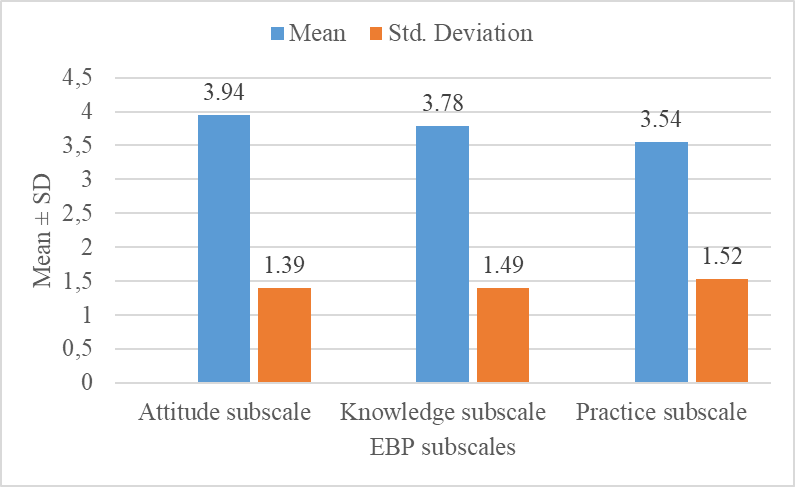
Figure 1 - A bar chart represents the overall mean scores and standard deviations of the EBPQ subscales
For the attitude subscale, the item “new evidence is important” received the highest score (4.15 ± 1.95), whereas “EBP is fundamental to professional practice” received the lowest score (3.61 ± 2.16). In the knowledge subscale, “sharing ideas and information with colleagues” received the highest score (4.13 ± 1.70), whereas “research skills” received the lowest score (3.45 ± 1.53). For the practices subscale, the item “evaluating the outcomes of your practice” received the highest score (3.96 ± 2.10), whereas “critically appraising against set criteria” received the lowest score (3.04 ± 1.83).
According to the data in Table 3, there were no significant differences in the scores on the EBP subscales according to age or gender. The knowledge scores of nurses with master's degrees were significantly higher (5.48 ± 1.01) than those with bachelor's degrees (p value = 0.004). These findings suggest that advanced education enhances competency in EBP. The highest practice scores (4.09 ± 1.42; p value = 0.032) were obtained by nurses with more than 10 years of experience, which may reflect their accumulated clinical expertise.
Table 3 - Association between demographic characteristics of the studied nurses and their EBP subscale score (n= 284)
|
Characteristics |
Knowledge level Mean ± SD |
Nursing attitude Mean ± SD |
Nursing practices Mean ± SD |
|
Age |
|
|
|
|
20–29 years |
3.76 ± 1.36 |
3.97 ± 0.88 |
3.53 ± 0.96 |
|
30–39 years |
4.17 ± 1.59 |
3.95 ± 1.13 |
3.81 ± 1.53 |
|
40–49 years |
3.32 ± 1.99 |
3.46 ± 1.67 |
3.02 ± 1.95 |
|
50–59 years |
4.47 ± 1.36 |
3.83 ± 1.35 |
4.16 ± 1.04 |
|
60–69 years |
1.71 |
1.25 |
2.66 |
|
Test of sig. |
f= 1.388 |
f= 1.174 |
f= 0.586 |
|
P value |
0.238 |
0.322 |
0.673 |
|
Gender |
|
|
|
|
Male |
3.93 ± 1.46 |
4.10 ± 1.47 |
3.71 ± 1.71 |
|
Female |
3.72 ± 1.36 |
3.88 ± 1.35 |
3.48 ± 1.42 |
|
Test of sig. |
t= 1.151 |
t= 1.235 |
t= 1.195 |
|
P value |
0.248 |
0.218 |
0.233 |
|
Level of education |
|
|
|
|
Diploma |
3.63 ± 1.51 |
4.02 ± 1.57 |
3.33 ± 1.56 |
|
Bachelor |
3.80 ± 1.34 |
3.94 ± 1.34 |
3.61 ± 1.49 |
|
Master |
4.80 ± 1.56 |
4.20 ± 1.27 |
3.81 ± 1.94 |
|
Doctorate |
1.89 ± 0.82 |
2.50 ± 1.32 |
2.12 ± 0.89 |
|
Test of sig. |
f= 4.567 |
f= 1.616 |
f= 1.752 |
|
P value |
0.004* |
0.186 |
0.157 |
|
Years of experience |
|
|
|
|
<5 years |
3.75 ± 1.35 |
3.95 ± 1.42 |
3.57 ± 1.49 |
|
5–10 years |
3.70 ± 1.61 |
3.79 ± 1.25 |
3.08 ± 1.63 |
|
>10 years |
4.16 ± 1.47 |
4.14 ± 1.39 |
4.09 ± 1.42 |
|
Test of sig. |
f= 1.899 |
f= 0.487 |
f= 3.498 |
|
P value |
0.383 |
0.615 |
0.032* |
Note: t= Independent t test; f= One-way ANOVA test; * = Statistically significant differences at the p≤0.05 level.
We evaluated the correlation between the EBP subscales using Pearson's correlation matrix test. The results indicated a strong positive relationship between nurses' knowledge of EBP and their attitudes toward it (r = 0.522, p value = 0.001), indicating that nurses who knew more about EBP tended to have better attitudes. The findings revealed a significant weak positive relationship between nurses' knowledge levels and their practices (r = 0.219, p value = 0.001), suggesting that knowledge alone is insufficient—organizational support is likely needed. Additionally, there was a weak positive link between nurses' practices and their attitudes toward evidence-based practice (r = 0.136, p value = 0.005), indicating that attitudes alone poorly predict behavior (Table 4).
DISCUSSION
The findings of this study offer substantial information about the current state of EBP among Iraqi nurses. The results of this study revealed that attitudes received the highest scores, followed by knowledge/skills and practices. In accordance with the present results, previous studies have demonstrated that nurses' attitudes toward EBP displayed the highest scores, followed by their practices and knowledge(8,14). These findings indicate that although Iraqi nurses generally have a slightly positive attitude toward EBP, their actual knowledge and practical application remain inadequate. This gap is consistent with findings from neighboring countries such as Jordan and Iran(7,15). A possible explanation for these findings is that knowledge and the implementation of EBP are limited because of barriers, including insufficient training, time limitations, and lack of resources.
On the attitude subscale, the item “new evidence is of paramount importance” received the highest score, whereas the item “EBP is essential to professional practice" received the lowest score in this study. A similar study revealed that nurses may have a positive attitude toward EBP, but this attitude does not always lead to its actual implementation(12). These findings indicate a significant discrepancy in Iraqi nurses' attitudes toward EBP. Although nurses value the importance of new evidence, they do not consider EBP important to their professional practice. The lack of institutional support for EBP in Iraqi health care settings may explain this gap, as traditional methods based on experience are often favored(16).
The knowledge subscale indicated that “research skills” received the lowest score in this study. This finding is consistent with previous research, which shows that nurses often struggle to apply research findings effectively(7,17). This suggests that many Iraqi nurses lack confidence in their ability to conduct or critically appraise research. According to numerous studies, higher education has been directly linked to greater application and knowledge of EBP(8,18-19). Nurses with master's degrees exhibit greater knowledge than those with baccalaureate degrees do, according to the current study. However, since only 3.5% of participants had a master's degree, it is likely that most nurses lack the skills necessary for the critical evaluation or application of evidence. This obstacle has also been observed in Saudi Arabian and Iranian nursing populations(15).
The practice subscale indicated that the item “critically appraising against set criteria” received the lowest score in this study. This finding aligns with a previous study that underscored the challenges nurses encounter in integrating research into their practice(20). Factors contributing to these challenges may include heavy workloads, time constraints, limited access to research databases, and inadequate training(13). Nevertheless, in this study, nurses with more than ten years of experience demonstrated better practices than those with less than ten years of experience did. These results are consistent with those of a prior study that reported that practice is related to years of work experience(8,14,21). However, the higher scores among nurses with more than ten years of experience likely indicates their strong confidence in established practices.
This study’s findings indicate a significant positive relationship between the subscales of the EBP. This research supports previous observations(1-2,22). For example, previous studies have shown that current nursing knowledge, practices, and attitudes significantly affect the adoption and implementation of EBP(1,10,20). Additionally, another previous study emphasized the need for educational interventions and training programs aimed at enhancing knowledge and skills, promoting positive attitudes, and facilitating the successful implementation of EBP(23). The positive relationships between knowledge, attitudes, and practices imply that enhancing one of these domains may have a beneficial effect on the others. Increasing nurses' knowledge may lead to better nursing practices and attitudes, which would improve EBP in Iraqi clinical settings.
Given the positive correlation among knowledge, attitudes, and practices, specific interventions such as structured training, mentorship programs, and institutional support could enhance the implementation of EBP. Addressing logistical obstacles, fostering a culture of informed decision-making, and enhancing the research capabilities of nurses are essential for advancing health care outcomes in Iraq. To address the gap in the application of EBP, subsequent investigations should focus on actionable solutions for educational programs and organizations.
CONCLUSION
This study indicated that Iraqi nurses generally held slightly positive attitudes toward EBP; however, they lacked sufficient knowledge and practical skills. Nurses with master’s degrees reported higher levels of knowledge than baccalaureate nurses did. Nevertheless, compared with those with less than ten years of experience, nurses with more than ten years of experience demonstrated superior practices. To effectively adopt EBP in Iraq, it is crucial to enhance educational programs, establish supportive institutional policies, and provide structured hands-on training. These measures help integrate theoretical knowledge with practical application, thereby improving EBP implementation within the health care system.
CONFLICT OF INTERESTS
The authors declare that there are no conflicts of interest.
REFERENCES
1. Alamri AA, Alahmadi A, Aljohani FR, Ibrahim TA, Alsehimi OM, Alharbi NM, et al. Nurses’ Knowledge, Attitudes, and Implementation of Evidence- based Practice in Medina, Saudi Arabia. Journal of Ecohumanism. 2024;3(8):4194-4204. https://doi.org/10.62754/joe.v3i8.5075
2. Al-Ghabeesh S, Khalifeh AH, Rayan A. Evidence-based practice knowledge, attitude, practice and barriers as predictors of stay intent among Jordanian registered nurses: a cross-sectional study. BMJ Open. 2024;14(7):e082173. https://doi.org/10.1136/bmjopen-2023-082173
3. Brunt BA, Morris MM. Nursing Professional Development Evidence-Based Practice. In: StatPearls [Internet]. Treasure Island (FL): StatPearls Publishing; 2025 [cited 2025 Jun 4]. Available from: http://www.ncbi.nlm.nih.gov/books/NBK589676/
4. Narulita S, Mustikowati T, Hijriati Y, Marianna S, Setyaningsih W, Subu MA. Experiences and Perspectives of Indonesian Nurses on Barriers and Facilitators for Implementing Evidence-Based Nursing Practice: A Qualitative Study. The Malaysian Journal of Nursing. 2025;16(4):208-217. https://doi.org/10.31674/mjn.2025.v16i04.020
5. Malik G, McKenna L, Plummer V. Perceived knowledge, skills, attitude and contextual factors affecting evidence-based practice among nurse educators, clinical coaches and nurse specialists. Int J Nurs Pract. 2015;21 (Suppl 2):46-57. https://doi.org/10.1111/ijn.12366
6. Zammar AMA. Nurses’ Knowledge and Attitude Regarding Evidence-Based Practice: An Integrative Review. Open J Nurs. 2022;12(2):103-112. https://doi.org/10.4236/ojn.2022.122007
7. AbuRuz ME, Hayeah HA, Al-Dweik G, Al-Akash HY. Knowledge, Attitudes, and Practice about Evidence-Based Practice: A Jordanian Study. Health Sci J [Internet]. 2017 [cited 2025 Jun 13];11(2):489. Available from: https://www.itmedicalteam.pl/articles/knowledge-attitudes-and-practice-about-evidencebased-practice-a-jordanian-study-105948.html
8. Kaseka PU, Mbakaya BC. Knowledge, attitude and use of evidence based practice (EBP) among registered nurse-midwives practicing in central hospitals in Malawi: a cross-sectional survey. BMC Nurs. 2022;21(1):144. https://doi.org/10.1186/s12912-022-00916-z
9. Alkhatib AH, Ibrahim EA, Ameenuddin M, Ibrahim IA. Nurses’ Knowledge, Perception, and Attitude towards Evidence-Based Practice at King Abdullah Medical City-Saudi Arabia. American Journal of Nursing Research. 2021;9(1):1-7. https://doi.org/10.12691/ajnr-9-1-1
10. Raosoft Inc. Sample size calculator [Internet]. Seattle: Raosoft Inc.; c2004 [cited 2025 Jun 9]. Available from: http://www.raosoft.com/samplesize.html
11. Upton D, Upton P. Development of an evidence-based practice questionnaire for nurses. J Adv Nurs. 2006;53(4):454-458. https://doi.org/10.1111/j.1365-2648.2006.03739.x
12. Al Qadire M. Undergraduate student nurses’ knowledge of evidence-based practice: A short online survey. Nurse Educ Today. 2019;72:1-5. https://doi.org/10.1016/j.nedt.2018.10.004
13. Melnyk BM, Fineout-Overholt E, Gallagher-Ford L, Kaplan L. The state of evidence-based practice in US nurses: critical implications for nurse leaders and educators. J Nurs Adm. 2012;42(9):410-407. https://doi.org/10.1097/nna.0b013e3182664e0a
14. Zhou F, Hao Y, Guo H, Liu H. Attitude, Knowledge, and Practice on Evidence-Based Nursing among Registered Nurses in Traditional Chinese Medicine Hospitals: A Multiple Center Cross-Sectional Survey in China. Evid Based Complement Alternat Med. 2016;2016:5478086. https://doi.org/10.1155/2016/5478086
15. Farokhzadian J, Dehghan Nayeri N, Borhani F. The long way ahead to achieve an effective patient safety culture: challenges perceived by nurses. BMC Health Serv Res. 2018;18(1):654. https://doi.org/10.1186/s12913-018-3467-1
16. Saifan A, Devadas B, Daradkeh F, Abdel-Fattah H, Aljabery M, Michael LM. Solutions to bridge the theory-practice gap in nursing education in the UAE: a qualitative study. BMC Med Educ. 2021;21(1):490. https://doi.org/10.1186/s12909-021-02919-x
17. Saunders H, Vehviläinen-Julkunen K. The state of readiness for evidence-based practice among nurses: An integrative review. Int J Nurs Stud. 2016;56:128-140. https://doi.org/10.1016/j.ijnurstu.2015.10.018
18. Adamakidou T, Ntempeli E, Galanis P, Mantoudi A, Kleisiaris C, Mantzorou M, et al. Factors Related to Evidence-Based Practice among Community Nurses in Greece: A Cross-Sectional Study. Healthcare (Basel). 2023;11(23):3071. https://doi.org/10.3390/healthcare11233071
19. Alqahtani N, Oh KM, Kitsantas P, Rodan M, Innab A, Asiri S, et al. Organizational Factors Associated with Evidence-Based Practice Knowledge, Attitudes, and Implementation among Nurses in Saudi Arabia. Int J Environ Res Public Health. 2022;19(14):8407. https://doi.org/10.3390/ijerph19148407
20. Majid S, Foo S, Luyt B, Zhang X, Theng YL, Chang YK, et al. Adopting evidence-based practice in clinical decision making: nurses’ perceptions, knowledge, and barriers. J Med Libr Assoc. 2011;99(3):229-236. https://doi.org/10.3163/1536-5050.99.3.010
21. Pérez-Campos MA, Sánchez-García I, Pancorbo-Hidalgo PL. Knowledge, Attitude and Use of Evidence-Based Practice among nurses active on the Internet. Invest Educ Enferm. 2014;32(3):451-460. https://doi.org/10.17533/udea.iee.v32n3a10
22. Maskey S, Ghimire S, Singh JP. Knowledge, Attitude and Practice Regarding Evidence Based Practice among Nurses in Teaching Hospital, Chitwan. IOSR Journal of Nursing and Health Science [Internet]. 2019 [cited 2025 Jun 2];8(6):46-53. Available from: https://www.iosrjournals.org/iosr-jnhs/papers/vol8-issue6/Series-11/E0806114653.pdf
23. Qtait M. Nurses’ Knowledge, Attitudes, and Implementation of Evidence-Based Practice Comparative Study. SAGE Open Nurs. 2025;11:23779608251343611. https://doi.org/10.1177/23779608251343611
Submission: 21-Jun-2025
Approved: 08-Jul-2025
Editors:
Rosimere Ferreira Santana (ORCID: 0000-0002-4593-3715)
Geilsa Soraia Cavalcanti Valente (ORCID: 0000-0003-4488-4912)
Ramon Oliveira (ORCID: 0000-0001-9668-7051)
Corresponding author: Ied Al-Sadoon (Ied_Al_Sadoon@utq.edu.iq; ied.aliomar84@gmail.com)
Publisher:
Escola de Enfermagem Aurora de Afonso Costa – UFF
Rua Dr. Celestino, 74 – Centro, CEP: 24020-091 – Niterói, RJ, Brazil
Journal email: objn.cme@id.uff.br
|
AUTHORSHIP CONTRIBUTIONS |
|
Study conception: Al-Sadoon I. Data acquisition: Al-Sadoon I, Khasal QA. Data analysis: Al-Sadoon I. Data interpretation: Al-Sadoon I, Khasal QA. All authors are responsible for the textual writing and critical review of the intellectual content, for the final published version, and for all ethical, legal, and scientific aspects related to the accuracy and integrity of the study. |
