
ORIGINAL ARTICLE
UPDATE OF INSTITUTIONAL PARAMETERS IN THE PERROCA PATIENT CLASSIFICATION SYSTEM: APPLIED METHODOLOGICAL STUDY
Mozara Mota Gentilini1, Fernanda Niemeyer2, Gabrielli Mottes Orlandini3, Thiane Mergen4, Natália Moraes Quevedo5, João Lucas Campos de Oliveira6
1 Porto Alegre Clinical Hospital, Clinical Nursing Service. Porto Alegre, RS, Brazil. ORCID: 0000-0002-1260-0789. Email: mgentilini@hcpa.edu.br
2 Porto Alegre Clinical Hospital, Nursing Education Service. Porto Alegre, RS, Brazil. ORCID: 0009-0000-5350-4753. Email: fniemeyer@hcpa.edu.br
3 Porto Alegre Clinical Hospital, Oncohematological Nursing Service. Porto Alegre, RS, Brazil. ORCID: 0000-0002-7288-0858. Email: gmorlandini@hcpa.edu.br
4 Porto Alegre Clinical Hospital, Nursing Process Committee. Porto Alegre, RS, Brazil. ORCID: 0000-0001-5603-905X. Email: tmergen@hcpa.edu.br
5 Porto Alegre Clinical Hospital, Surgical Nursing Service. Porto Alegre, RS, Brazil. ORCID: 0009-0007-4445-8311. Email: nmoquevedo@hcpa.edu.br
6 Federal University of Rio Grande do Sul, School of Nursing and Public Health, Department of Career Counseling and Guidance. Porto Alegre, RS, Brazil. ORCID: 0000-0002-1822-2360. Email: joao-lucascampos@hotmail.com
ABSTRACT
Objective: To present the update process of institutional parameters for applying the Perroca Patient Classification System. Method: Applied methodological study conducted by the working group responsible for managing the classification of hospitalized adult patients in a large university hospital located in southern Brazil. The study was carried out between June 2024 and August 2025 in six stages, including the process for revising and updating parameters; internal and external audits of inter-rater agreement; final review and institutional communication with the updated instructions and the related standard operating procedure; and incorporation of the updated parameters into the electronic health record. Results: Although the final classification/stratum agreement between evaluations was satisfactory, the areas of planning and coordination of care, investigation and monitoring, and health education presented negative outcomes. This was addressed in institutional communication to avoid subjectivity in assessment, which, according to the audit results, tends to occur at some level. Conclusion: An institutional guideline set is presented for each of the 36 instrument items used for patient classification. These guidelines do not replace the original scale but support the complexity of the studied hospital and the innovations within contemporary nursing practice.
Descriptors: Patient Classification Systems; Workload; Nursing Staff; Nursing Human Resources in Hospitals; Nursing Assessment.
|
How to cite: Gentilini MM, Niemeyer F, Orlandini GM, Mergen T, Quevedo NM, Oliveira JLC. Updating the institutional parameters of the Perroca Patient Classification System: an applied methodological study. Online Braz J Nurs. 2025;24(Suppl 2):e20256888. https://doi.org/10.17665/1676-4285.20256888 |
What is already known:
Patient Classification Systems are essential instruments for measuring workload and determining nursing staff size.
The application of Patient Classification Systems depends on the nurse’s clinical judgment, which can lead to disagreements and subjectivity in the assessment process.
What this article adds:
An updated set of institutional parameters is presented, related to the widely recognized Perroca Patient Classification System.
The institutional parameters do not replace the original scale. However, they align with the reality of a highly complex hospital as well as innovations within nursing work processes.
By incorporating more tangible parameters of work processes, classifying nurses can make less subjective judgments regarding each item in the Patient Classification System.
INTRODUCTION
Assessing patient care demands has been a work organization activity conceived since the professionalization of modern nursing. This care management practice is relevant for identifying clientele priorities and allocating resources required for care delivery. Therefore, the use of reliable instruments that underpin the assessment of patient complexity enhances accuracy in this process conducted by nurses(1).
Alongside the assessment of nursing care complexity and dependency levels, Patient Classification Systems (PCSs) are instruments capable of estimating nursing staff workload in continuous care units(2). Although not fully sensitive in their entirety, due to the inherent complexity of the construct “nursing workload (NWL)”(3-4), PCSs are internationally acknowledged as valid tools for both organizing direct care and determining nursing staff size(2-7). The latter depends on measuring NWL(1,8).
In Brazil, the Federal Nursing Council (Conselho Federal de Enfermagem, COFEN)(8) currently identifies seven PCSs for use in healthcare institutions that deliver continuous care. The entity also recognizes the possibility of employing other PCSs, provided their scientific validation processes are ensured. This is relevant because, as with other measurement instruments, if a PCS does not precisely correspond to what it aims to evaluate or generates extensive ambiguity among different evaluating nurses, its purpose may not be achieved(5), thereby consuming professionals' time without attaining satisfactory assessment outcomes(9).
Usually, PCSs are presented in scale format and require the nurse’s clinical judgment when classifying a patient under different direct and indirect care elements(3). This implies the potential for subjectivity in assessment. Researchers(5) from Finland concur with this notion, reporting that while investigating the validity and reliability of the RAFAELA® PCS - applied in Finland, Iceland, Norway, and Sweden - they concluded that maintaining satisfactory validity and reliability levels constitutes a major challenge. Alternatives to overcome such barriers include the continuous refinement of the PCS to ensure compatibility with contemporary nursing demands, as well as training and motivating nurses responsible for patient classification(5).
A recent study(10) investigated inter-rater agreement in the application of the Nursing Activities Score (NAS) by analyzing three different evaluator pairs: reference nurse versus intensive care unit nurses; reference nurse versus research assistant “1”; and reference nurse versus research assistant “2”. Although the researchers concluded that the overall agreement level was satisfactory, the percentage of perfect agreement between the reference nurse (who also worked in the unit) and the other nurses in the study unit did not reach 70% of the total measures (n=88). Moreover, among the 23 NAS items, 14 achieved almost perfect or perfect agreement between the reference nurse and research assistants, whereas only two items reached that level between the reference nurse and the other unit nurses(10).
Based on these findings, the scientific literature supports that the assessment of NWL and patient classification is a procedure susceptible to subjectivity, thus compromising reliability(1,5,9-10). This conclusion aligns with the authors’ empirical observations as members of a working group responsible for training, monitoring, and improvement initiatives related to the PCS for hospitalized adults(11), which has been utilized for more than 10 years in a large hospital accredited by the Joint Commission International (JCI) since 2013. Nurses’ frequent doubts, limited adherence to the classification process, and discrepancies in item interpretation within the PCS are frequently observed. Therefore, this study aims to present the process for updating institutional parameters for applying the Perroca Patient Classification System.
METHOD
Study type
This applied methodological study was based on the development of a technical and technological product. It was assumed that technologies and innovations encompass a range of activities with scientific, organizational, financial, or commercial characteristics. These are expressed through products, technological processes, and entirely new or improved services, considering technological innovation as implemented once applied in social practice or within a production process(12). Thus, the institutional criteria for applying the Perroca PCS(11) were considered as the studied product, with relevance and innovation for implementation, given its direct impact on processes related to nursing staff estimation(1).
Setting
The study was conducted at Hospital de Clínicas de Porto Alegre (HCPA), in collaboration with the working group responsible for managing the Perroca PCS, already consolidated within the hospital. Specifically, the PCS is applied in 11 non-critical adult clinical and surgical inpatient units and partially in a protected environment unit comprising 29 beds, which admits both adults and children under 14 years of age. Altogether, these units include 460 beds, representing over 50% of the hospital’s total (n=860). All units that apply the PCS, fully or partially, involve 156 staff nurses who were trained for using the Perroca PCS following the institutional routine.
Previous studies had established the routine for applying the Perroca PCS, defined scientifically for five consecutive days during the last full week (with no holidays) of each month(13); as well as the parameters for completing the scale(14), which are the focus of this update study.
Study protocol
The updating process of the product examined in this study was developed in six stages. Each stage, along with its methodological procedures, responsible participants, and timeline, is presented in Chart 1 below.
Chart 1 - Stages of the review and updating process for institutional parameters related to the Perroca Patient Classification System (PCS). Porto Alegre, RS, Brazil, 2024-2025
|
Stage |
Responsible Parties |
Procedures |
Period |
|
1st Stage
Revision and construction |
Working Group responsible for managing the Perroca Patient Classification System (PCS)(11) at the hospital. Group composition: two nurses from the Clinical Nursing Service, one of whom is the group coordinator; two nurses from the Surgical Nursing Service; one nurse from the Onco-hematology Nursing Service; one nurse from the Nursing Process Committee; one nurse from the Nursing Education Service; and two professors from the School of Nursing affiliated respectively with the Clinical and Surgical Nursing Services. |
Item-by-item review of the current parameters(14) up to the revision reported herein. For this purpose, five meetings were conducted with the Working Group, lasting 2 hours each, totaling 10 hours of review. Each filling parameter was positioned side by side with its corresponding item in the original Perroca PCS and discussed extensively and collectively. Institutional changes such as updates to Standard Operating Procedures (SOP), acquisition of new technologies and/or care support equipment/devices, or workflow changes were especially considered when reviewing the parameters. It is emphasized that filling parameters do not replace or equate to original scale items. These are practical complements with institutional thematic elements meant to guide each classifying nurse. Updates were carried out in real time on a synoptic chart containing the “current” and the “updated” parameters. Such updates only occurred after consensus, following extensive group discussion and consultation of the scientific literature and/or other institutional work routines. |
June to July 2024 |
|
2nd Stage
Internal audits |
Three nurses from the Working Group responsible for managing the Perroca PCS(11); two nurses from the hospital’s Clinical and Surgical Units; and one nurse from the Protected Environment Unit. |
A convergence audit of the newly proposed filling parameters was conducted during the conventional Perroca PCS application week. The scale oriented by the updated parameters was applied to the same patient by two nurses, one from the Working Group and another staff nurse. |
August 2024 |
|
3rd Stage
External audits |
A Master’s student in Nursing and a final-semester undergraduate nursing student, both in a Clinical and Special Care Unit. Additionally, external audits were repeated in the same unit by eighth-semester nursing students during applied practice in Nursing Administration. |
A new convergence audit cycle was performed using the PCS guided by the updated parameters. This time, no member of the working group or any nurse from the units applying the scale participated. As in the previous stage, data from this audit were analyzed by absolute and relative frequency (%). |
October 2024, repeated in June 2025 |
|
4th Stage
Final revisions and institutional communication |
Working Group responsible for managing the Perroca PCS(11) at the hospital. |
Upon receiving the results of the internal and external inter-rater audits, the Working Group reviewed the updated material again and developed an educational announcement for nurses in the applying units with three goals: a) to avoid differences in understanding regarding each item and/or filling criterion; b) to disclose the parameter update within the electronic health record; and c) to disseminate the updated standard operating procedure (SOP) for classifying hospitalized adult patients. This material was distributed by the Nursing Directorate to all the hospital nurses. |
August 2025 |
|
5th Stage
Incorporation of filling criteria into the electronic health record |
Nursing Process Committee (COPE). |
The new parameters were incorporated into the electronic health record by nurses who work in the Nursing Process Committee (COPE), who have authorization to register data in the computerized system used by the Institution (AGHUse®). After these system updates, the new parameters became visible to clinical nurses for application of the scale. |
August 2025 |
This study is part of a larger project titled “Quality and Human Resource Management in the Hospital Environment: Metrics, Methods, and Subjectivities,” approved by the Research Ethics Committee under protocol CAAE No. 47595221.5.0000.5327.
RESULTS
After the preliminary revision process, the working group conducted a first inter-rater agreement audit using the already updated parameters in the institutional application of the Perroca Patient Classification System (PCS). Fourteen duplicate assessments were performed (Table 1).
Table 1 - Agreement among internal evaluators by domain of the Perroca PCS and hospital unit, and agreement in final classification. Porto Alegre, RS, Brazil, 2024
|
Perroca PCS Domain |
Hospital Unit |
Total PSC Domain |
||||||
|
Clinical Inpatient Unit |
Surgical Inpatient Unit |
Protected Environment Unit |
||||||
|
Agreement (Yes/No) |
Agreement (Yes/No) |
Agreement (Yes/No) |
Agreement (Yes/No) n (%) |
|||||
|
Planning and care coordination |
3 |
2 |
- |
5 |
1 |
3 |
4 (29%) |
10 (71%) |
|
Investigation and monitoring |
4 |
1 |
2 |
3 |
3 |
1 |
9 (64%) |
5 (36%) |
|
Body care |
3 |
2 |
4 |
1 |
3 |
1 |
10 (71%) |
4 (29%) |
|
Skin and mucosa care |
5 |
- |
1 |
4 |
2 |
2 |
8 (57%) |
6 (43%) |
|
Nutrition |
3 |
2 |
4 |
1 |
3 |
1 |
10 (71%) |
4 (29%) |
|
Locomotion |
3 |
2 |
5 |
- |
4 |
- |
12 (86%) |
2 (14%) |
|
Therapeutics |
1 |
4 |
3 |
2 |
4 |
- |
8 (57%) |
6 (43%) |
|
Emotional support |
2 |
3 |
4 |
1 |
2 |
2 |
8 (57%) |
6 (43%) |
|
Health education |
3 |
2 |
4 |
1 |
2 |
2 |
9 (64%) |
5 (36%) |
|
Final agreement in patient classification by unit |
||||||||
|
n (%)* |
4 (80%) |
1 (20%) |
3 (60%) |
2 (40%) |
3 (75%) |
1 (25%) |
10 (72%) |
4 (18%) |
*positive agreement emphasized in bold for clarity.
External audits took place in a single unit through 23 duplicate assessments (Table 2).
Table 2 - Agreement among external evaluators by domain of Perroca PCS and agreement in final classification in a clinical and special care inpatient unit. Porto Alegre, RS, Brazil, 2024
|
Perroca PCS Domain |
Agreement n (%)
|
Disagreement n (%)
|
Total n (%)
|
|
Planning and care coordination |
17 (74%) |
6 (26%) |
23 (100%) |
|
Investigation and monitoring |
15 (65%) |
8 (35%) |
23 (100%) |
|
Body care |
20 (87%) |
3 (13%) |
23 (100%) |
|
Skin and mucosa care |
17 (74%) |
6 (26%) |
23 (100%) |
|
Nutrition |
16 (70%) |
7 (30%) |
23 (100%) |
|
Locomotion |
18 (78%) |
5 (22%) |
23 (100%) |
|
Therapeutics |
17 (74%) |
6 (26%) |
23 (100%) |
|
Emotional support |
17 (74%) |
6 (26%) |
23 (100%) |
|
Health education |
16 (70%) |
7 (30%) |
23 (100%) |
|
Final classification agreement |
14 (61%) |
9 (39%) |
23 (100%) |
Following the conclusion of the agreement audits, the working group responsible for updating the PCS application parameters developed institutional communication material for all hospital nurses, containing information about this revision process and the updated standard operating procedure (SOP) for patient classification (Figure 1).
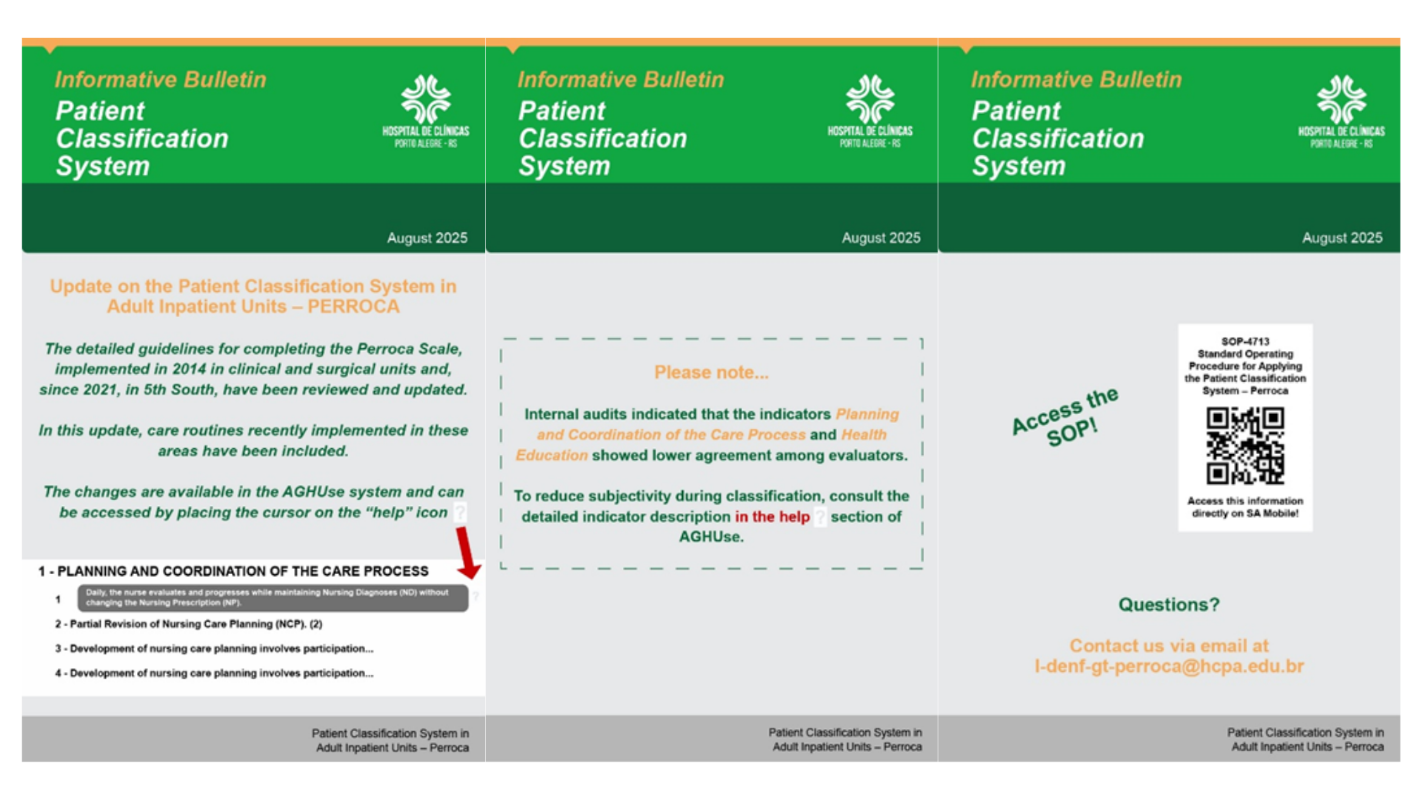
Figure 1 - Informative bulletin on the process of updating institutional parameters for applying the Perroca Patient Classification System. Porto Alegre, RS, Brazil, 2025
Finally, the updated institutional parameters are presented in Chart 2 below. It is important to note that, due to character limitations in the electronic health record, parameters employ acronyms and abbreviations.
Chart 2 - Demonstration of the original version of the Perroca Patient Classification System and the complementary institutional parameters for its application. Porto Alegre, RS, Brazil, 2025
*Some items in the original scale have been synthesized or abbreviated without altering content or meaning. This results from the format in which the scale was incorporated into the electronic health record at the institution studied, which imposes a character limit.**The authors chose to describe the parameters updated in this study exactly as included in the electronic record of the institution under investigation. Readers may request clarification regarding abbreviations and/or other information that may not be immediately understood.
DISCUSSION
According to the audits conducted during the parameter update process subject to this study, although the final classification of patients, that is, the dependency stratum/level, achieved reasonable agreement among evaluators, some domains of the Perroca Patient Classification System (PCS) clearly require attention. Authors(11) have previously noted that such divergence may arise when classifiers confront items with greater subjectivity.
Beyond the subjectivity involved in applying an instrument for care dependency assessment, it is important to consider the significant number of nurses who are potential classifiers (n=156). We believe this reaffirms the relevance of the updated institutional parameters, since although these do not replace the essence of each original scale item(11), these parameters may provide each nurse with more concrete elements to support decision-making for faithful classification.
PCSs are instruments intended to capture nursing care demands of a particular clientele. Indeed, this directs nurses to identify elements that are not always fully objective or even easily capturable(3), contrasting with elements identified by clinical severity scores based solely on objective criteria, which may also influence nursing workload(15).
A study(16) conducted in Brazil’s Midwest region indicated that agreement on each PCS item among nurse classifiers was a timely factor for effective implementation of the instrument in routine work. In part, this may explain the results of the agreement audits performed here, since classifications occurred among internal and external evaluators without any prior agreement regarding the understanding of each PCS item and corresponding institutional parameter.
The update process for institutional parameters in applying the Perroca PCS involved clear modernizations in nursing work processes. For example, the Integrated Transport Unit (Unidade Integrada de Transportes, UNIT), recently available at the institution for intra-hospital patient transfer, is an advancement for the profession given that movements and transports represent significant time demands in nurses’ work shifts(17).
The Perroca PCS, used at our institution for over a decade, has transcended Brazil and reached other countries such as Turkey(2). Given the internationally recognized status of the hospital studied, we believe the updated parameters presented herein may serve as an invitation for nurses from various origins to increasingly equip themselves with strategies capable of reflecting their teams’ work demands.
This study has a highly applied character and hence presents limitations related to statistical rigor, notably the absence of a better-sized sample for calculating agreement audits and a lack of more robust analyses. Nevertheless, the potential contribution of this research remains significant.
CONCLUSION
This article presents a set of institutional parameters for each of the 36 items in applying the widely recognized Perroca PCS, which has been utilized in the study setting for over a decade. These parameters do not replace the original scale, which should be understood as the conceptual source of each evaluative item to classify patients.
The use of institutional parameters aims to exemplify concrete elements of nursing work processes in a highly complex and large hospital organization, seeking to mitigate subjectivity in evaluation by multiple nurse classifiers. Thus, the parameter set may serve as guidance and/or complement in interpreting each aspect of care dependency assessed, including similar contexts to the one studied. Despite this, agreement audits on patient classification among evaluators in this study demonstrate that full agreement remains a challenge.
ACKNOWLEDGMENTS
We would like to thank the Perroca Patient Classification System Working Group of the Hospital de Clínicas de Porto Alegre and the Nursing Directorate of the institution for making this study possible.
CONFLICT OF INTEREST
The authors declare no conflict of interest.
FINANCING
This work was carried out with support from the Rio Grande do Sul Research Support Foundation (FAPERGS), Notice No. 10/2024.
REFERENCES
1. Guardalupe JA, Brum ID, Canto DF do, Telles KCM, Magalhães AMM de, Oliveira JLC de. Comparison of patient classification systems for dimensioning nursing staff. Rev Esc Enferm USP. 2023;57:e20230047. https://doi.org/10.1590/1980-220x-reeusp-2023-0047en
2. Ayan G, Türkmen E, Uğur E, Akbal E, Sarıtaş B, Erbay Ç, et al. Determination of Nursing Care Times Based on the Perroca Patient Classification Instrument in the Inpatient Oncology Unit: A Mixed Method Study. Semin Oncol Nurs. 2024;40(2):151608. https://doi.org/10.1016/j.soncn.2024.151608
3. Oliveira JLC de, Cucolo DF, Magalhães AMM de, Perroca MG. Beyond patient classification: the “hidden” face of nursing workload. Rev Esc Enferm USP. 2022;56:e20210533. https://doi.org/10.1590/1980-220X-REEUSP-2021-0533en
4. Saville C, Griffiths P. Ward staffing guided by a patient classification system: A multi-criteria analysis of “fit” in three acute hospitals. J Nurs Manag. 2021;29(7):2260-2269. https://doi.org/10.1111/jonm.13341
5. Junttila JK, Haatainen K, Koivu A, Nykänen P. How the reliability and validity of the patient classification system can be ensured in daily nursing work? A follow-up study. J Clin Nurs. 2023;32(13-14):3720-3729. https://doi.org/10.1111/jocn.16559
6. Ko Y, Park B, Lee H, Kim D. Development of a patient classification system for critical care nursing based on nursing intensity. Int J Nurs Pract. 2023;29(5):e13128. https://doi.org/10.1111/ijn.13128
7. Hong KJ, Chung H, Jo YM. Relationships between Alternative Nurse Staffing Level Measurements and Nurses’ Perceptions of Nurse Staffing Level Adequacy, Fatigue, and Care Quality. J Nurs Manag. 2023;2023:6060536. https://doi.org/10.1155/2023/6060536
8. Brasil. Conselho Federal de Enfermagem. Parecer Normativo nº 1/2024/COFEN. Parâmetros para o planejamento da força de trabalho da Enfermagem pelo Enfermeiro [Internet]. Brasília (DF): COFEN; 2024 [cited 2025 Aug 13]. Available from: https://www.cofen.gov.br/parecer-normativo-no-1-2024-cofen/
9. Rosa NG da, Vaz TA, Lucena A de F. Nursing workload: use of artificial intelligence to develop a classifier model. Rev Lat Am Enfermagem. 2024;32:e4239. https://doi.org/10.1590/1518-8345.7131.4239
10. Batassini É, Veras JC, Ferreira RR, Beghetto MG. Agreement among evaluators in the Nursing Activities Score application. Acta Paul. Enferm. (Online). 2022;35:eAPE03327. http://dx.doi.org/10.37689/acta-ape/2022AO033277
11. Perroca MG. The new version of a patient classification instrument: assessment of psychometric properties. J Adv Nurs. 2013;69(8):1862-1868. https://doi.org/10.1111/jan.12038
12. Brasil. Ministério da Educação. Coordenação de Aperfeiçoamento de Pessoal de Nível Superior. Diretoria de Avaliação. Documento de área: área 20: enfermagem [Internet]. Brasília: CAPES; 2019 [cited 2025 Aug 13]. Available from: https://www.gov.br/capes/pt-br/centrais-de-conteudo/enfermagem-pdf
13. Macedo ABT, Souza SBC de, Funcke LB, Magalhães AMM de, Riboldi C de O. Systematization of an instrument for patient classification in a teaching hospital. REME. 2018;22:e-1152. https://doi.org/10.5935/1415-2762.20180073
14. Macedo ABT, Riboldi C de O, Silva KS da, Mergen T, Echer IC, Souza SBC de. Validation of parameters to fill in the Perroca’s patient classification system. Rev Gaucha Enferm. 2018;39:e20170241. https://doi.org/10.1590/1983-1447.2018.20170241
15. Lima F da C, Ribeiro JB, Denadai S, Nogueira LS, Ferretti-Rebustini RE de L. Influence of neurological severity and degree of dependence of patients after stroke on nursing workload: a retrospective cohort. Rev Esc Enferm USP. 2025;59:e20240302. https://doi.org/10.1590/1980-220x-reeusp-2024-0302en
16. Moraes RMR, Lara AC de, Remedio EC, Gaiva MAM, Gentilini MM, Oliveira JLC de, et al. Patient classification and nursing staff dimensioning in a pediatric inpatient unit. Cogitare Enferm. (Online). 2023;28:e89190. https://doi.org/10.1590/ce.v28i0.89190
17. Campos MS de, Cucolo DF, Perroca MG. Repercussions of moving patients on the context of practice: perspectives of the nursing team. Rev Lat Am Enfermagem. 2024;32:e4113. https://doi.org/10.1590/1518-8345.7042.4113
Submission: 13-Aug-2025
Approved: 10-Sep-2025
Editors:
Rosimere Ferreira Santana (ORCID: 0000-0002-4593-3715)
Geilsa Soraia Cavalcanti Valente (ORCID: 0000-0003-4488-4912)
Corresponding author: João Lucas Campos de Oliveira (joao-lucascampos@hotmail.com)
Publisher:
Escola de Enfermagem Aurora de Afonso Costa – UFF
Rua Dr. Celestino, 74 – Centro, CEP: 24020-091 – Niterói, RJ, Brazil
Journal email: objn.cme@id.uff.br
|
AUTHORSHIP CONTRIBUTIONS |
|
Study conception: Oliveira JLC. Data acquisition: Gentilini MM, Niemeyer F, Orlandini GM, Mergen T, Quevedo NM, Oliveira JLC. Data analysis: Gentilini MM, Niemeyer F, Orlandini GM, Mergen T, Quevedo NM, Oliveira JLC. Data interpretation: Gentilini MM, Niemeyer F, Orlandini GM, Mergen T, Quevedo NM, Oliveira JLC. All authors are responsible for the textual drafting and critical review of the intellectual content, for the final published version, and for all ethical, legal, and scientific aspects related to the accuracy and integrity of the study. |
