
ORIGINAL ARTICLE
ENTREPRENEURIAL TENDENCY OF NURSES IN THE CARE OF PEOPLE WITH WOUNDS: A CROSS-SECTIONAL STUDY*
Ana Luiza Sardenberg Louzada1, Alcione Matos de Abreu2, Fernanda Soares Pessanha3
1 Alfredo Pinto School of Nursing (EEAP), Federal University of the State of Rio de Janeiro (UNIRIO). Rio de Janeiro, RJ, Brazil. ORCID: 0009-0004-2624-3075. E-mail: analuiza.sardenberg@hotmail.com
2 Department of Medical-Surgical Nursing, Alfredo Pinto School of Nursing (EEAP), Federal University of the State of Rio de Janeiro (UNIRIO). Rio de Janeiro, RJ, Brazil. ORCID: 0000-0001-6078-7149. E-mail: alcione.abreu@unirio.br
3 Department of Fundamentals of Nursing and Administration (MFE), Aurora de Afonso Costa School of Nursing (EEAAC), Fluminense Federal University (UFF). Niterói, RJ, Brazil. ORCID: 0000-0002-8082-5242. E-mail: fepessanha@id.uff.br
ABSTRACT
Objective: To assess the association between sociodemographic profile and entrepreneurial tendency among nurses providing care to individuals with wounds. Method: A cross-sectional study conducted in 2023 with 115 nurses who participated in an educational activity organized by the Regional Nursing Council of Rio de Janeiro. Data were collected virtually using the Entrepreneurial Tendency Test. Results: Entrepreneurial nurses were predominantly women (87.9%) over 41 years of age (62.6%), with postgraduate education (94.7%), more than 10 years since graduation (66.9%), and engaged in entrepreneurship to supplement their income (87.8%), which ranged between 4 and 9 minimum wages (64.5%). Most participants showed low or very low entrepreneurial tendency (40.1%). Higher scores in the success/achievement and creative tendency dimensions were associated with higher income levels. Conclusions: Although the nurses assessed demonstrated low or very low entrepreneurial tendency, they were experienced, highly qualified professionals who seek to advance their careers through drive and determination.
Descriptors: Entrepreneurship; Wounds and Injuries; Health Services Administration; Nursing Administration Research; Nursing.
|
How to cite: Louzada ALS, Abreu AM, Pessanha FS. Entrepreneurial tendency of nurses in the care of people with wounds: a cross-sectional study. Online Braz J Nurs. 2025;24(Suppl 2):e20256887. https://doi.org/10.17665/1676-4285.20256887 |
What is already known:
Nurses in Brazil have legal support for autonomous practice, guided by the principles of evidence-based practice.
Career opportunities in nursing have been expanding toward business-oriented entrepreneurship.
There is a knowledge gap regarding the sociodemographic profile and the level of entrepreneurial tendency among nurses who provide wound care.
What this article adds:
Entrepreneurial nurses are mostly women over 41 years old, with postgraduate education, more than 10 years since graduation, and who engage in entrepreneurship to supplement their income.
These professionals demonstrated low or very low entrepreneurial tendency.
Higher scores in the success/achievement and creative tendency dimensions were associated with higher income levels.
INTRODUCTION
Entrepreneurship can be defined as the act of achieving success through the coordination and execution of projects, services, and operations(1). Innovative initiatives have been implemented in various areas of nursing—care, education, management, and business—demonstrating the growing diversity of the profession’s roles and impact(1–2).
In the current nursing labor market, professionals have been building their careers through business-oriented entrepreneurship. Consequently, employment relations in nursing have evolved with the emergence of new care settings, such as offices and clinics entirely founded and managed by nurses(3), always emphasizing the improvement of care quality and the profession’s social commitment to the population.
It is important to emphasize, however, that entrepreneurial tendency and entrepreneurship are not synonymous. In this study, entrepreneurial tendency is understood as a set of behaviors, attitudes, and individual characteristics that express a person’s disposition to initiate and manage new projects or businesses, even under uncertain conditions. It is therefore a psychological and behavioral construct that does not represent entrepreneurial practice itself, but rather indicates the potential to engage in it. Entrepreneurship, in turn, is directly related to the impact that creating new businesses or projects has on economic development through innovation, job creation, and financial growth(1–2).
In 1991, the Entrepreneurial Tendency Test was developed to measure entrepreneurial characteristics across different occupational groups(4). The instrument is based on self-assessment through questions distributed into five dimensions: need for success/achievement, need for autonomy/independence, creative tendency, calculated risk-taking, and drive and determination(4–5). Since its development, the test has been applied to nurses in international contexts(4). In Brazil, although there are studies addressing entrepreneurship in nursing(6–8), only one has employed the Entrepreneurial Tendency Test(9), and it was applied to nursing students rather than to licensed professionals.
People with wounds represent a population commonly cared for by entrepreneurial nurses, given that skin integrity disorders constitute a growing global health problem(10). These disorders can be defined as breaks in the skin surface that may involve underlying tissues, ranging from acute traumatic wounds to chronic lesions. Individually, wounds can cause pain, discomfort, disruption of daily activities, and a decline in quality of life(11). Likewise, for health systems and society, the prevalence of individuals with wounds results in high treatment costs and productivity losses.
In the United States, among users of the federal health insurance program for individuals aged 65 years or older, chronic non-healing wounds are estimated to affect approximately 8.2 million people(12). In Brazil, epidemiological data on the incidence and prevalence of wounds remain limited. Nevertheless, it is known that such conditions affect the general population regardless of sex, age, or ethnicity, and impose substantial costs on both individuals and the health system(12).
Nursing plays a significant role in the care of people with wounds across all levels of health care. This practice is essentially guided by the nursing process and its stages—assessment, nursing diagnosis, planning, implementation, and evaluation(13)—as well as by evidence-based practice and legal regulations that support professional autonomy(14–15). Consequently, nursing career opportunities have been expanding toward business entrepreneurship(3).
A persisting knowledge gap in this context concerns how nurses’ sociodemographic characteristics (such as age, sex, and educational background) relate to their entrepreneurial tendency. This aspect is particularly relevant, as such characteristics may directly influence how nurses identify opportunities, develop innovative services, and contribute to sustainable care models. The absence of studies that critically address this relationship hinders a more precise understanding of the subject and, therefore, limits the development of strategies to encourage, train, and support entrepreneurial practice in nursing.
Accordingly, this study aims to answer the following research question: What are the sociodemographic profile and entrepreneurial tendency level of nurses providing care to people with wounds?
The objective of this study was to examine the association between nurses’ sociodemographic profiles and their entrepreneurial tendencies in the provision of care to individuals with wounds.
METHOD
Study design
This is a cross-sectional study, reported according to the Strengthening the Reporting of Observational Studies in Epidemiology (STROBE) guidelines(16).
Setting
Participant recruitment was conducted during an in-person and free scientific event organized by the Regional Nursing Council of Rio de Janeiro (COREN-RJ) on September 28, 2023, entitled “Roundtable: Dimensions of the Job Market for Entrepreneurial Nurses”. This event was selected as a recruitment opportunity because its target audience consisted of professionals engaged in entrepreneurial activities such as ear piercing, health education, aesthetic clinics, and wound care services.
At the time of event registration, participants consented to the use of their contact information for future research invitations. Thus, beyond fostering experience exchange among entrepreneurial nurses, the event also served as a platform to identify professionals active in business-oriented nursing. However, data collection was conducted virtually only after the event, between October and November 2023.
Participants and inclusion criteria
Participants were selected through convenience sampling. Based on the event registration data, nurses who reported providing care to individuals with wounds were individually invited to participate via WhatsApp. The invitation included a link to the Informed Consent Form (ICF) and the survey instrument, both created using Google Forms. Each participant received up to three contact attempts on alternate days. Those who consented electronically were automatically directed to the study’s data collection form.
Inclusion criteria were: being a nurse who provides care to individuals with wounds; having at least one year of experience in the field; having participated in the COREN-RJ scientific event; and responding to the recruitment invitation within three contact attempts via WhatsApp.
Incomplete responses to the data collection form were not considered an exclusion criterion. Given the minimal risk associated with the study, it was acknowledged that participants might feel uncomfortable disclosing certain variables (such as income, secondary employment, or business characteristics). Therefore, the ICF explicitly stated that participants could choose not to answer questions that caused discomfort. In the statistical analysis, such cases were treated as missing data.
A total of 150 professionals were invited; 115 responded and agreed to participate after three contact attempts, composing the final study sample. All participants provided complete data for sex, age group, educational level, and years since graduation. Regarding private practice, 114 nurses responded, while 107 provided information on monthly income, work arrangement, and entrepreneurial tendency.
It is important to note that the Federal Nursing Council (COFEN) and the Regional Nursing Councils (CORENs), established by Law No. 5,905/1973, form a regulatory structure designed to oversee and support the nursing profession in Brazil(17). These autonomous entities have played a key role in promoting continuing professional education through various initiatives. Within COREN-RJ, the Capacita COREN Project stands out for offering courses and lectures on diverse topics—including entrepreneurship—thereby contributing to professional advancement in the state of Rio de Janeiro.
Variables and data sources
The data collection form was divided into two sections: (1) sociodemographic, academic, and entrepreneurial variables; and (2) the General Entrepreneurial Tendency Test (GETT).
The sociodemographic variables included sex, age group, and monthly income. Academic variables included educational level and years since graduation. Entrepreneurial characteristics comprised private practice (clinic attendance) and work arrangement (exclusive self-employment or self-employment combined with a formal employment relationship). Monthly income was calculated based on Brazil’s minimum wage for 2023(18).
The General Entrepreneurial Tendency Test aims to measure entrepreneurial inclination by assessing five key business-related characteristics: need for success/achievement; need for autonomy/independence; creative tendency; calculated risk-taking; and drive and determination(4–5). The instrument employs a validated methodology to identify entrepreneurial traits and psychological characteristics(19–20) and has been adapted for use in Brazil, showing a Cohen’s Kappa coefficient of 0.65, indicating strong agreement(9). Since its development in 1991, the test has been applied in studies involving nurses(4).
Participants were instructed to select “Agree” or “Disagree” for each of the 54 statements distributed across the five dimensions. Scoring followed the original protocol: for odd-numbered statements, one point was assigned for each “Disagree” response; for even-numbered statements, one point was assigned for each “Agree” response. Scores for each statement were then summed to obtain the final score for each dimension.
The need for success/achievement dimension describes the pursuit of challenging goals supported by high personal standards of excellence, with an average score of 9 and a maximum of 12(4). The need for autonomy/independence refers to the desire to act and express oneself freely despite conventions, with an average score of 4 and a maximum of 6(4). The creative tendency is associated with imagination, innovation, curiosity, and versatility; calculated risk-taking reflects the ability to act under uncertainty; and drive and determination identify individuals who assume responsibility for both success and failure, attributing outcomes to skill and effort. For these three dimensions, the mean score is 8, with a maximum of 12(4).
Finally, the total number of dimensions in which a respondent achieved the maximum score determined the overall entrepreneurial tendency level: five dimensions — very high tendency; four — high; three — moderate; two — low; and one or none — very low, as proposed in prior studies(4,19–20).
Statistical methods
Responses were extracted from a Microsoft Excel spreadsheet exported from Google Forms and analyzed using RStudio (R version 4.2.2)(21).
Descriptive statistics were initially applied, including absolute and relative frequencies. The Shapiro–Wilk test indicated non-normal data distribution; therefore, corresponding measures of central tendency (median, interquartile range, maximum, and minimum values) were used.
For bivariate analysis, nonparametric statistical methods were applied(22): the Mann–Whitney U test for independent samples to evaluate significant differences between dichotomous categorical and quantitative variables; the Kruskal–Wallis test for variables with three or more categories; and Dunn’s multiple comparison test when the Kruskal–Wallis test indicated significant differences among categories. A 95% confidence interval (p < 0.05) was adopted. Results were presented in text, tables, and figures.
Ethical considerations
All ethical standards for health research were observed, in accordance with National Health Council Resolutions No. 466/2012 and No. 510/2016. The study was approved by the Research Ethics Committee of the Federal University of the State of Rio de Janeiro (Approval No. 6.087.901). The ICF and data collection form were administered electronically. Participants were informed of their right to withdraw from the study at any time without any moral or legal repercussions.
A total of 115 nurses comprised the study sample. Nurses engaged in entrepreneurial activities related to wound care in the state of Rio de Janeiro were predominantly women (87.9%; 101/115), aged over 41 years (62.6%; 72/115), with lato sensu postgraduate education (85.2%; 98/115), and more than ten years since graduation (66.9%; 77/115). Most participants held a permanent job and undertook entrepreneurial activities as a means of supplementing their income (87.8%; 94/115), which generally ranged between four and nine minimum wages (64.5%; 69/107).
Overall, 40.1% of the nurses exhibited low (23.3%; 25/107) or very low (16.8%; 18/107) entrepreneurial tendency. Further details are presented in Table 1.
Table 1 – Professional profile and entrepreneurial tendency of the nurses participating in the study. Rio de Janeiro, RJ, Brazil, 2023
|
|
n |
% |
|
Sex |
|
|
|
Male |
14 |
12.1 |
|
Female |
101 |
87.9 |
|
Total |
115 |
100 |
|
Age group |
|
|
|
Up to 40 years |
43 |
37.4 |
|
41 years or older |
72 |
62.6 |
|
Total |
115 |
100 |
|
Educational level |
|
|
|
Undergraduate degree |
6 |
5.2 |
|
Lato sensu postgraduate |
98 |
85.2 |
|
Stricto sensu postgraduate |
11 |
9.6 |
|
Total |
115 |
100 |
|
Years since graduation |
|
|
|
1 – 3 years |
7 |
6.2 |
|
4 – 9 years |
31 |
26.9 |
|
More than 10 years |
77 |
66.9 |
|
Total |
115 |
100 |
|
Monthly income |
|
|
|
1 – 3 minimum wages |
27 |
25.2 |
|
4 – 9 minimum wages |
69 |
64.5 |
|
10 or more minimum wages |
11 |
10.3 |
|
Total |
107 |
100 |
|
Work arrangement |
|
|
|
Self-employed only |
13 |
12.2 |
|
Self-employed and employed in a healthcare institution |
94 |
87.8 |
|
Total |
107 |
100 |
|
Provides care in private office |
|
|
|
No |
85 |
74.6 |
|
Yes |
29 |
25.4 |
|
Total |
114 |
100 |
|
Entrepreneurial tendency |
|
|
|
Very high |
16 |
14.9 |
|
High |
15 |
14.2 |
|
Moderate |
33 |
30.8 |
|
Low |
25 |
23.3 |
|
Very low |
18 |
16.8 |
|
Total |
107 |
100 |
Note: n = number of participants. Totals vary across variables because participants could choose not to answer questions that might cause discomfort or embarrassment.
Source: prepared by the authors, 2023.
No statistically significant associations were found between the overall results of the Entrepreneurial Tendency Test and the sociodemographic variables. Measures of central tendency according to performance in each dimension of the Entrepreneurial Tendency Test are presented in Figure 1. It is noteworthy that the autonomy/independence dimension showed the lowest scores compared to the others.
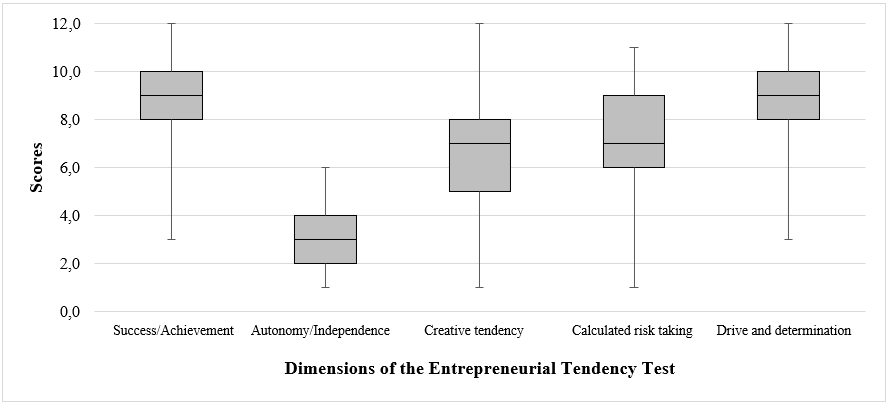
Figure 1 – Boxplot of the scores obtained by nurses in the Entrepreneurial Tendency Test. Rio de Janeiro, RJ, Brazil, 2023
Source: Prepared by the authors, 2023.
When assessing the relationship between the dimensions of the Entrepreneurial Tendency Test and participants’ income (Table 2), a statistically significant difference was observed in the success/achievement and creative tendency dimensions. It is important to note that the total number of respondents in this table differs from the overall study sample (n = 115), as participants were allowed to skip questions they found uncomfortable.
Table 2 – Relationship between the dimensions of the Entrepreneurial Tendency Test and income. Rio de Janeiro, RJ, Brazil, 2023
|
|
Monthly income |
|
|||
|
Variables |
Total, n = 107 |
1 – 3 minimum wages, n = 27 |
4 – 9 minimum wages, n = 69 |
10 or more minimum wages, n = 11 |
p- value* |
|
Success/Achievement |
|
|
|
0.031 |
|
|
Median (1st – 3rd quartile) |
9.0 (8.0 - 10.0) |
9.0 (7.5 - 9.0) |
9.0 (8.0 - 10.0) |
10.0 (9.0 - 10.5) |
|
|
Autonomy/Independence |
|
|
|
0.188 |
|
|
Median (1st – 3rd quartile) |
3.0 (2.0 - 4.0) |
3.0 (1.5 - 4.0) |
3.0 (2.0 - 4.0) |
4.0 (2.5 - 4.0) |
|
|
Creative tendency |
|
|
|
0.019 |
|
|
Median (1st – 3rd quartile) |
7.0 (5.0 - 8.0) |
5.0 (5.0 - 7.0) |
7.0 (6.0 - 9.0) |
6.0 (5.0 - 7.5) |
|
|
Calculated risk taking |
|
|
|
0.501 |
|
|
Median (1st – 3rd quartile) |
7.0 (6.0 - 9.0) |
8.0 (6.0 - 8.5) |
7.0 (6.0 - 9.0) |
7.0 (6.0 - 7.5) |
|
|
Drive and determination |
|
|
|
0.458 |
|
|
Median (1st – 3rd quartile) |
9.0 (8.0 - 10.0) |
8.0 (8.0 - 9.5) |
9.0 (8.0 - 10.0) |
9.0 (9.0 - 9.5) |
|
Note: *Kruskal–Wallis statistical test.
Source: prepared by the authors, 2023.
To identify which income groups showed differences, Dunn’s multiple comparison test was applied. In the success/achievement dimension, a statistically significant difference (p = 0.033) was observed between the group earning 1–3 minimum wages and the group earning 10 or more minimum wages. The other comparisons showed no statistical significance.
In the creative tendency dimension, the same test indicated a significant difference (p = 0.021) between the groups earning 1–3 and 4–9 minimum wages, with no statistically significant differences in the remaining comparisons.
Table 3 presents the relationship between the dimensions of the Entrepreneurial Tendency Test and the participants’ time since graduation, in which no statistically significant differences were identified.
Table 3 – Relationship between the dimensions of the Entrepreneurial Tendency Test and time since graduation. Rio de Janeiro, RJ, Brazil, 2023
|
|
Time since graduation |
|
|||
|
Variables |
Sample, n = 115 |
1 – 3 years, n = 7 |
4 - 9 years, n = 31 |
10 years or more, n = 77 |
p- value* |
|
Success/Achievement |
|
|
|
0.274 |
|
|
Median (1st – 3rd quartile) |
9.0 (8.0 - 10.0) |
9.0 (8.0 - 10.5) |
9.0 (9.0 - 10.0) |
9.0 (7.0 - 10.0) |
|
|
Autonomy/Independence |
|
|
|
0.212 |
|
|
Median (1st – 3rd quartile) |
3.0 (2.0 - 4.0) |
3.0 (3.0 - 3.5) |
4.0 (2.5 - 4.0) |
3.0 (2.0 - 4.0) |
|
|
Creative tendency |
|
|
|
0.879 |
|
|
Median (1st – 3rd quartile) |
7.0 (5.0 - 8.0) |
7.0 (5.5 - 7.5) |
6.0 (5.0 - 8.0) |
7.0 (5.0 - 8.0) |
|
|
Calculated risk taking |
|
|
|
0.063 |
|
|
Median (1st – 3rd quartile) |
7.0 (6.0 - 9.0) |
6.0 (4.5 - 6.5) |
8.0 (6.5 - 9.0) |
7.0 (6.0 - 9.0) |
|
|
Drive and determination |
|
|
|
0.241 |
|
|
Median (1st – 3rd quartile) |
9.0 (8.0 - 10.0) |
8.0 (7.0 - 8.5) |
9.0 (8.0 - 10.0) |
9.0 (8.0 - 10,0) |
|
Note: *Kruskal–Wallis statistical test.
Source: prepared by the authors, 2023.
Regarding the provision of care in a private office (Table 4), a statistically significant association was observed with the success/achievement dimension of the Entrepreneurial Tendency Test. As in previous analyses, it is noteworthy that the total number of respondents differs from the total number of participants in the study, due to the option to decline answering certain questions.
Table 4 – Relationship between the dimensions of the Entrepreneurial Tendency Test and providing care in a private office. Rio de Janeiro, RJ, Brazil, 2023
|
|
Providing care in a private office |
|
||
|
Variables |
Total, n = 114 |
No, n = 85 |
Yes, n = 29 |
p-value* |
|
Success/Achievement |
|
|
|
0.002 |
|
Median (1st – 3rd quartile) |
9.0 (8.0 - 10.0) |
9.0 (7.0 - 10.0) |
10.0 (9.0 - 11.0) |
|
|
Autonomy/Independence |
|
|
0.460 |
|
|
Median (1st – 3rd quartile) |
3.0 (2.0 - 4.0) |
3.0 (2.0 - 4.0) |
3.0 (2.0 - 4.0) |
|
|
Creative tendency |
|
|
|
0.098 |
|
Median (1st – 3rd quartile) |
7.0 (5.0 - 8.0) |
6.0 (5.0 - 8.0) |
7.0 (6.0 - 8.0) |
|
|
Calculated risk taking |
|
|
0.122 |
|
|
Median (1st – 3rd quartile) |
7.0 (6.0 - 9.0) |
7.0 (6.0 - 9.0) |
8.0 (7.0 - 9.0) |
|
|
Drive and determination |
|
|
|
0.141 |
|
Median (1st – 3rd quartile) |
9.0 (8.0 - 10.0) |
8.0 (8.0 - 10.0) |
9.0 (9.0 - 10.0) |
|
|
Note: *Mann–Whitney statistical test. Source: prepared by the authors, 2023. |
||||
DISCUSSION
Nursing accounts for approximately half of the global health workforce, despite variations in educational levels and regional differences worldwide(23). In the era of advanced practice(24), the nursing labor market has been reorganizing to meet the evolving demands of both care recipients and professionals themselves. This reality is supported by the findings of the present study, as the analysis of the association between sociodemographic profiles and entrepreneurial tendency revealed that, although participants generally exhibited low or very low entrepreneurial tendency, they were experienced, qualified, and sought professional advancement through drive, determination, and effective care management.
Although most nurses work as salaried employees in healthcare institutions, in some countries, they increasingly practice more independently(2), a trend also observed in Brazil. Entrepreneurship depends on the interaction between personality traits and environmental opportunities(4). Previous research has identified that the main motivations for nurses to engage in entrepreneurial activities include dissatisfaction with formal employment remuneration, the pursuit of greater autonomy in scheduling care, and perceived lack of visibility and social recognition in traditional work arrangements(25).
Nevertheless, the majority of participants demonstrated low or very low entrepreneurial tendency, which may be associated with significant barriers to entrepreneurial practice in nursing in Brazil, such as limited managerial knowledge and skills (e.g., in accounting and legal matters), challenges related to financing, and restrictions on reimbursement for services provided within supplementary healthcare(1,25).
Conversely, the subset of professionals exhibiting high or very high entrepreneurial tendency underscores the importance of developing competencies related to idea generation, project planning, and resource utilization(1), traits commonly found among entrepreneurial nurses. With the legal support currently available in the country(15), these competencies can be channeled toward improving healthcare delivery and access, thereby enhancing care outcomes and professional satisfaction.
Regarding the success/achievement dimension, nurses with higher scores reported higher income levels and engagement in private office practice. These findings align with previous studies(19–20), highlighting that achieving success is both a motivator and a condition for sustaining entrepreneurial endeavors(1). Professionals perceiving positive financial returns are more likely to view entrepreneurship as a legitimate avenue for professional recognition and expansion, with economic gains reinforcing entrepreneurial tendency and motivation to maintain or expand initiatives(1,25). Thus, success in entrepreneurial nursing encompasses not only subjective satisfaction but also objective conditions such as financial stability and market recognition.
In this context, it is important to consider the working conditions often faced by nurses in healthcare units. Previous research(26) identified complaints related to difficulties in relationships with supervisors, incidents of workplace violence and discrimination, professional burnout—reflected in high rates of sick leave and absenteeism—and unsatisfactory remuneration. Similarly, social marginalization and unemployment have been identified as factors driving entrepreneurial initiatives(4). As such, many nurses turn to entrepreneurship seeking greater satisfaction and autonomy after experiencing dissatisfaction with traditional employment(1,25).
Concerning the autonomy/independence dimension, scores were lower compared to other dimensions. While autonomy and independence are distinct concepts in some contexts, they are treated as synonymous in the Entrepreneurial Tendency Test. Autonomy in nursing allows professionals to provide care based on their highest level of training, contributing to better health outcomes. Full autonomous practice requires professional responsibility, solid technical-scientific training, and continuous education to support evidence-based decision-making(27).
Thus, an autonomous nurse exercises clinical judgment grounded in scientific knowledge, legislation, and ethics. This competence is particularly relevant in specialties such as stoma care and dermatological nursing, which require complex clinical decision-making, including prescription of dressings and interpretation of complementary exams. In summary, the greater the professional autonomy, the higher the likelihood that a nurse will develop entrepreneurial projects, whether in private offices, specialized clinics, or home-based innovative services.
However, in many contexts—and particularly in societal perceptions—nursing is still associated with dependency and subordination(28). In Brazil, this is partly linked to the consolidation of a healthcare model centered on large hospital complexes from the mid-20th century, where professional relationships were—and in many cases still are—marked by territorial disputes among professions, knowledge, and practices(28–29). This context fosters the desire for autonomy and legitimizes the pursuit of new entrepreneurial spaces.
Autonomy should therefore be understood as a key driver for strengthening nursing entrepreneurship and consolidating legitimate spaces within the healthcare system(24), constituting a central element of entrepreneurial tendency by enabling nurses to structure their own services, expand market presence, and strategically reposition the profession as innovative and solution-oriented.
Nurses with higher scores in the creative tendency dimension reported higher income levels. Nevertheless, overall performance in this dimension was limited. By nature, entrepreneurs are innovative managers(4); creativity supports the proposal of innovative solutions, such as adapting materials, developing new techniques, or creating more effective and accessible care flows. Creativity in nursing involves mental flexibility, acceptance, and generation of new ideas applicable to care, ensuring that resulting methods are useful, efficient, accessible, and safe(30). The variability observed in scores indicates that creativity is an individual trait that differentiates nurses with higher capacity for adaptation and innovation in new contexts and markets.
Similarly, in the calculated risk-taking dimension, participants’ results were limited(4) compared to the test average. Facing uncertainty is inherent to entrepreneurship, and professionals with this profile tend to demonstrate greater confidence in their risk-management abilities(1). This characteristic allows nurses to advance in complex clinical decisions and offer specialized services even amid uncertainty, an essential aspect in scenarios requiring personalized care.
The drive/determination dimension was the only one in which overall scores surpassed other dimensions(4), representing a significant finding for discussions on empowerment in nursing. This construct can be defined as the ability of nurses to effectively mobilize personal and material resources to achieve positive outcomes(31–32). Thus, drive and determination reinforce the legitimacy of entrepreneurial practice in a highly competitive market.
Overall, the dimensions of entrepreneurial tendency directly reflect and relate to clinical practice. Professionals who develop these competencies are able to act innovatively, grounded in evidence-based decision-making, and maintain a differentiated positioning in the current market.
Limitations
The version of the General Entrepreneurial Tendency Test used in this study was originally validated for in-person administration—unlike the digital data collection employed here—and did not report the Cronbach’s alpha for application among nurses in the state of Rio de Janeiro(5). The self-assessment nature of the instrument may have introduced bias, although most respondents exhibited low or very low entrepreneurial tendency. Additionally, the convenience sampling limits the generalizability of the findings, as the representativeness of the sample cannot be ensured. Other factors, such as socio-environmental conditions for developing entrepreneurial initiatives and the duration of autonomous practice, could provide additional relevant data to deepen the discussion.
Implications
The findings of this study contribute to understanding the entrepreneurial profile of nurses working in wound care, helping to reduce knowledge gaps on the topic. The observation that dimensions such as success/achievement and autonomy are associated with income and clinical practice suggests that strengthening entrepreneurial competencies can enhance social recognition and economic sustainability within the profession.
Investing in the development of managerial skills, creativity, decision-making in uncertain contexts, and drive/determination constitutes a crucial strategy to expand the role of nurses in specialized areas such as stoma care and dermatological nursing. Moreover, these results open avenues for further research on the effectiveness of educational interventions targeting managerial skills, creativity, and innovation from undergraduate through postgraduate levels, as well as studies evaluating the impact of recent legislation on nursing entrepreneurial practice in Brazil—both in terms of professional advancement and the expansion of access to specialized care.
CONCLUSION
The findings of this study elucidate the sociodemographic profile of nurses providing care to individuals with wounds and its association with entrepreneurial tendency. The results indicate a predominance of experienced and highly qualified women who seek professional and social advancement, despite most exhibiting low or very low entrepreneurial tendency. The dimension of drive/determination emerged as particularly relevant.
The observed association between higher creative tendency and greater income underscores the importance of innovative skills—such as autonomy, flexibility, and proactivity—for professional growth.
These results suggest that, as an expanding profession and scientific discipline, nursing should focus on understanding the diverse contexts of the contemporary labor market in Brazil and implement improvements that positively impact both the social and health realities of nurses and the population they serve.
*Article extracted from the final course paper entitled “Profile of nurses who treat wounds in the State of Rio de Janeiro and their entrepreneurial actions”, presented to the Undergraduate Nursing Course at the Federal University of the State of Rio de Janeiro (UNIRIO), Rio de Janeiro, RJ, Brazil, in 2023.
CONFLICT OF INTERESTS
The authors declare no conflict of interests.
REFERENCES
1. Neergård GB. Entrepreneurial nurses in the literature: A systematic literature review. J Nurs Manag. 2021;29(5):905-915. https://doi.org/10.1111/jonm.13210
2. Thepna A, Cochrane BB, Salmon ME. Advancing nursing entrepreneurship in the 21st century. J Adv Nurs. 2023;79(9):3183-3185. https://doi.org/10.1111/jan.15563
3. Araújo I de FL, Chagas MC, Sanhudo NF, Silva TP da, Costa L dos S, Moraes CM de, et al. Entrepreneurship in nursing: what meanings are unveiled by undergraduate students and professors? Rev. Baiana Enferm. (Online). 2022;36:e44570. https://doi.org/10.18471/rbe.v36.44570
4. Caird S. Testing enterprising tendency in occupational groups. British Journal of Management. 1991;2(4):177-186. https://doi.org/10.1111/j.1467-8551.1991.tb00025.x
5. Russo R de FSM, Sbragia R. Tendência empreendedora do gerente: uma análise de sua relevância para o sucesso de projetos inovadores. Gest. Prod. (Online). 2007;14(3):581-193. https://doi.org/10.1590/S0104-530X2007000300012
6. Menegaz J do C, Trindade L de L, Santos JLG dos. Entrepreneurship in Nursing: contribution to the Health and Well-being Sustainable Development Goal. Rev. Enferm. UERJ (Online). 2021;29:e61970. https://doi.org/10.12957/reuerj.2021.61970
7. Bragagnolo EGF, Katakura EALB, Cruz CFR, Strada JC, Bortolato-Major C. Empreendedorismo em enfermagem no Brasil: scoping review. Rev. Recien (Online). 2023;13(41):581-594. https://doi.org/10.24276/rrecien2023.13.41.581-594
8. Backes DS, Colomé JS, Mello GB de, Gomes RC de C, Lomba M de LL de F, Ferreira CL de L. Social entrepreneurship in the professional training in Nursing. Rev Bras Enferm. 2022;75(3):e20220391. https://doi.org/10.1590/0034-7167-2021-0391
9. Colichi RMB, Figueroa AEJ, Urrutia VG, Nunes HR de C, Lima SAM. Entrepreneurship and family support in nursing students from Brazil and Chile. Acta Paul. Enferm. (Online). 2021;34:eAPE00652. http://dx.doi.org/10.37689/acta-ape/2021AO00652
10. Bates M. The Future of Wound Care. IEEE Pulse. 2020;11(4):22-25. https://doi.org/10.1109/MPULS.2020.3008460
11. Sussman G. An update on wound management. Aust Prescr. 2023;46(2):29-35. https://doi.org/10.18773/austprescr.2023.006
12. Sen CK. Human Wound and Its Burden: Updated 2020 Compendium of Estimates. Adv Wound Care (New Rochelle). 2021;10(5):281-292. https://doi.org/10.1089/wound.2021.0026
13. Brasil. Conselho Federal de Enfermagem. Resolução COFEN no 736, de 17 de janeiro de 2024. Dispõe sobre a implementação do Processo de Enfermagem em todo contexto socioambiental onde ocorre o cuidado de enfermagem. Diário Oficial da União. 2024 Jan 23;Seção 1(16):74.
14. Brasil. Conselho Federal de Enfermagem. Resolução COFEN no 567, de 29 de janeiro de 2018. Regulamenta a atuação da equipe de enfermagem no cuidado aos pacientes com feridas. Diário Oficial da União. 2018 Fev 6;Seção 1(26):112.
15. Brasil. Conselho Federal de Enfermagem. Resolução COFEN no 568, de 09 de fevereiro de 2018. Aprova o regulamento dos consultórios de enfermagem e clínicas de enfermagem. Diário Oficial da União. 2018 Fev 20;Seção 1(34):61.
16. von Elm E, Altman DG, Egger M, Pocock SJ, Gøtzsche PC, Vandenbroucke JP, et al. The Strengthening the Reporting of Observational Studies in Epidemiology (STROBE) statement: guidelines for reporting observational studies. J Clin Epidemiol. 2008;61(4):344-349. https://doi.org/10.1016/j.jclinepi.2007.11.008
17. Brasil. Presidência da República. Casa Civil. Lei nº 5.905, de 12 de julho de 1973. Dispõe sobre a criação dos Conselhos Federal e Regionais de Enfermagem e dá outras providências. Diário Oficial da União. 1973 Jul 13;Seção 1:6825.
18. Brasil. Presidência da República. Casa Civil. Lei nº 14.663, de 28 de agosto de 2023. Define o valor do salário mínimo a partir de 1º de maio de 2023; estabelece a política de valorização permanente do salário mínimo a vigorar a partir de 1º de janeiro de 2024; e altera os valores da tabela mensal do Imposto sobre a Renda da Pessoa Física de que trata o art. 1º da Lei nº 11.482, de 31 de maio de 2007, e os valores de dedução previstos no art. 4º da Lei nº 9.250, de 26 de dezembro de 1995. Diário Oficial da União. 2023 Ago 28;Seção 1(164-A):1.
19. Fernandes Junior RB, Santos JLGD, Copelli FH da S, Balsanelli AP. Enterprising tendency and interpersonal communication of nursing students. Rev Esc Enferm USP. 2020;54:e03615. https://doi.org/10.1590/S1980-220X2018056603615
20. Soder RM, Cechet CEC, Higashi GDC, Silva LAA da, Amaral TMO, Menegaz J do C, et al. Entrepreneurship among Undergraduate Nursing Students at a public university. Rev Bras Enferm. 2021;75(1):e20201388. https://doi.org/10.1590/0034-7167-2020-1388
21. Shimizu I, Ferreira JC. Losing your fear of using R for statistical analysis. J Bras Pneumol. 49(3):e20230212. https://doi.org/10.36416/1806-3756/e20230212
22. Bensken WP, Ho VP, Pieracci FM. Basic Introduction to Statistics in Medicine, Part 2: Comparing Data. Surg Infect (Larchmt). 2021;22(6):597-603. https://doi.org/10.1089/sur.2020.430
23. World Health Organization. State of the world’s nursing 2020: investing in education, jobs and leadership [Internet]. Geneva: WHO; 2020 [cited 2025 Jan 15]. Available from: https://iris.who.int/handle/10665/331677
24. Angeli-Silva L, Leitão T de S, David HMSL, Mascarenhas NB, Acioli S, Silva TPC. State of the art on Advanced Nursing Practice: reflections for the agenda in Brazil. Rev Bras Enferm. 2022;75(05):e20220151. https://doi.org/10.1590/0034-7167-2022-0151
25. Silva VL da, Spigolon DN, Peruzzo HE, Costa MAR, Souza VS de, Christinelli HCB, et al. Process of building an entrepreneurial career in Nursing. Rev Esc Enferm USP. 2023;57:e20230086. https://doi.org/10.1590/1980-220X-REEUSP-2023-0086en
26. Farias SNP de, Souza NVD de O, Andrade KBS de, Varella TCMYML, Soares SSS, Carvalho EC. Brazilian labor reform and implications for nursing work: a case study. Rev Esc Enferm USP. 2021;55:e20210230. https://doi.org/10.1590/1980-220X-REEUSP-2021-0230
27. Peacock M, Hernandez S. A concept analysis of nurse practitioner autonomy. J Am Assoc Nurse Pract. 2020;32(2):113-139. https://doi.org/10.1097/JXX.0000000000000374
28. Wright RJ. Nursing: A Unique Profession, Not Lesser Than Medicine. J Psychosoc Nurs Ment Health Serv. 2021;59(7):3-4. https://doi.org/10.3928/02793695-20210611-02
29. Machado MH, Campos F, Haddad AE, Santos Neto PMD, Machado AV, Santana VGD, et al. Transformations in the world of healthcare work: workers and future challenges. Cien Saude Colet. 2023;28(10):2773-2784. https://doi.org/10.1590/1413-812320232810.10702023
30. Cheraghi MA, Pashaeypoor S, Dehkordi LM, Khoshkest S. Creativity in Nursing Care: A Concept Analysis. Florence Nightingale J Nurs. 2021;29(3):389-396. https://doi.org/10.5152/FNJN.2021.21027
31. Tan HVD, Conde AR. Nurse empowerment-Linking demographics, qualities and performances of empowered Filipino nurses. J Nurs Manag. 2021;29(5):1302-1310. https://doi.org/10.1111/jonm.13270
32. Oliveira IB de, Peres AM, Bastos RA, Casey M, Timmins F. Managerial Competencies Engaged in Innovative Actions in Primary Health Care: A Qualitative Study of Brazilian Nurses. J Nurs Manag. 2023;2023:8746398. https://doi.org/10.1155/2023/8746398
Submission: 02-Aug-2025
Approved: 10-Sep-2025
Editors:
Rosimere Ferreira Santana (ORCID: 0000-0002-4593-3715)
Geilsa Soraia Cavalcanti Valente (ORCID: 0000-0003-4488-4912)
Renan Alves Silva (ORCID: 0000-0002-6354-2785)
Corresponding author: Fernanda Soares Pessanha (fepessanha@id.uff.br)
Publisher:
Escola de Enfermagem Aurora de Afonso Costa – UFF
Rua Dr. Celestino, 74 – Centro, CEP: 24020-091 – Niterói, RJ, Brazil
Journal email: objn.cme@id.uff.br
|
AUTHORSHIP CONTRIBUTIONS |
|
Study conception: Louzada ALS, Abreu AM. Data acquisition: Louzada ALS. Data analysis: Abreu AM, Pessanha FS. Data interpretation: Abreu AM, Pessanha FS. All authors are responsible for the writing and critical review of the intellectual content, for the final published version, and for all ethical, legal, and scientific aspects related to the accuracy and integrity of the study. |
