
REVIEW PROTOCOL
TECHNOLOGIES USED BY NURSES TO MANAGE DIABETIC FOOT: A SCOPE REVIEW PROTOCOL
Simone Barroso de Carvalho1, Maria Sauanna Sany de Moura1, Loisláyne Barros Leal1, Zeila Ribeiro Braz2, João Rafael da Silva Fonseca3, Alane da Silva Tôrres1, Sheyla Dayana Coelho Cavalcanti4, Ana Roberta Vilarouca da Silva1
1 Federal University of Piauí, Teresina, PI, Brazil
2 Federal University of Ceará, Fortaleza, CE, Brazil
3 The Pernambuco State School of Public Health, Pernambuco, Brazil
4 Federal University of Piauí, Picos, PI, Brazil
ABSTRACT
Objective: To present a scope review protocol, which aims to share the mapping of scientific evidence on technologies used by nurses in the management of diabetic foot in health services. Method: The Protocol is registered in the Open Science Framework: https://osf.io/5mafd and will follow the methodology of the Joanna Briggs Institute, as well as the recommendations of the PRISMA Extension for Scoping Reviews checklist. The review question was created according to the PCC mnemonic: What are the technologies (concept) used by nurses (population) for the management of diabetic foot (concept) in health services (context)? The research of the articles and texts related to the topic will take place in seven databases and in the grey literature. After identifying the studies, two reviewers will select them using the Rayyan software, and the discrepancies will be solved by a third reviewer. Data collection will occur according to the standard form and will be organized and analyzed, using charts in Word and descriptive statistical techniques. The findings will be presented in tables and interpreted in the light of the literature, to meet the objective of the research.
Descriptors: Nurses; Technology; Diabetic Foot; Self-care; Review.
|
How to cite: Carvalho SB, Moura MSS, Leal LB, Braz ZR, Fonseca JRS, Tôrres AS, et al. Technologies used by nurses to manage diabetic foot: a scope review protocol. Online Braz J Nurs. 2025;24(Suppl 1):e20256829. https://doi.org/10.17665/1676-4285.20256829 |
INTRODUCTION
Diabetes Mellitus (DM) is a complex metabolic disease, resulting from multiple factors, marked by high blood glucose levels. Its repercussions on the health of individuals pose a significant challenge for public health(1).
The prevalence of diabetes mellitus is increasing worldwide and is projected to continue to increase in the coming decades. The global prevalence of DM is estimated to be 10.5%, affecting approximately 537 million adults between the ages of 20 and 79. This figure is expected to increase to 643 million by 2030. The prevalence of the disease was most pronounced in Pakistan (30.8%), French Polynesia (25.2%) and Kuwait (24.9%). In South and Central America, the prevalence was 9.5%, with about 32.5 million people affected. In Brazil, the estimate was 15.7 million individuals living with DM(2).
The most frequent chronic complication of DM is the diabetic foot, a condition that can evolve silently and, when not treated properly, can result in limb amputation(3). According to the Official Guideline of the Brazilian Diabetes Society, the incidence of diabetic foot ulcer is significant, affecting approximately 34% of patients with diabetes throughout their lives, with an annual risk of 2%. In addition to functional impairment and reduced quality of life, about 20% of patients with foot injuries do not heal within 1 year after diagnosis, and the recurrence rate in this period is approximately 40%(3).
A study conducted in Brazil in 10 years (2008-2018) analyzed diabetic foot complications in the 27 capitals and registered 45,095 complications. There was also a significant increase in complications from 2008 (average of 5.68/100,000 inhabitants) to 2018 (17.68/100,000 inhabitants), demonstrating an increasing trend in diabetic foot complications, with an average annual increase of 0.57 cases per 100,000 inhabitants(4).
Brazil has a prominent role in procedures related to lower limb amputation, according to a survey carried out by the Brazilian Society of Angiology and Vascular Surgery (SBACV) between 2012 and 2023, which found more than 282,000 leg or foot surgeries performed by the Unified Health System (SUS). In 2022, 31,190 surgeries were registered, resulting in a daily average of 85 amputations. The Southeast region is responsible for more than 42% of all surgeries performed in Brazil, followed by the Northeast, with 92,265 the lower limb amputation(5).
The aforementioned data are alarming and show a public health scenario that requires interventions to prevent both the onset of the disease and its complications. In this sense, as it represents a health problem with high prevalence and incidence, efforts have been made in the development and implementation of measures for both prevention and management of diabetic foot.
In the approach to the affected patient, different resources can be used, including technologies. In healthcare, technologies are classified into three main categories. Soft technologies refer to human interactions, such as relationships and bonds between health professionals and patients. Soft-hard technologies, on the other hand, involve technical knowledge for accurate diagnoses. Finally, hard technologies include medical equipment, machinery, and drugs used in patient care and treatment. This classification allows a comprehensive and effective approach to health service provision(6).
In addition, nursing also employs three additional categories of technologies: care, managerial, and educational, essential for excellence in care delivery. Nursing care technologies represent a systematized approach, based on scientific instruments, methods and theories to provide safe and qualified care to the individual in all its dimensions. This assistance is provided through communication that allows continuous contact with the patient, teleinterconsultations, and teleconsultations, tele-reports, as well as the use of equipment that helps in this assistance, such as robots for surgeries, pressure devices, scales, blood glucose meter and other tools that improve professional routines, increase the quality of care, perform surgical procedures with more safety and intelligence, monitor the health conditions of patients and make necessary interventions immediately(7).
Management technologies, in turn, are important tools for the development of dialogue as a basis for strengthening the bond between the subjects involved in the production of health. They also allow us to monitor patients, organize activities, and customize treatments. Automation of processes such as reporting, electronic medical records and artificial intelligence (AI) are examples of this type of technology that is widely used to store information about patients and perform advanced analysis of medical data, imaging diagnostics, treatment specification, and optimization of necessary conduct for each case(7).
Educational technologies used in the care of diabetic foot patients aim to educate and guide about the disease and to develop skills for self-care and prevention of foot ulcers. They can be printed (folders, posters, serial album), interactive (educational videos), digital (mobile applications, telemonitoring, Virtual Learning Environments - VLE) or involve audiovisual production (educational videos)(7).
In this perspective, therapeutic education is an important tool for the prevention of complications of chronic diseases in general, as it provides knowledge of the risk to which the patient is exposed and subsidizes the development of measures to eliminate or minimize it. Thus, the nursing team plays an important role in building a bond of trust and promoting therapeutic education for patients with diabetes and diabetic foot, and its performance is essential to implement care for the prevention of ulcers and amputations(8).
In this sense, with the expansion of the adoption of Information and Communication Technologies (ICTs), they are considered as a means of support in care and can be introduced in health care as tools that provide the collection, transfer, and interpretation of relevant data on DM and diabetic foot, contributing to scientifically based therapeutic decision-making directed to the patient's health needs(9).
In addition, the use of educational technologies in the implementation of care for patients with DM stimulates their autonomy, and promotes self-care, helping them to understand more about the disease, its treatment, and ways of preventing complications, which will help them in decision-making and adherence to the proposed measures(10).
From these reflections, the following question emerges: what technologies are used by nurses in the management of diabetic foot in health services?
Therefore, the research guided by this protocol will aim to map the scientific evidence on the technologies used for the management of diabetic foot by nursing to obtain the existing knowledge on the subject to subsidize the development of more assertive and effective health practices in relation to this management.
METHOD
The review proposed by this protocol will be carried out based on the methodological structure of the Joanna Briggs Institute (JBI)(11) and the PRISMA ScR checklist(12), ensuring quality and reliability. This protocol was registered in the Open Science Framework (OSF registries-https://osf.io/5mafd), DOI 10.17605/OSF.IO/5MAFD and shows details according to the items of the template for scoping review protocols(13).
Review Question
This review adopted the PCC (Population, Concept and Context) strategy to formulate the research question, as described below: Population (Nurses), Concept (Technology/diabetic foot), Context (Health Services). Thus, the central question of this review is: What technologies are used by nurses in the management of diabetic foot in health services?
Eligibility criteria
The selection of studies for this review will be based on inclusion criteria closely aligned with the PCC strategy. Literature published in any language, available online, in full text, without temporal limitation, addressing technologies used by nurses for the management of diabetic foot, including data from grey literature, will be included. Duplicate studies, letters to the editor, annals of events, and studies not available in full and for free will be excluded.
We decided not to establish a time frame so that important information published before the defined period would not be lost. The time frame may limit the scope of the review, making it less comprehensive and less useful to readers. In addition, knowledge and practices can evolve rapidly in some fields, making it important to consider information from different time periods.
All articles involving mixed technologies used by nurses in the management of diabetic foot will be included in the study.
Search strategy
To ensure a comprehensive approach, the following specialized databases will be consulted: Medical Literature Analysis and Retrieval System (PubMed/ MEDLINE), Latin American and Caribbean Health Sciences Literature (LILACS) via Virtual Health Library (VHL), Excerpta Medica Database (EMBASE), Scopus via Elsevier, Nursing Database (BDENF) via VHL, Cumulative Index to Nursing and Allied Health Literature (CINAHL) via Ebsco and the Web of Science platform, via CAPES journal portal. The Scientific Electronic Library Online (SciELO) will also be accessed. Grey literature studies that will be considered include those from Google Scholar and the Brazilian Digital Library of Theses and Dissertations (BDTD).
To ensure a comprehensive search, customized strategies were developed for each database, considering the Descriptors in Health Sciences (DeCS), Medical Subject Headings (MeSH) and the PCC mnemonic combined with Boolean operators (Figure 1). The selected descriptors were submitted to peer validation, involving experts in the study area. In addition, they underwent sensitivity testing to assess the effectiveness in capturing the relevant literature.
|
Base |
Strategy |
Occurrences obtained |
|
PubMed/Medline |
(((“Nurses”[Mesh] OR (Nurse) OR (Personnel, Nursing) OR (Nursing Personnel) OR (Registered Nurses) OR (Nurse, Registered) OR (Nurses, Registered) OR (Registered Nurse)) AND (“Technology”[Mesh] OR (Industrial Arts) OR (Arts, Industrial))) AND (“Diabetic foot ”[Mesh] OR (Foot, Diabetic) OR (Diabetic Feet) OR (Feet, Diabetic) OR (Foot Ulcer, Diabetic)) AND (“Health Services”[Mesh] OR (Health Service) OR (Services, Health)) |
34 |
|
LILACS (VHL) |
((Nurses) OR (Nurse) OR (Personnel, Nursing) OR (Nursing Personnel) OR (Registered Nurses) OR (Nurse, Registered) OR (Nurses, Registered) OR (Registered Nurse)) AND ((Technology) OR (Industrial Arts) OR (Arts, Industrial)) AND ((Diabetic foot) OR (Foot, Diabetic) OR (Diabetic Feet) OR (Feet, Diabetic) OR (Foot Ulcer, Diabetic)) AND ((Health Services) OR (Health Service) OR (Services, Health)) |
02 |
|
EMBASE |
('nurses'/exp OR 'personnel, nursing' OR 'nursing personnel'/exp OR 'registered nurses' OR 'nurse, registered') AND ('technology'/exp OR 'industrial arts' OR 'arts, industrial') AND ('diabetic foot'/exp OR 'feet, diabetic' OR 'foot ulcer, diabetic') AND ('health services'/exp OR 'services, health') AND [embase]/lim |
03 |
|
Scopus/Elsevier |
(TITLE-ABS-KEY (“Nurses” OR “Personnel, Nursing” OR “Nursing Personnel” OR “Registered Nurses” OR “Nurse, Registered” OR “Nurses, Registered” OR “Registered Nurse”) AND TITLE-ABS-KEY (“Technology” OR “Technology” OR “IndustrialArts” OR “Arts, Industrial”) AND TITLE-ABS-KEY (“Diabetic Foot” “Diabetic Foot” OR “Foot, Diabetic” OR “Diabetic Feet” OR “Feet, Diabetic” OR “Foot Ulcer, Diabetic”) AND TITLE-ABS-KEY (“Health Services” OR “Health Service” OR “, Health”)) |
02 |
|
BDENF (VHL) |
((Nurses) OR (Nurse) OR (Personnel, Nursing) OR (Nursing Personnel) OR (Registered Nurses) OR (Nurse, Registered) OR (Nurses, Registered) OR (Registered Nurse)) AND ((Technology) OR (Industrial Arts) OR (Arts, Industrial)) AND (((Diabetic foot) OR (Foot, Diabetic) OR (Diabetic Feet) OR (Feet, Diabetic) OR (Foot Ulcer, Diabetic)) AND ((Health Services) OR (Health Service) OR (Services, Health)) |
00 |
|
CINAHL (EBSCO)
|
(MH “Nurses” OR “Nurse” OR “Personnel, Nursing” OR “Nursing Personnel” OR MH “Registered Nurses” OR “Nurse, Registered” OR “Nurses, Registered” OR “Registered Nurse”) AND (MH “Technology” OR “Industrial Arts” OR “Arts, Industrial”) AND MH “(“Diabetic Foot” OR “Foot, Diabetic” OR “Diabetic Feet” OR “Feet, Diabetic” OR “Foot Ulcer, Diabetic”) AND (MH “Health Services” OR “Health Service” OR “Services, Health”) |
01 |
|
Web of Science
|
((ALL=("Nurses" OR "Personnel, Nursing" OR "Nursing Personnel" OR "Registered Nurses")) AND ALL=("Technology" OR "Industrial Arts" OR "Arts, Industrial")) AND ALL=("Diabetic foot" OR "Foot, Diabetic" OR "Diabetic Feet" OR "Feet, Diabetic" OR "Foot Ulcer, Diabetic") AND (“Health Services” OR “Health Service” OR “Services, Health”) |
09 |
|
Virtual Library
SciELO |
((Nurses) OR (Nurse) OR (Personnel, Nursing) OR (Nursing Personnel) OR (Registered Nurses) OR (Nurse, Registered) OR (Nurses, Registered) OR (Registered Nurse)) AND ((Technology) OR (Industrial Arts) OR (Arts, Industrial)) AND (((Diabetic foot) OR (Foot, Diabetic) OR (Diabetic Feet) OR (Feet, Diabetic) OR (Foot Ulcer, Diabetic)) AND ((Health Services) OR (Health Service) OR (Services, Health)) |
00 |
Figure 1 - Customized search strategies by database with Boolean operators. Teresina, PI, Brazil, 2024
Selection of studies in the sources of evidence
The studies will be selected by two researchers independently. Therefore, after the search, the studies will be exported to the Rayyan QCR selection platform(14). Rayyan assists researchers in integrative, systematic, and scope reviews, as it allows for exporting articles from a given database to the program quickly and efficiently, ensuring accuracy and reliability in the selection of studies by blinding the auxiliary researcher(14). The selection of articles will follow a strict protocol, involving BibTex import, duplicate filtering, and detailed content evaluation to confirm their eligibility. Disagreements related to evaluations will be resolved by a third reviewer, who plays a key role in ensuring the quality and reliability of the results. The selection process is represented in the flowchart Preferred Reporting Items for Systematic Reviews and Meta-Analyses extension for Scoping Reviews (Figure 2), based on PRISMA-ScR, according to JBI recommendations(12).
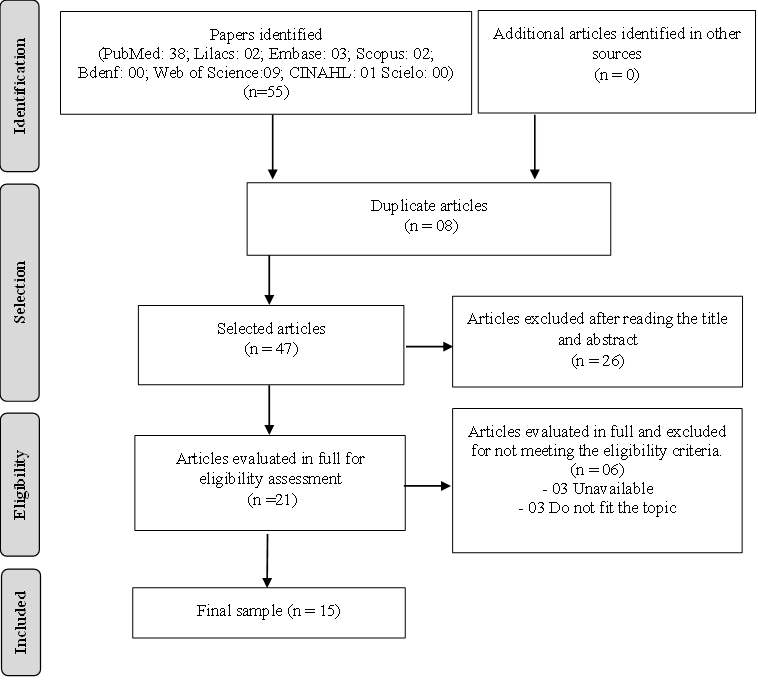
Figure 2 - Flowchart - Preferred Reporting Items for Systematic Reviews and Meta-Analyses Extension for Scoping Reviews (PRISMA-SCR) on the selection of studies. Teresina, Piauí, Brazil, 2024
Data extraction
To extract data from the selected studies, an instrument provided by the JBI and adapted for this study will be used(12). The selected information will be title, country, and year of publication; strategies carried out; technologies used; category/classification of technologies; place of application, and the evidence of the studies mapped.
Data analysis and presentation
Data analysis will be performed through systematic mapping of the collected information, using a descriptive analytical approach to examine the selected articles.
In data processing, only peer-reviewed publications will be considered, with critical evaluation of the texts, focusing on the reviewers’ method and expertise. Thus, the results found will be presented in tables, seeking to provide a better visualization and understanding of the data obtained. Thus, we intend to reflect on the findings shown in the tables with the contents evidenced in the research and, thus, achieve the objective and elucidate the proposed review issue.
The findings of the review may support clinical practices, public policies or educational tools aimed at nursing in several ways. In clinical practice, the findings may help improve the care provided by nurses to patients with diabetic foot, providing information on the most effective and safe technologies. In addition, they can support the development of clinical protocols for the management of diabetic foot, including the use of specific technologies. In addition, the results of the study will serve to train and qualify nurses on the subject.
The results can support the development of public policies to improve diabetic foot patient care, including technology acquisition and implementation. They can help allocate resources more effectively by prioritizing the acquisition and implementation of technologies that are more effective and secure.
Finally, the findings can be used to develop educational materials for nurses, including courses, training, and online resources.
Ethics and disclosure
There was no need for approval by the ethics council, as it is a scope review protocol, in which the research will present the analysis and interpretation of results of published studies. Results will be shared through open access publication in a peer-reviewed journal.
CONFLICT OF INTERESTS
The authors have declared that there is no conflict of interests.
REFERENCES
1. World Health Organization. Draft recommendations to strengthen and monitor diabetes responses within national noncommunicable disease programmes, including potential targets [Internet]. Geneva: WHO; 2021 [cited 2024 Dec 10]. Available from: https://www.who.int/publications/m/item/who-discussion-paper-draft-recommendations-to-strengthen-and-monitor-diabetes-responses-within-national-noncommunicable-disease-programmes-including-potential-targets
2. International Diabetes Federation. IDF Diabetes Atlas [Internet]. 10. ed. Brussels: IDF; 2021 [cited 2024 Dec 10]. Available from: https://profissional.diabetes.org.br/wp-content/uploads/2022/02/IDF_Atlas_10th_Edition_2021-.pdf
3. Sacco ICN, Lucovéis MDLS, Thuler SR, Parisi MCR. Diagnóstico e prevenção de úlceras no pé diabético. In: Diretriz da Sociedade Brasileira de Diabetes. São Paulo: SBD; 2024. https://doi.org/10.29327/5412848.2024-11
4. Santos AAA, Gomes AFL, Silva FSS, Lima HC, Silva JMM, Guedes MBOG, et al. Temporal trend of complications of the diabetic foot and Primary Health Care coverage in Brazilian capitals, 2008–2018. Rev. Bras. Med. Fam. Comunidade (Online). 2022;17(44):3420. https://doi.org/10.5712/rbmfc17(44)3420
5. Sociedade Brasileira de Angiologia e de Cirurgia Vascular. Brasil bate recorde de amputações de pés e pernas em decorrência do diabetes [Internet]. São Paulo: SBACV; 2023 [cited 2023 Sep 20]. Available from: https://sbacv.org.br/brasil-bate-recorde-de-amputacoes-de-pes-e-pernas-em-decorrencia-do-diabetes/
6. Merhy EE, Chakkour M. Em busca de ferramentas analisadoras das Tecnologias em Saúde: a informação e o dia a dia de um serviço, interrogando e gerindo trabalho em saúde. In: Merhy EE, Onoko R, editores. Agir em saúde: um desafio para o público. 2. ed. São Paulo: Hucitec; 2002. p. 113-50.
7. Nietsche EA, Backes VMS, Colomé CLM, Ceratti RM, Ferraz F. Tecnologias educacionais, assistenciais e gerenciais: uma reflexão a partir da concepção dos docentes de enfermagem. Rev Lat Am Enfermagem. 2005;13(3):344-52. https://doi.org/10.1590/S0104-11692005000300009
8. Hidalgo-Ruiz S, Rameurez-Duran MV, Basílio-Fernandez B, Alfageme-García P, Fabegrat-Fernández J, Jiménez-Cano VM, et al. Assessment of Diabetic Foot Prevention by Nurses. Nurs Rep. 2023;13(1):73-84. https://doi.org/10.3390/nursrep13010008
9. Phillip M, Bergenstal RM, Close KL, Danne T, Garg SK, Heinemann L, et al. The Digital/Virtual Diabetes Clinic: The Future Is Now-Recommendations from an International Panel on Diabetes Digital Technologies Introduction. Diabetes Technol Ther. 2021;23(2):146-54. https://doi.org/10.1089/dia.2020.0375
10. Oliveira DC, Brandão MGSA, Araújo MFM, Frota NM, Veras VS. Estratégias educativas para prevenção de úlceras nos pés em pessoas com diabetes mellitus: uma revisão integrativa [Internet]. Revenf. 2021 [cited 2024 Dec 10];40:1-14. Available from: https://www.scielo.sa.cr/pdf/enfermeria/n40/1409-4568-enfermeria-40-41631.pdf
11. Peters MDJ, Godfrey C, McInerney P, Munn Z, Tricco AC, Khalil H. Chapter 11: Scoping Reviews (2020 version). In: Aromataris E, Munn Z, editores. JBI Reviewer's Manual. Adelaide: JBI; 2020. http://dx.doi.org/10.46658/JBIMES-20-12
12. Tricco AC, Lillie E, Zarin W, O'Brien KK, Colquhoun H, Levac D, et al. PRISMA Extension for Scoping Reviews (PRISMA-ScR): checklist and explanation. Ann Intern Med. 2018;169(7):467-73. https://doi.org/10.7326/m18-0850
13. Joanna Briggs Institute. Scoping Review Protocol Template [Internet]. Adelaide: JBI; 2024 [cited 2024 Dec 10]. Available from: https://jbi.global/sites/default/files/2024-04/JBI_Protocol_Template_Scoping_Reviews_2024.docx
14. Ferreira LS. Roteiro para fazer revisões de literatura usando o Zotero e o Rayyan [Internet]. Rio de Janeiro: ICICT/Fiocruz; 2024 [cited 2024 Dec 10]. Available from: https://arca.fiocruz.br/handle/icict/66413
Submission: 29-Sep-2024
Approved: 07-May-2025
Editors:
Rosimere Ferreira Santana (ORCID: 0000-0002-4593-3715)
Geilsa Soraia Cavalcanti Valente (ORCID: 0000-0003-4488-4912)
Ana Carla Dantas Cavalcanti (ORCID: 0000-0003-3531-4694)
Corresponding author: Simone Barroso de Carvalho (simonebcarvalho2009@hotmail.com)
Publisher:
Escola de Enfermagem Aurora de Afonso Costa – UFF
Rua Dr. Celestino, 74 – Centro, CEP: 24020-091 – Niterói, RJ, Brazil
Journal email: objn.cme@id.uff.br
|
AUTHORSHIP CONTRIBUTIONS |
|
Project design: Carvalho SB. Data collection: Carvalho SB, Moura MSS, Leal LB. Data analysis and interpretation: Carvalho SB, Moura MSS, Leal LB, Braz ZR, Fonseca JRS, Tôrres AS, Cavalcanti SDC. Writing and/or critical review of the intellectual content: Carvalho SB, Moura MSS, Leal LB, Braz ZR, Fonseca JRS, Tôrres AS, Cavalcanti SDC, Silva ARV. Final approval of the version to be published: Carvalho SB, Moura MSS, Leal LB, Braz ZR, Fonseca JRS, Tôrres AS, Cavalcanti SDC, Silva ARV. Responsibility for the text in ensuring the accuracy and completeness of any part of the paper: Carvalho SB, Moura MSS, Leal LB, Braz ZR, Fonseca JRS, Tôrres AS, Cavalcanti SDC, Silva ARV. |
